







Women's Health Tracking: How a Smart Ring Can Help You Understand Your Body
Women's health tracking starts with a simple problem. Your body shifts across the month, but your memory does not keep up. Sleep quality, energy, daily movement, stress and menstrual cycle experiences can all change from one day to the next. Noticing those shifts helps. Remembering them accurately is the hard part.
Between work, exercise, family responsibilities and everyday routines, most people cannot recall how they slept eleven days ago, or when a particular pattern actually began. Paper notes work for a while, then life gets busy and the notes stop.
A smart ring offers a discreet way to keep that record going. It stays on your finger, so it keeps collecting data while you get on with your day. Instead of relying on memory, you get a running picture of your routines and trends.
This guide explains how to approach women's health tracking, where a smart ring fits, and what to check before you choose an Osawalla model.
Key takeaways
· Women's health tracking works best as a habit, not a project. Track a few things consistently rather than everything occasionally.
· Sleep is the highest-value starting point. Sleep touches energy, mood and recovery, so it explains more of your week than any single metric.
· A smart ring suits people who forget to log things. It captures data passively, so consistency costs you nothing.
· Cycle tracking and cycle prediction are different jobs. Use a dedicated app for period dates and symptoms; use the ring for the wellness data it actually supports.
· Not every ring lists the same features. The Osawalla Ceramic Pro Smart Ring lists Cycle & Ovulation Tracking; the Osawalla Signature Pro Smart Ring does not. Check the model, not the brand.
· Wearable data is not a diagnosis. Use it to prepare better questions for a healthcare professional, not to replace one.
What's in this guide
1. Why women's health tracking matters
2. How a smart ring fits into your routine
3. Sleep tracking: the best place to start
4. Activity tracking without the competition
5. Menstrual cycle tracking: pair wearable data with your own records
6. How to choose an Osawalla smart ring
7. A simple daily routine you can actually keep
8. What a smart ring cannot do
9. Quick recap
10. Frequently asked questions
1. Why women's health tracking matters
Women's wellness is not one number. It is the relationship between several things over time — how you slept, how much you moved, how stressed the week was, and where you are in your cycle.
That is why single-day results mislead. A tired Tuesday tells you almost nothing. Four tired Tuesdays in a row tell you something worth acting on.
A useful women's health tracking routine stays small:
· Sleep habits. Bedtime, regularity, and how rested you feel on waking.
· Daily activity. Walking, workouts, and general movement across the day.
· Personal observations. Mood, energy, comfort, or other symptoms you notice.
· Menstrual cycle records. Period dates and symptoms, kept in a dedicated app or calendar.
· Longer trends. Patterns that only appear across several weeks.
Notice that only some of these need a device. A ring can help with sleep and activity, and with cycle data on models that support it. Your own notes still carry the rest. If you want a fuller picture of what a ring can measure beyond sleep, see our guide to smart ring health tracking and body metrics.
The goal is not to monitor every moment. It is to make useful information easy to review, so you can adjust habits with confidence instead of guesswork.
2. How a smart ring fits into your routine
Traditional tracking depends on you. You remember how you felt, open an app, and type it in. That works until you are tired, travelling, or simply busy — which is exactly when the data would be most useful.
A ring changes the effort equation behind women's health tracking. You wear it; it records. Consistency stops depending on willpower. If you are new to the category, start with what a smart ring is and how it works.
A discreet wearable for everyday life
Form factor matters more than it sounds. A wrist device sits on your arm all day and announces itself. A ring is smaller, easier to forget, and simpler to wear alongside a watch, jewellery, or formal clothing.
For women building a long-term habit, that matters. A device you actually keep wearing produces better data than a more powerful device left in a drawer. Comfort and convenience beat raw capability, because consistency is what makes the data useful. The six core features of smart rings covers what to expect from the category.
A more consistent view over time
Individual readings rarely mean much. Trends do.
You might review your recorded activity next to your sleep habits and your own notes. Over a few weeks, that combination often surfaces changes you would otherwise miss — the week your activity dropped, the stretch of short nights before a demanding deadline, the slow improvement after you fixed your bedtime.
A ring also removes the wrist-based comparison entirely. If you are weighing ring versus watch, our breakdown of smart ring vs smartwatch for health and sleep tracking goes deeper.
Before you choose, always read the individual product page. Confirm the measurements, app features, compatibility and tracking functions that specific model supports. Capabilities differ across the range, and our Osawalla smart ring comparison lays out the differences.
Browse the Osawalla smart ring collection to see current models.
3. Sleep tracking: the best place to start
Start with sleep. It influences almost everything else in women's health tracking, and it is the area where a passive wearable gives you the most return for the least effort.
Sleep is also easy to disrupt without noticing. A busy schedule, travel, late-night screen use or an inconsistent bedtime can quietly erode it. The CDC recommends 7 or more hours of sleep per night for adults aged 18–60, and notes that quality matters as much as quantity.
A sleep routine does not need to be complicated. Ask four questions:
· Am I going to bed at a reasonably consistent time?
· Do I generally wake up feeling rested?
· Does my energy change after nights with less sleep?
· Are there habits that clearly make rest easier or harder for me?
Where a model supports sleep tracking, its recorded sleep data adds a second perspective to those personal answers. Both Osawalla rings list sleep tracking among their features, and both are rated for up to 5–7 days of battery life — long enough to wear overnight without charging interruptions.
To get value from the numbers, understand what they mean. How a smart ring tracks sleep explains the method honestly, what your sleep quality score means covers the daily number, sleep stages explained covers light, deep and REM, and what affects sleep quality lists the variables worth changing.
One boundary matters. Wearable sleep estimates are not a medical diagnosis. If you regularly struggle with sleep or feel persistent fatigue, talk to a qualified healthcare professional.
4. Activity tracking without the competition
Fitness looks different for everyone. One person runs; another walks, does yoga, cycles, lifts, or simply tries to move more during the working day.
The best routine is the one you keep. So compare yourself to yourself, not to someone else's week.
Start small. A daily walk. Movement breaks between meetings. A gradual return to exercise after a busy stretch. Then use recorded activity data to review how your routine shifts from day to day.
Both Osawalla rings list activity or fitness tracking. Our explainer on how wearables estimate daily calorie burn is worth reading before you treat any single number as precise, and how accurate smart ring heart rate monitoring is sets fair expectations for workout data. If you are choosing between device types, smart ring vs fitness tracker covers the trade-offs. You can also read about blood oxygen (SpO₂) monitoring and decide whether that metric matters to you.
Activity data completes the picture that women's health tracking is trying to build: how much you moved, and how that lines up with your sleep and your cycle.
A wearable should support your routine, not pressure you into a perfect score every day. Rest and flexibility belong in the plan.
5. Menstrual cycle tracking: pair wearable data with your own records
Cycle awareness is a core part of women's health tracking. Recording period dates and symptoms helps you prepare for upcoming cycles and notice changes worth raising with a doctor.
The Office on Women's Health describes the menstrual cycle as the hormonal process that prepares the body each month for a possible pregnancy, and notes that irregular or heavy, painful periods are not normal. That is exactly the kind of change worth tracking and discussing.
A dedicated period-tracking app or calendar remains the most direct place to record:
· The first and last days of your period.
· Symptoms such as cramps, headaches or bloating.
· Mood or energy changes you personally observe.
· Anything you want to raise with a healthcare professional.
Where an Osawalla ring fits in
Wearable data and menstrual records do different jobs. A period app records dates, symptoms and cycle estimates. A ring records the wellness signals its sensors support — sleep, HRV, activity, and on some models cycle-related features.
Used together, they build a broader personal record. You might review sleep data alongside your own notes about how a particular week felt. That helps you notice patterns. It does not prove the cycle caused any specific change.
What Osawalla actually lists
This is where model choice matters. Do not assume every smart ring offers cycle features — check the product page.
|
Model |
Listed features |
Cycle & ovulation tracking |
Sizes |
Price |
|
4 g ultra-light, Sleep & HRV Tracking, 2.6 mm slim profile, 5–7 day battery, 5ATM / IP68 water resistant, no subscription |
Listed |
6–10 |
$49.99 |
|
|
24/7 health monitoring, Smart Fitness Tracking, Advanced Sleep Tracking, lightweight comfortable design, 5–7 day battery, no subscription |
Not listed |
6–13 |
$49.99 |
If cycle tracking is your priority, the choice is straightforward: the Ceramic Pro lists Cycle & Ovulation Tracking, the Signature Pro does not. Features, colours and availability change, so confirm details on the product page before ordering.

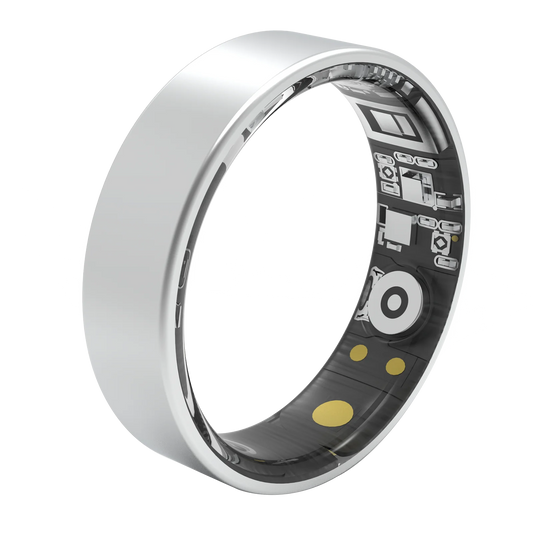
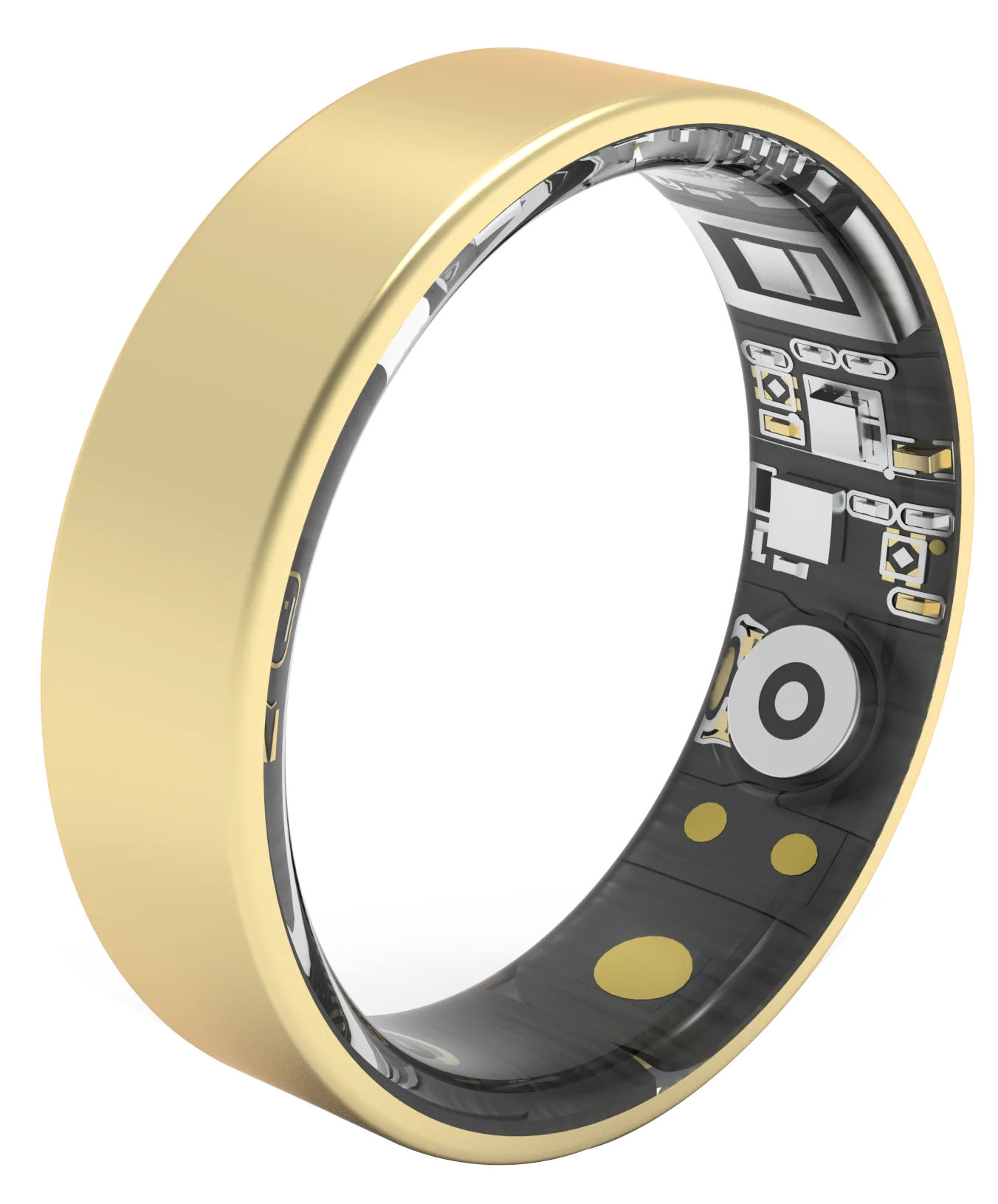
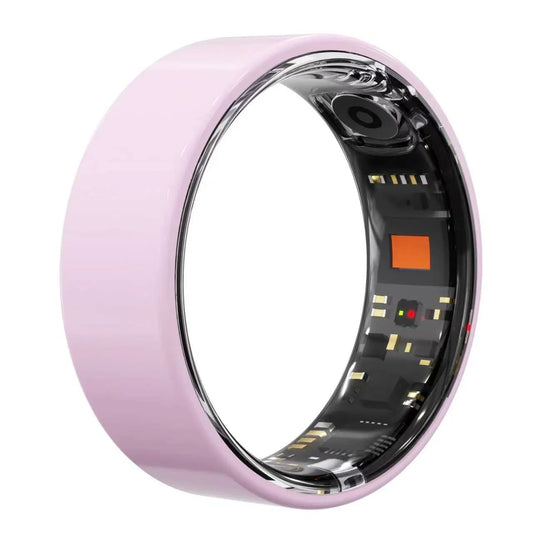
Osawalla Ceramic Pro smart ring for women's health tracking, listing cycle and ovulation tracking
Two limits apply either way. Cycle estimates are not a substitute for medical advice, and predicted fertile windows must never be relied on as contraception.
6. How to choose an Osawalla smart ring

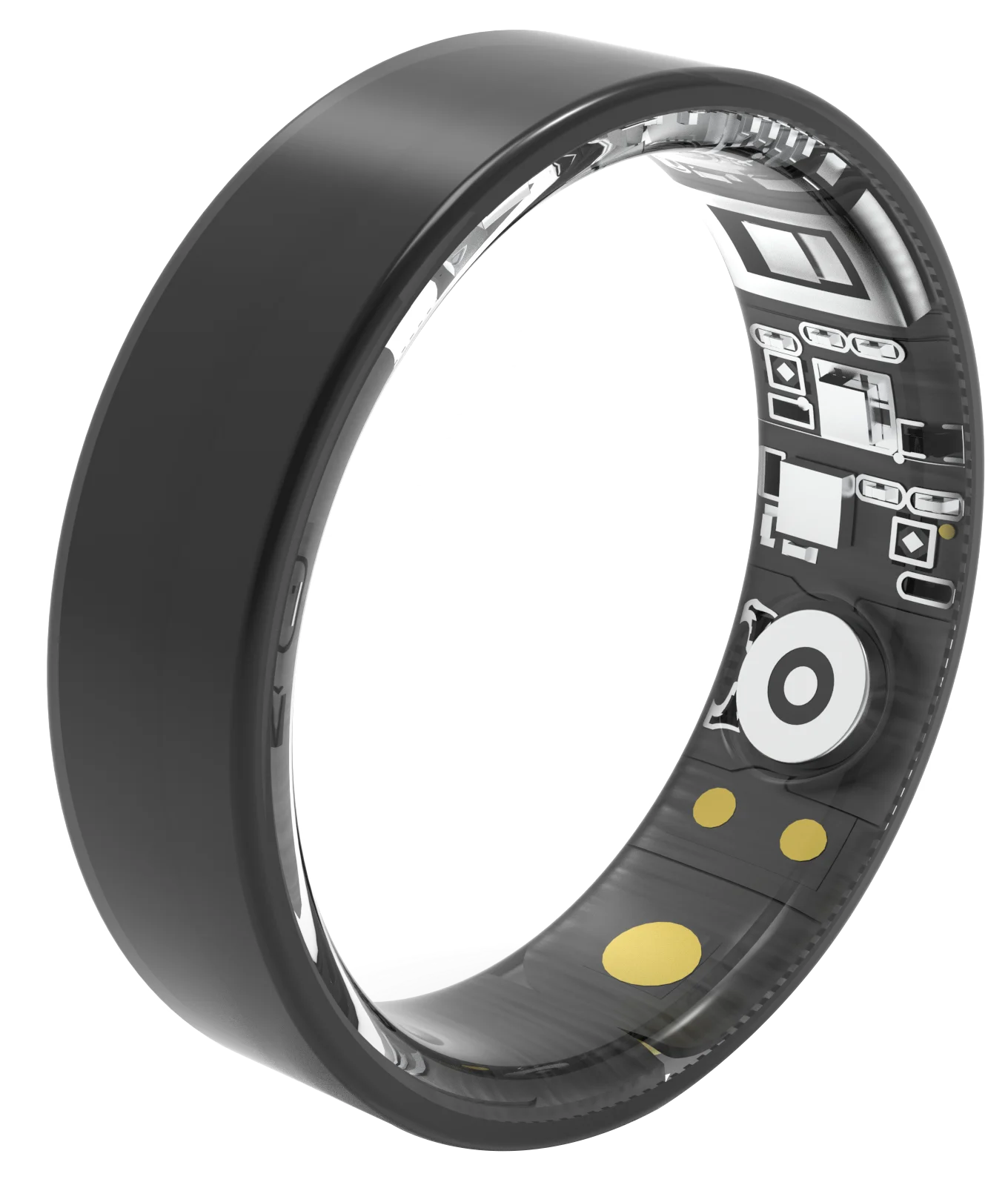
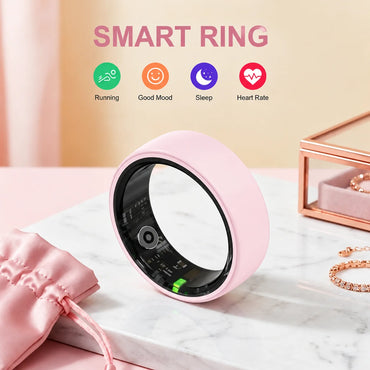
Osawalla Signature Pro smart ring, a discreet option for everyday women's health tracking
Not all smart rings serve the same purpose. Decide what you want from women's health tracking, then match the model to that list.
Comfort and fit
Fit drives both comfort and data quality. A ring that is too loose slips; too tight becomes uncomfortable overnight. Finger size also changes with temperature, time of day and hydration.
· Read how to choose the correct smart ring size before ordering.
· Check the smart ring size guide for measuring instructions.
· Consider which finger you will wear it on — see smart ring finger choice.
· If you want certainty first, the smart ring sizer kit removes the guesswork.
The Ceramic Pro measures 6–10 and the Signature Pro 6–13, so size availability may decide the model for you.
Features that match your goals
Write down your top three priorities, then compare them with the actual specifications. Check which measurements the model supports, what the app provides, and whether your phone is compatible.
Ignore long feature lists. Three functions you use beat ten you never open. If you want a detailed look at one model, read our Signature Pro review.
Battery life and charging
Charging friction is the main reason wearables get abandoned. Both current Osawalla rings are rated for up to 5–7 days per charge, which means weekly charging rather than daily.
Actual battery life varies with usage, settings and conditions, so treat the product page as the reference. If you travel often, a smart ring charging case extends your runway; our guide to smart ring charging cases explains when one is worth it.
App experience and data access
The app is half the product. Check how it presents data, which phone operating systems it supports, and whether it offers the history and summaries you want.
Also check integrations before assuming they exist. If you plan to combine wearable data with a period-tracking app, verify each service separately — see Apple Health, Strava and sync: what to check. Do not assume the ring imports menstrual records or syncs with every health platform.
Subscription model deserves attention too. Both Osawalla rings are sold without a mandatory subscription. That is not universal in this category, and why a no-subscription smart ring matters explains the long-run cost difference.
Privacy and control
Health data is personal. Read the device and app privacy policies before you buy. Check what is collected, how it is stored, and which sharing and permission controls you get.
Choose tools you feel comfortable with. A device you distrust is a device you will stop wearing.
7. A simple daily routine you can actually keep
Do not change every habit at once. Women's health tracking survives on routines small enough to keep during a busy week. Start with four checkpoints.
In the morning. If your model supports sleep insights, glance at the app. Ask how rested you feel, rather than judging your day by one number.
During the day. Move in ways that fit your schedule — a walk, a stretch between meetings, an activity you enjoy. Treat activity data as a reference, not a test you pass or fail.
In the evening. Reflect briefly. If you track your cycle, record period dates or symptoms in your chosen app or calendar.
Once a week. Review the week as a whole. Are bedtimes more consistent? Did you find chances to move? Have you noticed any change worth discussing with a healthcare professional?
This blends personal observations with wearable data where it exists. It does not require you to track everything or interpret every fluctuation. Routine skin and device care helps too — see how to clean a smart ring.
The point of the ring is to fit into your life, not to make you check your health data constantly.
8. What a smart ring cannot do
Women's health tracking has boundaries, and they are worth stating plainly.
A period-tracking app records menstrual dates, symptoms and cycle estimates. A smart ring measures certain wellness indicators, depending on its hardware and software. A medical device or clinical assessment evaluates a health concern. These are three different tools.
Combining them can be useful, but compatibility and available functions must be checked individually.
Ring measurements are affected by fit, movement, device limitations and other factors. They should not be used on their own to diagnose a condition, determine fertility, or make treatment decisions.
See a qualified healthcare professional if you experience persistent changes in your cycle, unusually heavy bleeding, severe pain, or other concerning symptoms. Wearable data can help you describe the pattern when you get there. It cannot replace the assessment.
For a sense of where the category is heading, read smart ring trends 2026.
9. Quick recap
Here is the whole guide in eight lines — the women's health tracking essentials, nothing else.
|
Section |
The one thing to remember |
|
Why tracking matters |
Track a few things consistently; single days mislead, patterns inform. |
|
How a ring fits |
A ring records passively, which is why it beats manual logging for consistency. |
|
Sleep |
Start here — sleep explains more of your week than any other metric. |
|
Activity |
Compare yourself to yourself, and keep rest in the plan. |
|
Cycle tracking |
Use a period app for dates and symptoms; check whether your ring model lists cycle features. |
|
Choosing a ring |
Fit first, then features you will actually use, then battery and app. |
|
Daily routine |
Four small checkpoints beat an ambitious system you abandon. |
|
Limits |
Wearable data is not a diagnosis and not contraception. |
10. Frequently asked questions
Short answers to the questions we hear most often about women's health tracking.
Can a smart ring track my menstrual cycle?
Some can, but check the model. The Osawalla Ceramic Pro Smart Ring lists Cycle & Ovulation Tracking. The Signature Pro does not list it. Even on models that support it, keep period dates and symptoms in a dedicated app, and never use cycle predictions as contraception.
Is a smart ring better than a smartwatch for women's health tracking?
It depends on what you value. Rings are lighter, less intrusive, and often more comfortable overnight — which improves sleep data. Watches usually offer bigger screens and more workout features. Our smart ring vs smartwatch comparison breaks it down.
How accurate is smart ring sleep tracking?
Useful for trends, imperfect for individual nights. Wearables estimate sleep from movement, heart rate and related signals rather than measuring brain activity directly. Our guide to how a smart ring tracks sleep explains the method and its limits.
Do Osawalla smart rings require a subscription?
No. Both the Ceramic Pro and Signature Pro are sold without a mandatory subscription, and both are rated for up to 5–7 days of battery life per charge. See why no subscription matters.
Which finger should I wear a smart ring on?
Most people choose index, middle or ring finger, prioritising a secure fit and sensor contact. Fit affects both comfort and data quality, so check smart ring finger choice and confirm your size before ordering.
Make everyday wellness easier with Osawalla
Women's wellness is personal, and no single routine suits everyone. For some, that means keeping a menstrual calendar. For others, it means steadier sleep, more regular movement, or paying closer attention to energy changes.
A smart ring supports women's health tracking best when it is comfortable enough to forget and simple enough to keep using. The key is choosing a model whose real features match what you actually want to track.
Explore the Osawalla smart ring collection, compare the specifications, and choose the features that make sense for your routine.
Start with a few simple habits, review your information over time, and use what you learn to support better conversations about your wellbeing.
Health disclaimer: This article is for general educational purposes only and is not medical advice. Smart ring data is not a substitute for professional diagnosis or treatment. Product capabilities vary by model; consult the relevant product specifications for confirmed features. Cycle predictions should not be used as contraception.


