







Smart Ring Health Tracking: Body Metrics Beyond Sleep
By the Osawalla Product Team · Reviewed by Clark Huang · Published: Sep 24, 2026 · Last updated: Sep 24, 2026
Health notice: This article is for general wellness information only. Osawalla smart rings are not medical devices and are not intended to diagnose, treat, cure, or prevent any disease or medical condition. Consumer wearable readings are estimates and vary by device, fit, skin tone, motion, and other factors. If you have a health concern, talk to a healthcare professional.
Smart ring health tracking covers far more than sleep. You wear a ring overnight and check your sleep stages in the morning. Yet the same sensors spend the other sixteen hours logging heart rate, HRV, blood oxygen, stress, activity, and recovery signals. Sleep data alone cannot explain any of those.
That shift changes the question you ask each morning. Instead of "How did I sleep?", you start asking "What is my body telling me today?"
For anyone weighing a wellness ring against a watch, this is where the category earns its keep. This guide walks through the body metrics worth watching, how they connect to one another, and how to read them against your own baseline instead of a generic target.
On this page
1. What Is Smart Ring Health Tracking?
2. Heart Rate: A Continuous Record, Not a Spot Check
3. HRV: Why There Is No "Good" Number
4. Recovery Tracking: Six Signals, One Direction
5. Blood Oxygen: Read the Trend, Ignore the Single Number
6. Stress Tracking: What Your Day Actually Costs You
7. Activity Tracking: The Missing Half of the Story
8. Cycle Insights: A More Personal Layer
9. How to Build Your Own Baseline in 14 Days
10. Osawalla Smart Rings
11. Smart Ring vs. Smartwatch
12. FAQ
13. Sources

What Is Smart Ring Health Tracking?
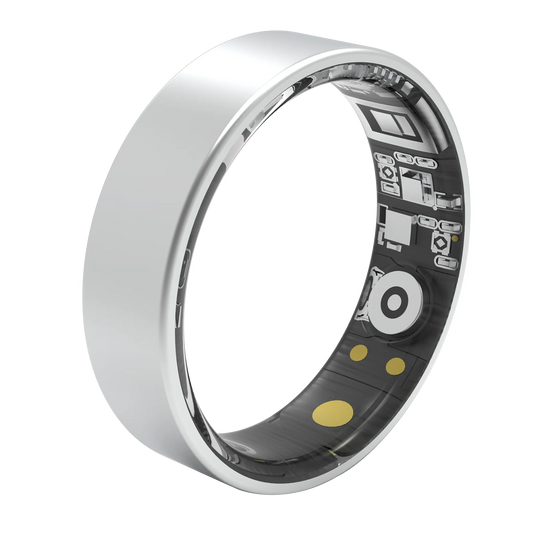
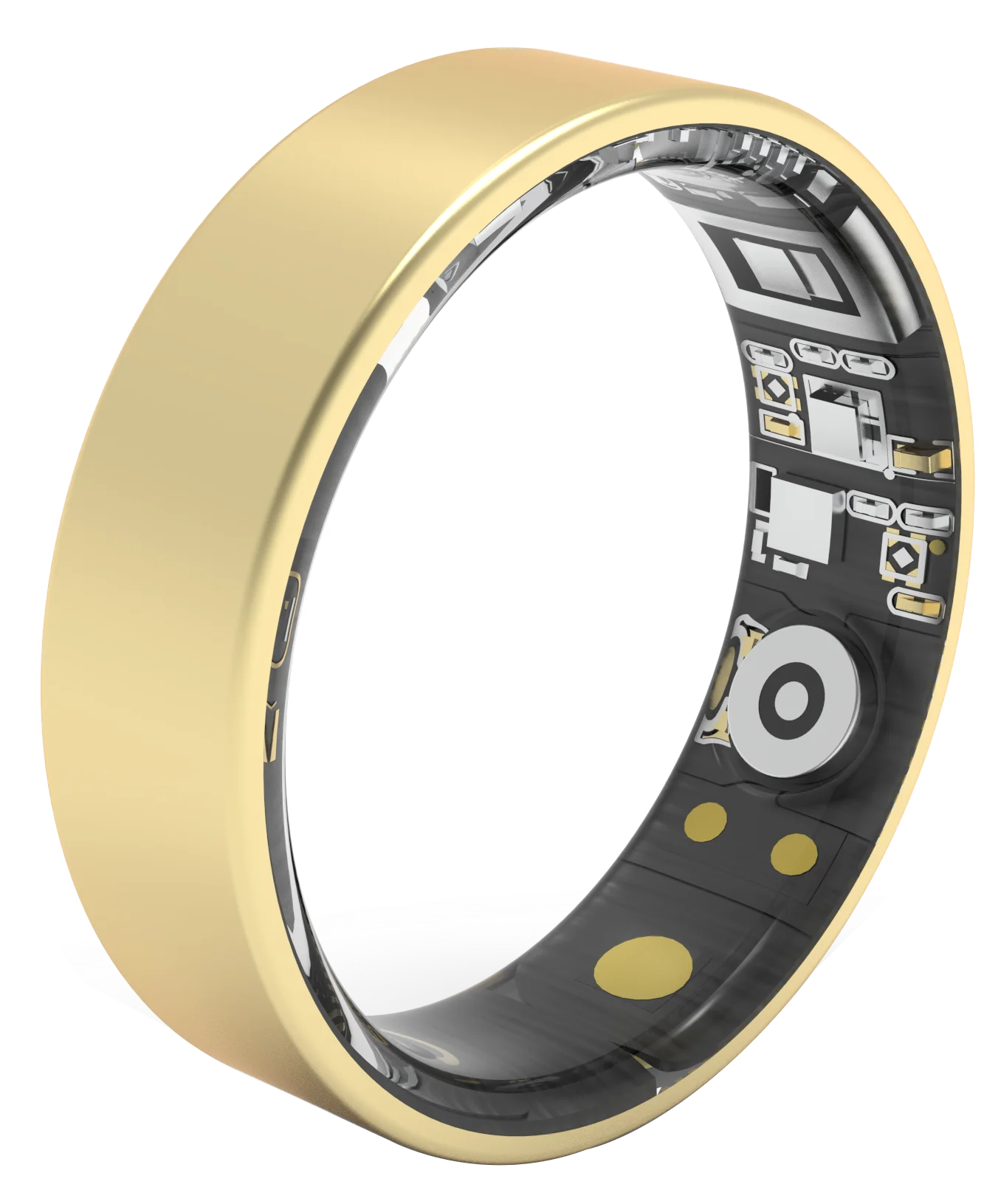
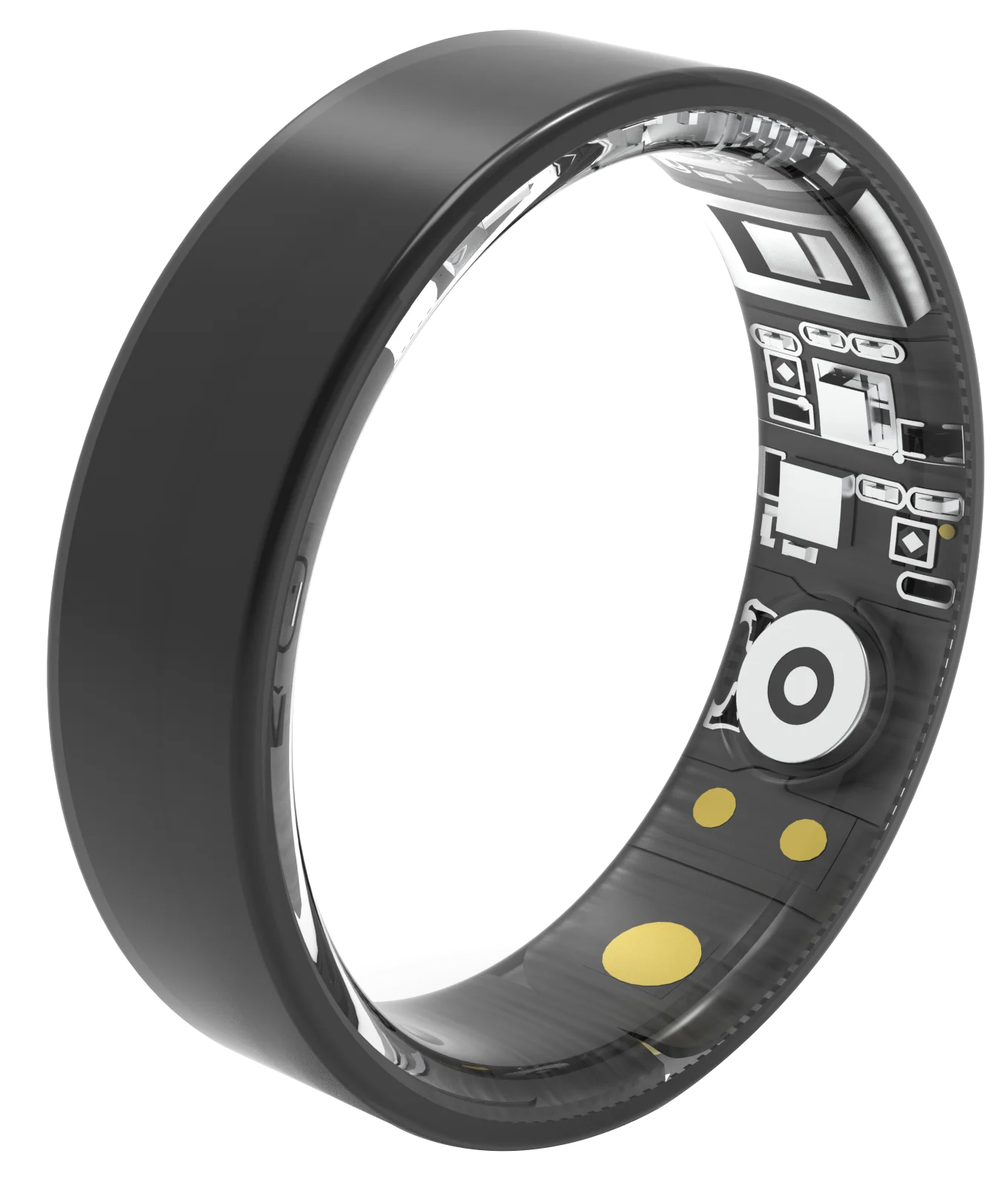
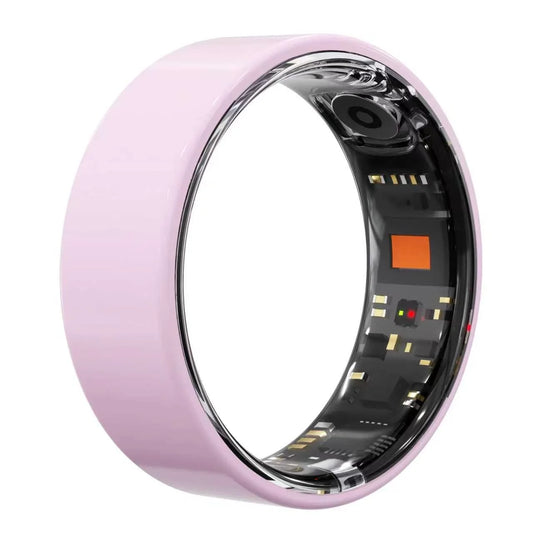
Smart ring health tracking is the continuous collection of physiological and activity data through sensors packed into a ring. A ring stays on your finger through meetings, workouts and sleep. So it captures far more of your day than a device you strap on only to train.
The result is a set of body metrics sampled across a full 24-hour cycle, not a snapshot taken mid-workout. Those metrics usually fall into these groups:
|
Group |
What the ring records |
|
Cardiovascular |
Heart rate, resting heart rate, HRV |
|
Respiratory |
Blood oxygen (SpO₂), breathing patterns during sleep |
|
Sleep |
Duration, stages, interruptions, timing |
|
Activity |
Steps, distance, calories, workouts |
|
Recovery |
Resting heart rate trend, HRV trend, sleep debt |
|
Stress |
Stress-related measurements across the day |
|
Cycle |
Cycle and ovulation insights, temperature trends |
Two things decide how good that data is: fit and placement. A loose sensor reads light instead of blood. So which finger you wear it on and finding your correct ring size matter more than most people expect. So does keeping the sensors clean. That is data quality, not just hygiene.
Nor is the value in any single number. One high heart-rate reading tells you almost nothing. Resting heart rate, HRV, sleep, and activity moving together over several days tells you something.
1. Heart Rate: A Continuous Record, Not a Spot Check
Heart rate is the most familiar metric on any wearable, and the most misunderstood. Most people check it during a workout and ignore it the rest of the day.
The more useful signal is resting heart rate. For healthy adults this typically sits between 60 and 100 beats per minute, and it drops measurably as cardiovascular fitness improves over months. Your ring measures it while you sleep, which is why it is worth more than a reading taken after climbing stairs.
A continuous record lets you compare the same body across different conditions:
· Rest days vs. workout days
· High-stress workdays vs. relaxed weekends
· Well-slept nights vs. short nights
· This month vs. three months ago
That last comparison is the one a wrist-check cannot give you. It is also why wearability beats raw sensor count: a ring comfortable enough to wear 24/7 produces a more complete dataset than a more accurate device you forget to charge.
2. HRV: Why There Is No "Good" Number
Heart rate variability measures the variation in time between successive heartbeats. A heart beating at exactly 60 bpm is not a metronome — the gaps fluctuate, and that fluctuation is what HRV quantifies.
HRV is widely used as one input when assessing recovery and autonomic nervous system activity. But here is the part most articles skip: there is no universally accepted normal range for HRV.
A 2025 systematic review found no generally accepted normal values for HRV. It also found that repeated measurements within the same individual are reproducible and comparable over time.[^1]
That single sentence should shape how you use the metric:
· Comparing your HRV to a friend's number is meaningless.
· Comparing your HRV to your own last 30 days is meaningful.
· An HRV of 40 ms is neither good nor bad in isolation. It is only low or high relative to your range.
Treat HRV as a relative signal with a personal baseline, not an absolute score with a target.
3. Recovery Tracking: Six Signals, One Direction
Recovery is not sleep. Sleep is one input; physical load, psychological stress, rest, and routine changes are the others. Recovery tracking is what happens when a ring puts those inputs on one screen.
|
Signal |
What it shows you |
Useful when |
|
Resting heart rate |
Whether your baseline is drifting up or down |
Compared week over week |
|
HRV |
Beat-to-beat variability against your own range |
Read as a 7-day trend |
|
Sleep duration & stages |
How much rest you actually got |
Against the 7-hour floor[^2] |
|
Activity load |
Training stress you put in |
Before and after hard sessions |
|
SpO₂ |
Overnight blood oxygen pattern |
As a trend, not a spot check |
|
Stress measurements |
Daytime load that sleep cannot offset |
On demanding workdays |
The practice is simple: when several of these move in the same direction at once, your routine — rest, training load, or schedule — deserves a second look. When only one moves, it is usually noise.
The point is not to turn every morning into a verdict. It is to shorten the gap between "something is off" and knowing why.
4. Blood Oxygen: Read the Trend, Ignore the Single Number
Blood oxygen (SpO₂) estimates the percentage of oxygen saturation in your blood. Rings typically sample it overnight, where motion artifact is lowest.
Two caveats come straight from the regulators, not from us:
The U.S. FDA has stated that pulse oximeters have limitations and a risk of inaccuracy under certain circumstances.[^3] The FDA also notes that over-the-counter devices sold for general wellness or fitness use are not intended for medical purposes, and do not undergo FDA review. Accuracy is affected by poor circulation, skin pigmentation, skin thickness, skin temperature, tobacco use, and fingernail polish.
Independent clinical review puts typical accuracy at roughly ±2–3% in the 90–100% range. It drops further as saturation falls below 90%.[^4]
Here is what that means in practice. A single overnight reading of 96% versus 98% carries no information. A sustained downward shift across a week does, especially alongside symptoms. For anything you need to act on, use a medical-grade device and a clinician.
5. Stress Tracking: What Your Day Actually Costs You
Most wearable advice ignores the sixteen hours between waking and bed. Work deadlines, commutes, long sitting blocks, travel, and schedule changes all leave measurable traces.
Stress-related metrics turn your day into something you can connect to your night:
busy day → elevated stress pattern → shorter or lighter sleep → lower next-day recovery
That chain is the practical payoff. It converts a dashboard of unrelated numbers into a cause-and-effect story about your own habits. It is also the clearest difference between step counting and a genuine wellness ring experience: one reports what happened, the other helps you explain it.
6. Activity Tracking: The Missing Half of the Story
Sleep explains the night. Activity explains the day. Rings track steps, distance, calories, and workouts without the bulk of a watch — which suits people whose goal is consistency rather than periodized training.
What counts as "enough" movement? The WHO 2020 guidelines recommend 150–300 minutes of moderate-intensity aerobic activity per week. The alternative is 75–150 minutes of vigorous-intensity activity. Add muscle-strengthening work on two or more days.[^5]
Your activity data answers questions that sleep data cannot:
· Did I move enough this week compared with last week?
· Did a heavy training block cut into my sleep?
· How much did a desk-bound week reduce my daily movement?
· Is my activity trend rising, falling, or flat over a month?
Curious how those calorie numbers are produced? We break down the estimation method in how wearables estimate daily burn.
7. Cycle Insights: A More Personal Layer
For many users, body tracking means understanding how metrics shift across the menstrual cycle. Rings combine temperature trends, heart rate patterns, and logged cycle data to surface cycle and ovulation insights.
This is one reason a ring functions as more than a fitness tracker: steps and calories describe output, while cycle patterns describe state.
Two things to keep in mind. These insights are general wellness information, not medical diagnosis or contraception. And because cycle and temperature tracking depend on overnight skin contact, consistent wear matters more here than in any other metric — a night off the finger is a night of missing data.
8. How to Build Your Own Baseline in 14 Days
Every body metric above ends at the same place: compare yourself to yourself. Here is the actual procedure, because "watch your trends" is useless without it.
14. Wear the ring on the same finger every night for 14 consecutive days. Switching fingers between index, ring, and thumb changes sensor contact and introduces step changes in your data.
15. Read your metrics at the same time each morning. Resting heart rate and HRV are most stable right after waking, before caffeine and before your commute.
16. Discard days 1–4. Your sleep is still adapting to wearing a ring, and early readings reflect novelty rather than your physiology.
17. From day 5, watch direction across three metrics at once — resting heart rate, HRV, and sleep duration. Three signals agreeing is a pattern. One signal moving is noise.
18. Only compare yourself to yourself. If you must sanity-check the number, compare your 7-day average, never a single morning.
Fourteen days is enough to see a shape. Thirty days is enough to trust it.

Osawalla Smart Rings: Health Tracking Without a Screen
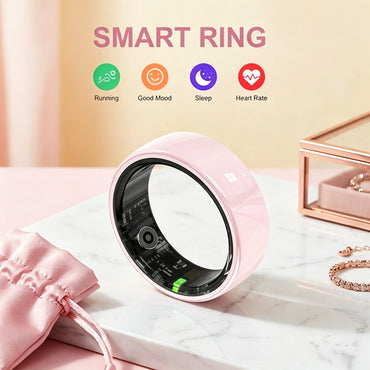
Both Osawalla rings are built on one idea: continuous tracking should not require a screen on your wrist all day.
Neither model charges a subscription fee to see your own data — a deliberate difference from the subscription-gated model used by several higher-priced competitors.
Osawalla Signature Pro Smart Ring — $49.99
The accessible all-rounder for everyday health and fitness tracking.
· Heart rate, HRV, blood oxygen, stress, sleep, activity
· Steps, calories, distance, sports tracking
· Cycle insights
· Up to 5–7 days of battery life per charge
· IP68 sweat and water resistant
· No app subscription fee
Shop the Signature Pro Smart Ring →
Osawalla Ceramic Pro Smart Ring — $69.99
The same wellness tracking in a lighter, more refined ceramic build.
· 4g weight, 2.6mm profile
· Heart rate, HRV, blood oxygen, stress, sleep, activity
· Recovery-related insights, cycle and ovulation insights
· 128+ sports modes
· Apple Health support, gesture photo control
· Up to 7–9 days of battery life per charge
· 5ATM / IP68 water resistant
· No app subscription fee
Shop the Ceramic Pro Smart Ring →
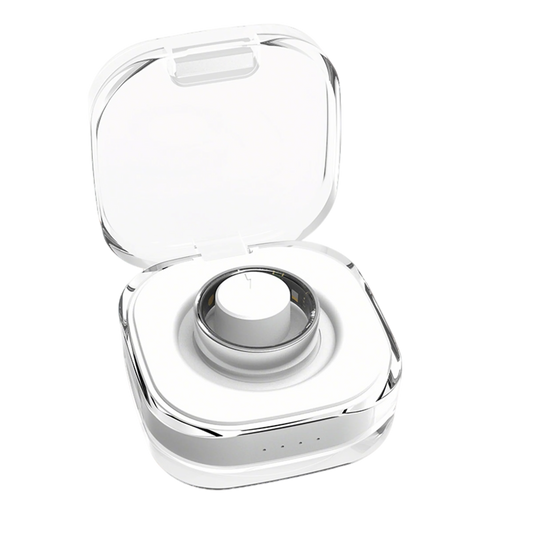
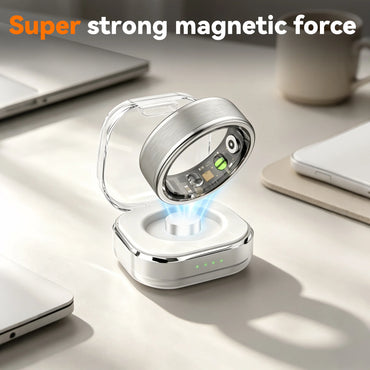
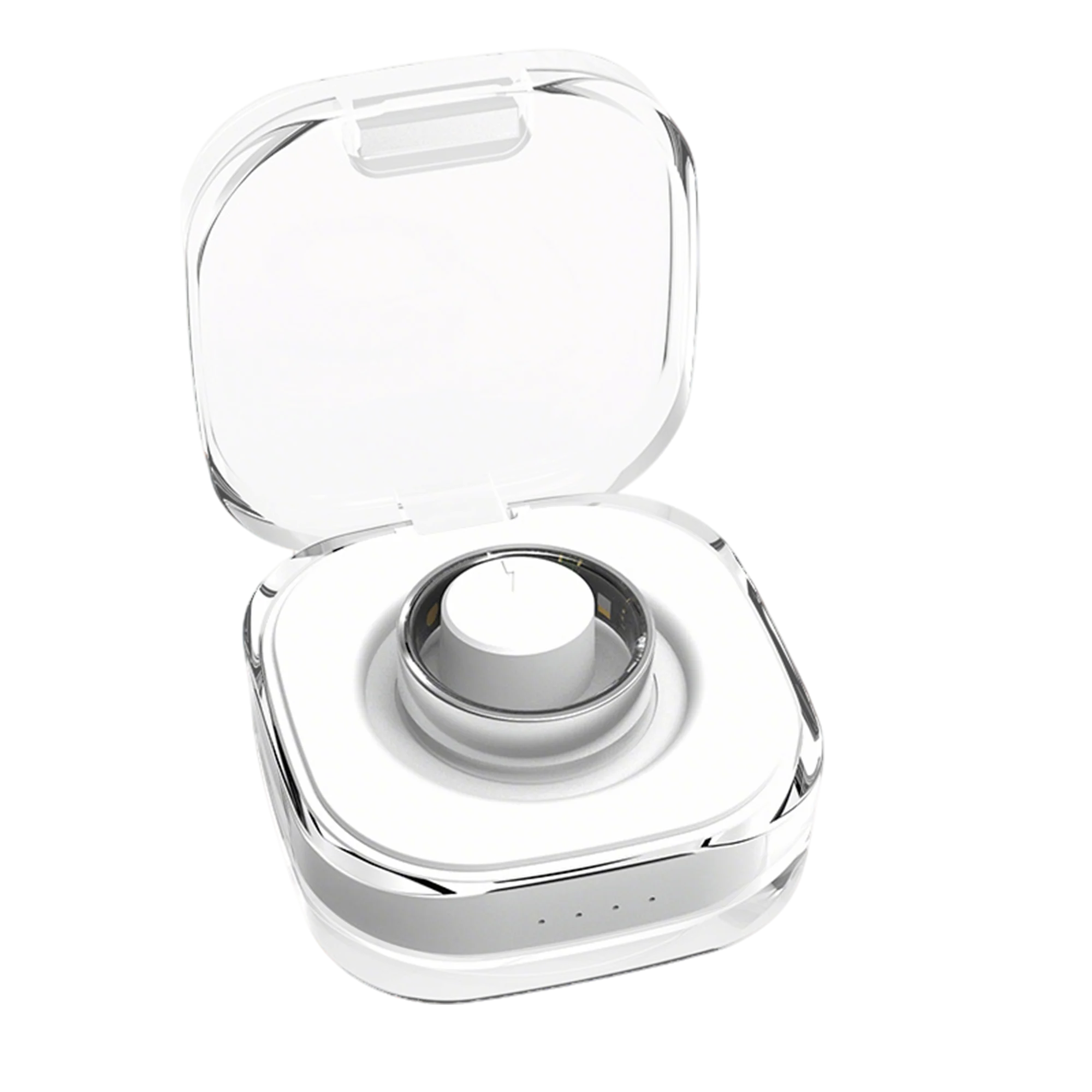
Battery estimates depend on usage and settings. On charging hardware and what to look for, see smart ring charging cases. Moving your data into a wider ecosystem? Check Apple Health and Strava sync.

Smart Ring vs. Smartwatch: Different Ways to Track Your Body
|
Feature |
Smart Ring |
Smartwatch |
|
Sleep tracking |
✓ |
✓ |
|
Heart-rate tracking |
✓ |
✓ |
|
HRV |
✓ |
✓ |
|
Blood oxygen |
✓\* |
✓\* |
|
Activity tracking |
✓ |
✓ |
|
Workout tracking |
✓ |
✓ |
|
On-device screen |
No |
Yes |
|
Notifications |
Usually no |
Yes |
|
Overnight comfort |
Designed for continuous wear |
Depends on model |
|
Daily interaction |
Minimal |
Frequent |
\*Availability and functionality vary by device and market.
A ring is not a watch replacement. It is the layer you forget is there. That is exactly why it captures the hours a watch spends on the charger, and why a screen-free wellness ring suits anyone who wants body metrics without another notification stream.

FAQ
Does a smart ring track more than sleep?
Yes. Most modern smart rings track heart rate, HRV, blood oxygen (SpO₂), stress, steps, calories, and workouts alongside sleep stages. Some models add cycle insights and recovery scoring.
Which body metrics matter most on a smart ring?
Start with resting heart rate, HRV, and sleep duration. Those three respond to the same underlying load, so they move together when something real is happening. Then add activity for context, and SpO₂ or stress only if you want the extra layer.
What is HRV, and what number should I aim for?
HRV measures the variation in time between heartbeats. There is no universally accepted target — a systematic review of HRV reference values found no generally agreed normal range.[^1] Use your own 7-day or 30-day average as the reference point.
Is smart ring recovery tracking accurate?
Consumer rings produce trend-level wellness data, not clinical measurements. Accuracy depends on fit, finger choice, motion, and skin contact. Read patterns across weeks rather than individual readings.
Can a smart ring measure blood oxygen?
Many do, usually overnight. The FDA notes that over-the-counter devices sold for general wellness or fitness use are not intended for medical purposes and do not undergo FDA review.[^3] For medical questions, use a medical-grade pulse oximeter and a clinician.
Smart ring or smartwatch — which tracks better?
Rings win on overnight comfort and continuous wear; watches win on real-time feedback, screens, and workout control. Many people wear a ring as the always-on layer and a watch for training.
Do smart rings require a subscription?
Some do. The Osawalla Signature Pro and Ceramic Pro both include full app data access with no monthly subscription fee.
Sources
[^1]: Systematic Review on HRV Reference Values — PubMed Central. https://pmc.ncbi.nlm.nih.gov/articles/PMC12194801/
[^2]: Sleep FAQs — Sleep Education, American Academy of Sleep Medicine. Recommends 7 or more hours per night for adults. https://sleepeducation.org/sleep-faqs/
[^3]: Pulse Oximeter Basics — U.S. Food and Drug Administration. https://www.fda.gov/consumers/consumer-updates/pulse-oximeter-basics
[^4]: Pulse oximetry in primary care: factors affecting accuracy and interpretation — PubMed Central. https://pmc.ncbi.nlm.nih.gov/articles/PMC8884444/
[^5]: WHO Guidelines on Physical Activity and Sedentary Behaviour (2020) — 150–300 min moderate or 75–150 min vigorous per week. https://www.ncbi.nlm.nih.gov/books/NBK566048/
The bottom line: if you are shopping for a wellness ring, evaluate the full body-metrics ecosystem, not the sleep feature. Ask what it measures. Ask whether it covers activity as well as rest, and whether you can see long-term trends. Then ask whether it is comfortable enough that you will actually wear it every night.
The best data is the data you collect consistently. That is where a small ring stops being a sleep tracker and becomes a screen-free record of what your body does every day.
Osawalla — Wear Tomorrow.
Health and wellness information in this article is for general informational purposes only and is not intended to diagnose, treat, cure, or prevent any disease or medical condition. Osawalla smart rings are not medical devices. Smart ring measurements may vary by device, fit, activity, skin tone, and other factors. Consult a healthcare professional with any health concern.
Reviewed by Clark Huang — part of the Osawalla product team, where he works on sensor accuracy and wearable health features.
Link List
· which finger you wear it on — https://osawalla.com/blogs/news/smart-ring-finger-choice
· finding your correct ring size — https://osawalla.com/blogs/news/smart-ring-size-guide-how-to-find-the-right-fit
· keeping the sensors clean — https://osawalla.com/blogs/news/how-to-clean-a-smart-ring
· how wearables estimate daily burn — https://osawalla.com/blogs/news/smart-ring-calorie-tracking-how-wearables-estimate-daily-burn
· Shop the Signature Pro Smart Ring → — https://osawalla.com/products/osawalla-signature-pro-smart-ring
· Shop the Ceramic Pro Smart Ring → — https://osawalla.com/products/osawalla-ceramic-pro-smart-ring
· smart ring charging cases — https://osawalla.com/blogs/news/blogs-news-smart-ring-charging-case
· Apple Health and Strava sync — https://osawalla.com/blogs/news/smart-ring-apple-health-strava-sync-what-to-check-2026


