









Why Your Smart Glasses Feel Uncomfortable: 7 Design Details That Matter
Smart glasses comfort is the reason a lot of first pairs end up in a drawer. The camera works, the translation works, the audio works — and then, ninety minutes into a normal day, your nose hurts, your temples ache, or you catch yourself pushing the frame back up your face for the twentieth time. Nothing is broken. The frame is just doing a job it was never shaped for.
Ordinary eyewear only has to hold two lenses in front of your eyes. Smart eyewear has to hold a camera, a battery, a chipset, microphones, speakers and an antenna in the same footprint, on the same two contact points: your nose and the tops of your ears. Every gram you add lands on those points, and unlike a backpack or a watch, it never shifts.
That is why the fix is rarely "get used to it." Smart glasses comfort is mostly a frame problem, and frame problems are design decisions you can check before you buy. Below are the seven details that decide whether a pair feels fine for an hour or fine for a whole day — plus a one-minute fit test and how four different Osawalla frames approach each one.
 Why smart glasses comfort is harder than it looks
A frame is a lever system, and your nose is the pivot. Weight at the front — camera module, lens, battery if it is built into the brow — pulls the glasses forward and down. Weight carried further back, in the temple arms, is shared with the tops of your ears. Two pairs can publish the same total weight and feel completely different after two hours because one puts its mass in front of your face and the other puts it behind your ears.
Heat is the second difference. A processor and a battery in a thin frame generate warmth at exactly the points that touch your skin, so contact materials matter more here than on a non-electronic frame. And because you usually buy online, you have to judge wearable comfort from a spec sheet — which is why knowing which numbers to read makes all the difference.
1. Total frame weight — and making sure you read the right number
The first number to look for is frame weight in grams, quoted for the glasses alone. Be careful what you are reading: many product listings show a shipping weight that includes the case, cable and packaging. A "144 g" shipping figure tells you nothing about what sits on your nose.
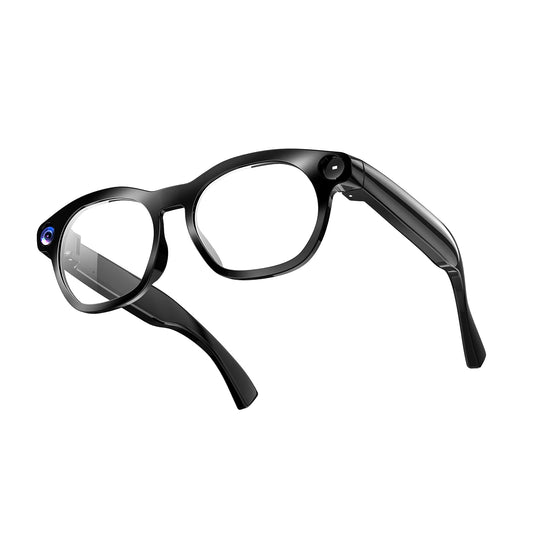
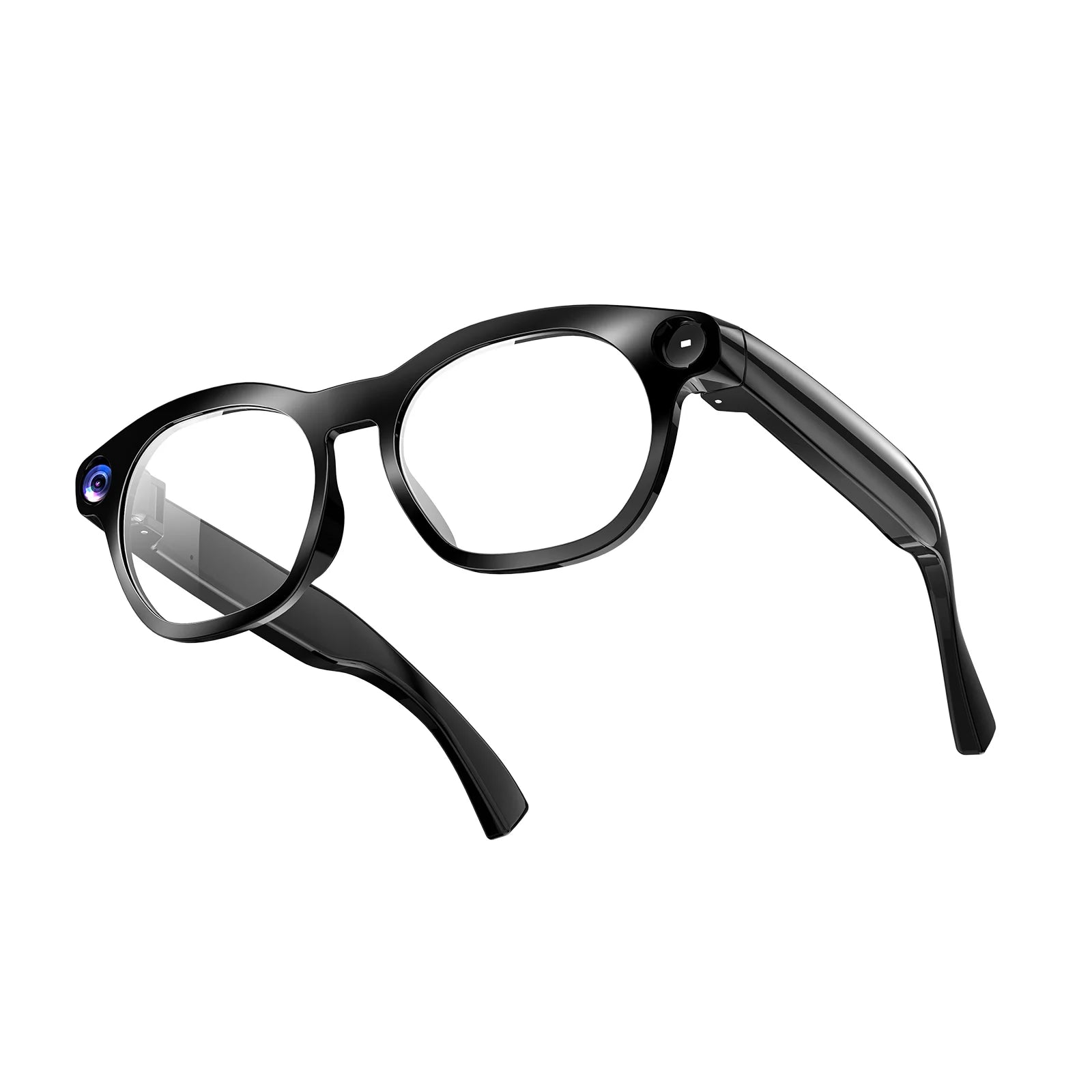
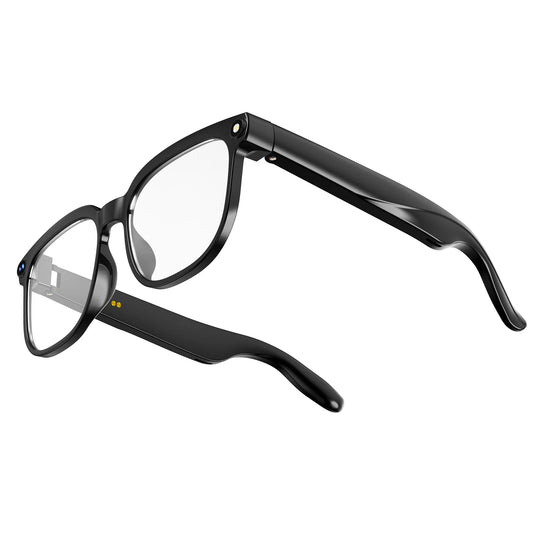
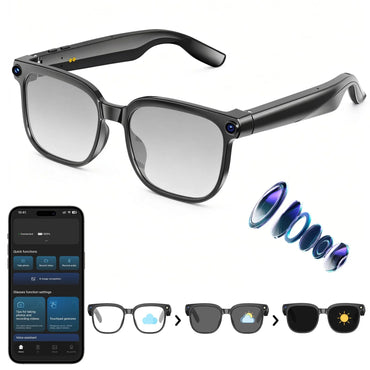
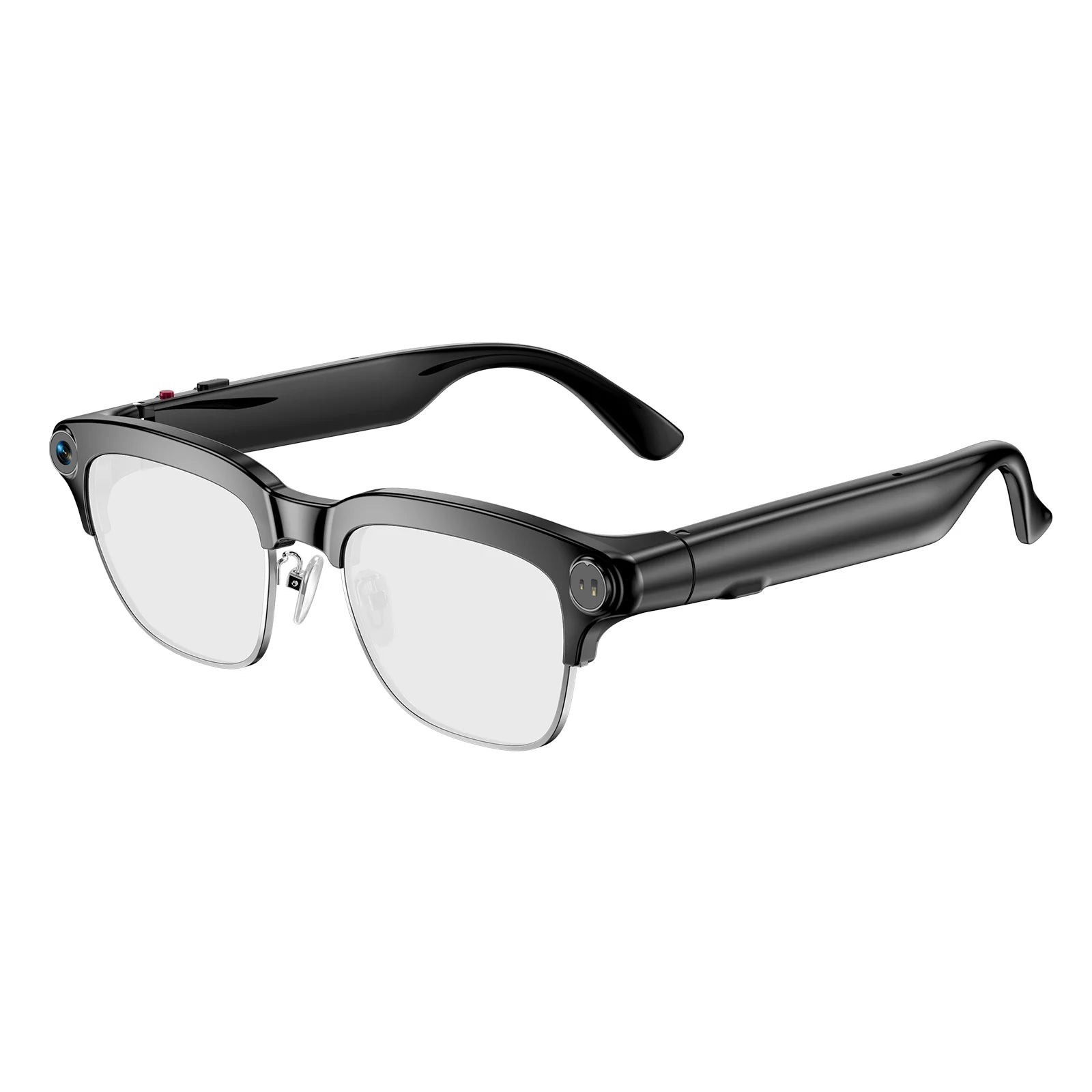
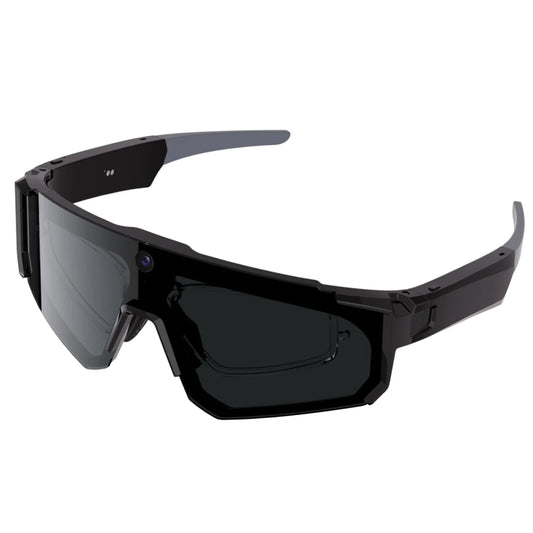
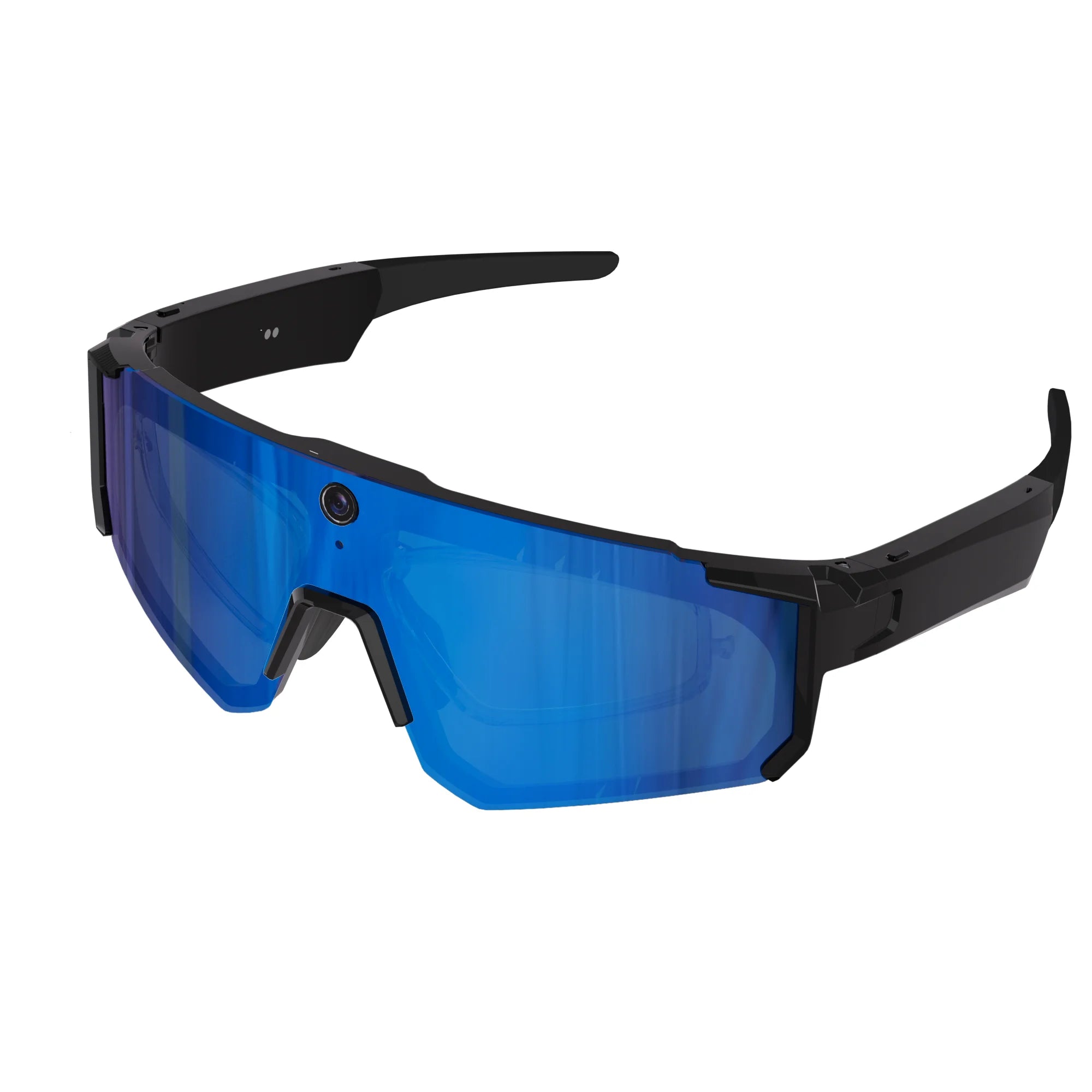
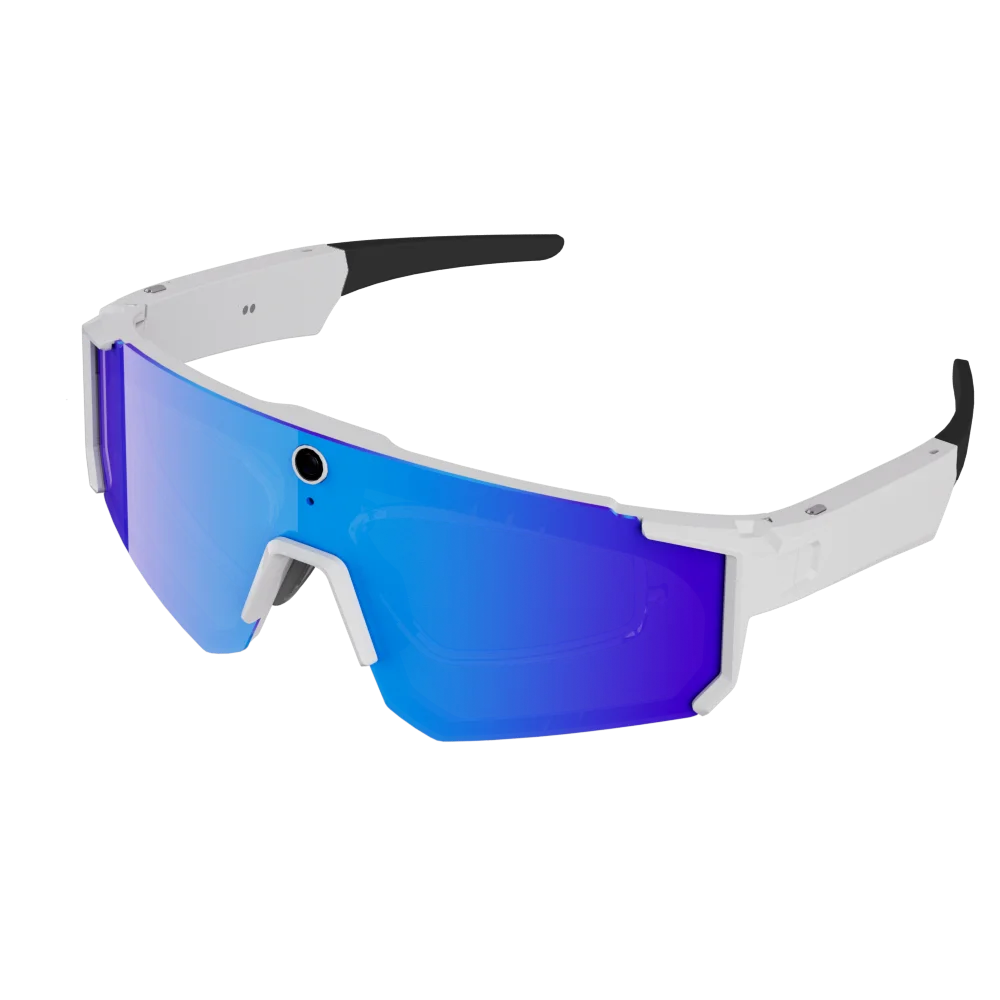
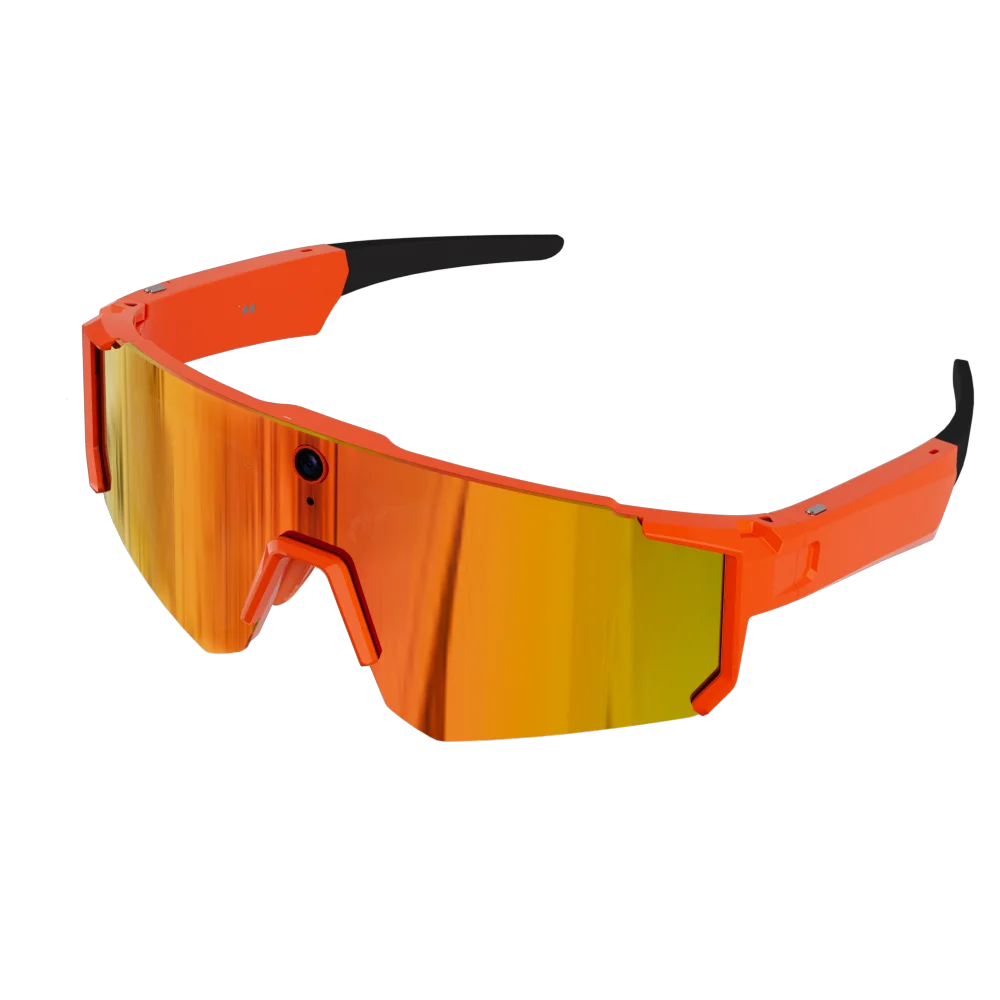
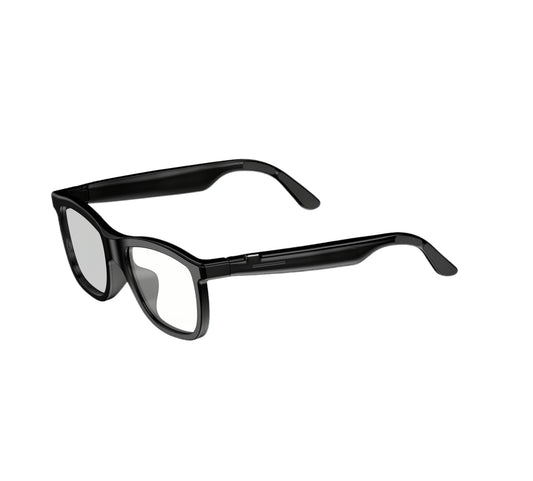
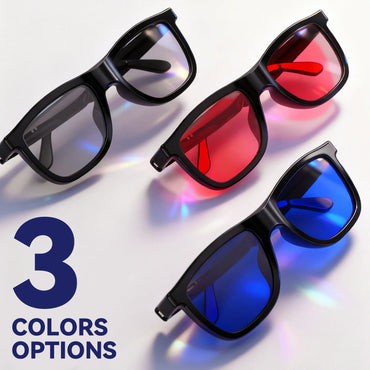
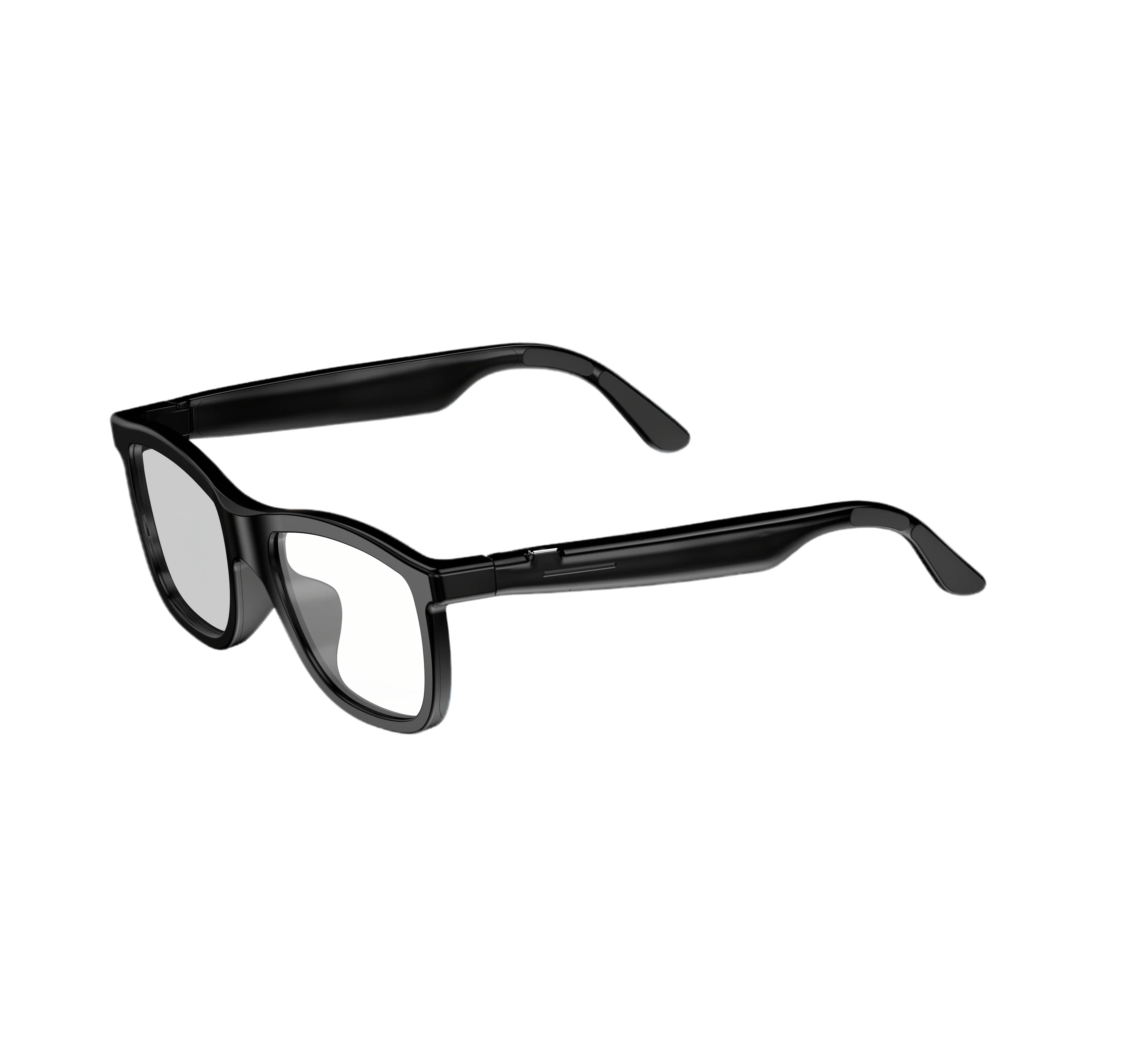
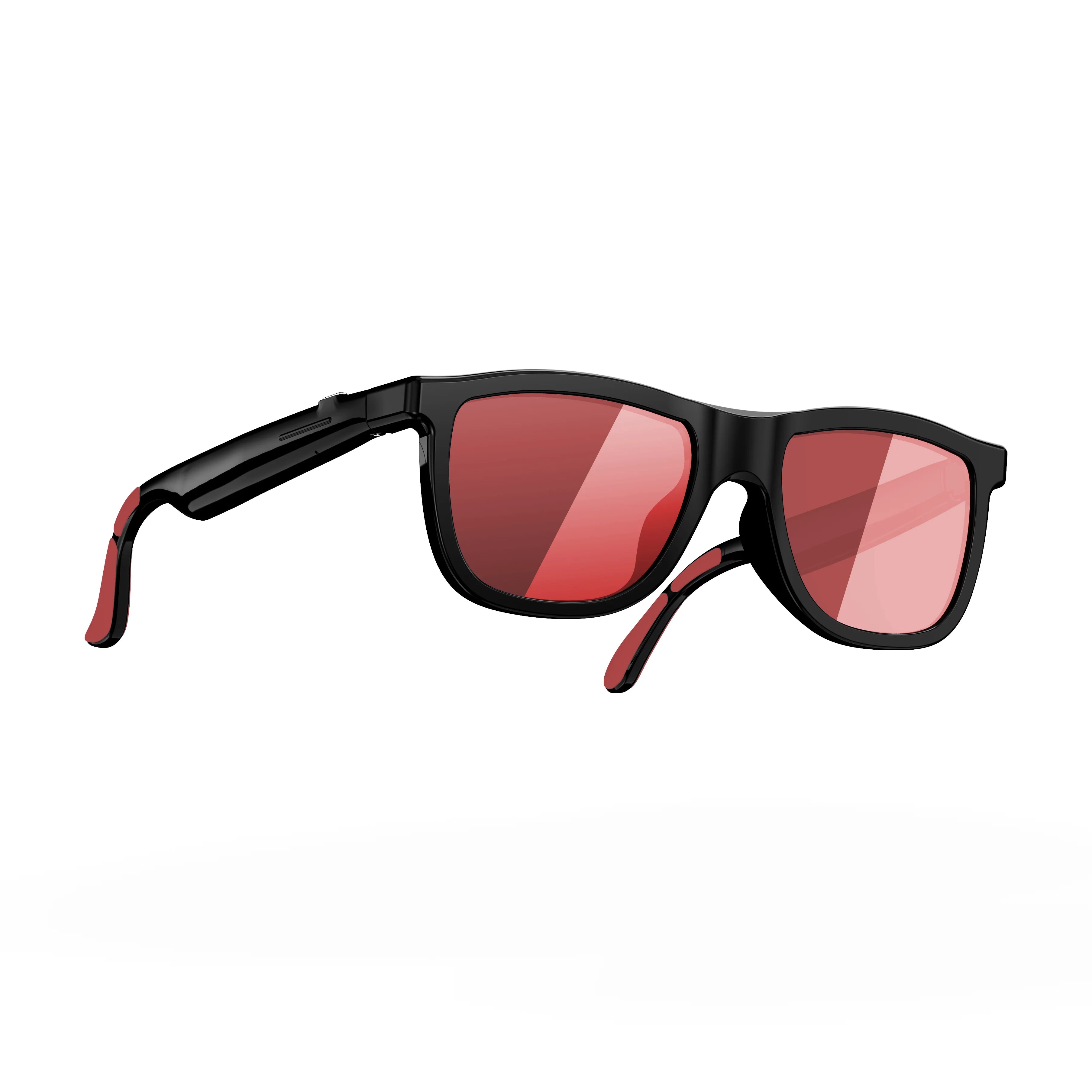
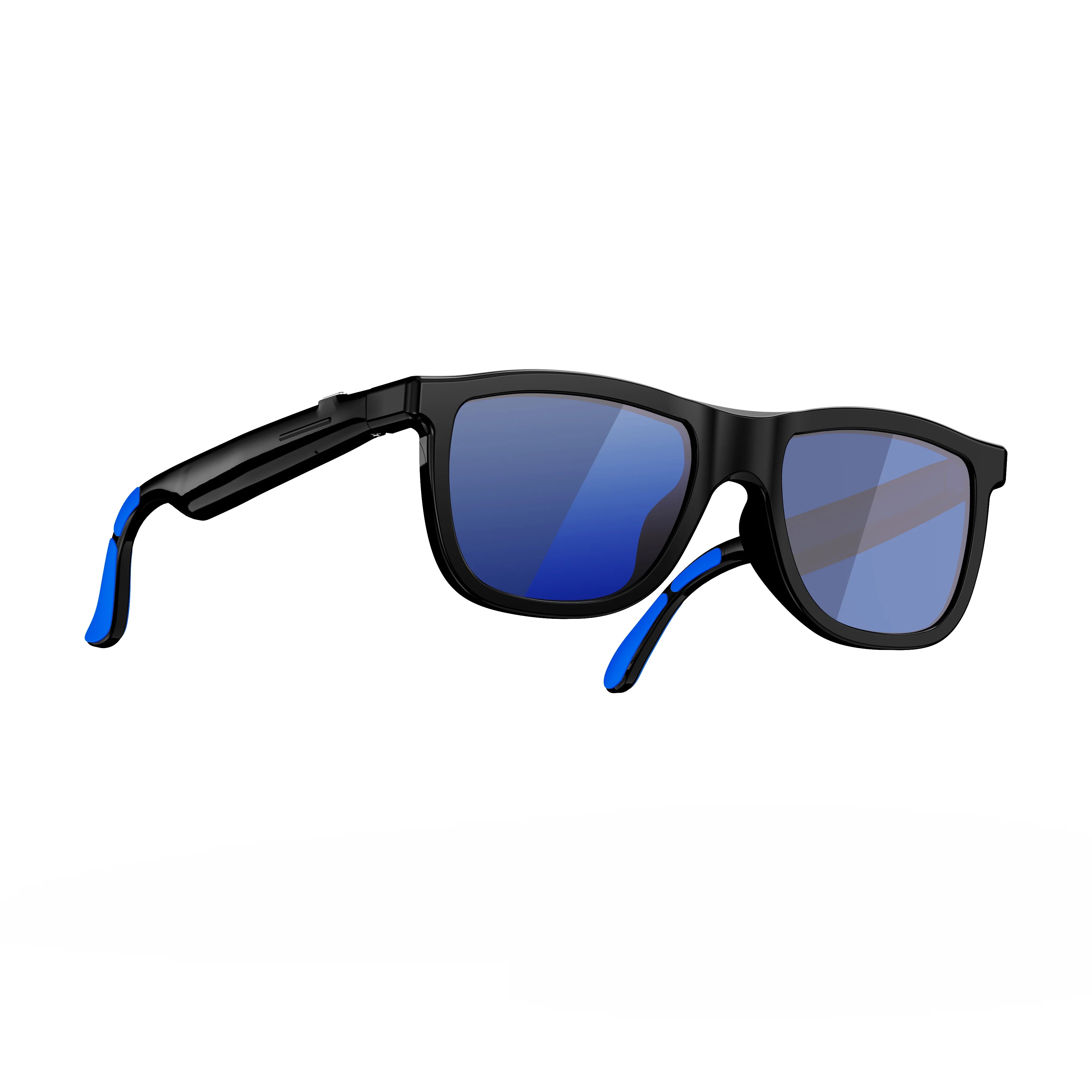
For reference, Osawalla publishes frame weights on three of its four current models: the Chic Core Smart Audio Glasses come in at 39 g, the Daily Pro Camera Glasses at 40.8 g, and the Sport Pro Camera Glasses at 49.5 g. The Daily Core Camera Glasses are listed as lightweight construction, but no frame weight is published on the product page at the time of writing — worth asking about directly if grams are your deciding factor.
There is no universal "comfortable" threshold, because a well-balanced 49 g frame can beat a badly balanced 39 g one. But the difference between 39 g and 49 g is ten grams sitting on one square centimetre of nose bridge, and over a full day that is very easy to feel.

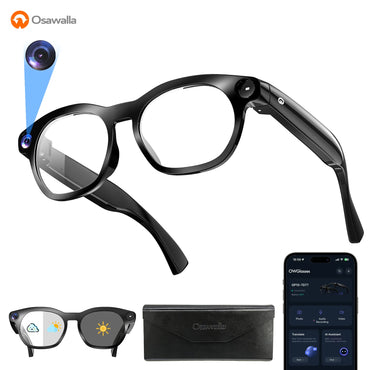
Osawalla smart glasses lightweight comfort and size specification collage showing frame dimensions and contact points
2. Where the weight sits matters more than the total
If a pair feels front-heavy, no amount of lightness will save it. Front-loaded frames slide down, and the instinctive fix — pushing them back up — makes the nose pads rub, which is how you end up with sore marks by mid-afternoon.
Look for designs that put the battery in the temple arms rather than the brow. That single decision moves load from your nose to the tops of your ears, where skin and cartilage handle pressure far better. It also lowers the centre of gravity, so the frame stops creeping forward when you walk, look down at a phone, or lean over a bike handlebar.
Sport models go further: the Sport Pro's 49.5 g PC frame is paired with an adjustable, non-slip fit, because a heavier frame used while running needs grip more than it needs to be light. That is a fair trade — stability is part of wearable comfort when you are moving.
3. Nose bridge and nose pads: the smallest part, the biggest complaint
Ask any optician what causes glasses complaints and the nose bridge comes up first. Standard fitting guidance is consistent on this point: the weight of the frame should be balanced evenly across the bridge or spread across the nose pads, and the frame should not leave marks or dig in — if it does, the fix is adjusting the pads or moving to a frame with a larger bridge width (All About Vision).
Two things to check:
· Fixed vs adjustable pads. A moulded bridge looks cleaner and cannot snag, but if its angle does not match your nose you cannot correct it. Adjustable silicone pads let you change both width and angle, which is the difference between "fine for an hour" and wearable all day.
· Bridge width. This is the middle number in the three-number size stamped inside most frames (lens width – bridge width – temple length). Too narrow and it pinches; too wide and the frame slides. If you have a low or flat bridge, look for a low-bridge fit rather than trying to make a standard bridge work.
Red marks that last more than a few minutes after you take the glasses off are the clearest signal that the bridge is wrong for you.
4. Temple design: length, bend and what touches your ears
The temple arms do the actual holding. Standard guidance puts temple length somewhere between 120 and 150 mm, with the bend sitting just past the top of your ear and roughly 30–45 mm of arm continuing past that bend to follow the contour of your head (All About Vision).
Get this wrong in either direction and you feel it. Temples that are too short pull the frame back into the sides of your head and concentrate pressure behind your ears. Temples that are too long cannot grip and the frame slides forward, dumping the load back onto your nose. The bend point matters as much as the length: a bend placed too early lifts the frame off your nose, and one placed too late presses into the skull behind your ear.
Contact material is the other half of temple design. Hard plastic against skin is fine for fifteen minutes and noticeable after three hours. Soft-touch or silicone temple sleeves — the Chic Core uses silicone temples — spread the contact and add a little grip, which is why audio-first frames built for all-day wear tend to use them.
5. Hinge tension and clamping force
Hinges are the least glamorous part of the frame and one of the most consequential. A hinge that is too stiff turns the temples into a clamp: stable, yes, but the kind of stable that produces a headache an hour in. A hinge that is too loose leaves the frame wandering, and on camera glasses a wandering frame means a wandering horizon line in your footage.
What you want is smooth, consistent resistance on both sides. Open and close each temple a few times and compare — if one side is noticeably tighter, the frame will sit slightly rotated on your face, which shows up as one nose pad taking more load than the other.
Spring hinges are worth looking for on heavier frames. They let the temples flex outward slightly when you put the glasses on and then return, which keeps grip without a permanent squeeze. On smart frames specifically, remember that wiring often runs through the temple, so a hinge that feels gritty or uneven is also a durability signal.
6. Frame material decides how pressure feels
Material is not just about weight; it changes how the frame behaves under load.
· TR90 bends under pressure and returns to shape. It is the material behind the 40.8 g Daily Pro frame, and it is forgiving on wider faces because the temples flex rather than press.
· PC (polycarbonate) is stiffer and very impact-resistant, which is why sport frames use it. The Sport Pro's 49.5 g PC frame is heavier, but it holds its geometry when you are moving, sweating or being rained on.
· Silicone at contact points — temple sleeves, soft pads — is what turns a rigid frame into one you can forget about, and it is the easiest thing to retrofit.
If you have sensitive skin, check that contact surfaces are hypoallergenic; if you run warm, remember the frame material is what conducts heat into your skin.
7. The weight you add later: prescription lenses, heat and accessories
Comfort is decided at the moment you buy, but it is often lost afterwards. Prescription lenses add grams to the front of the frame — precisely the worst place — so a frame that feels fine with plain lenses can tip into uncomfortable once glazed. If you need prescription lenses, prefer a lighter base frame.
Heat works the same way: long recording sessions, AI queries and file transfers draw power, and power becomes warmth near your temple. That is one reason continuous-recording limits exist at all. And check water ratings against real use — the Sport Pro is rated IP54 and the Daily Pro IP65, so both handle sweat and light rain, but neither is a swimming frame.
A 60-second fit test before you commit
You cannot try on a pair you buy online, but you can test smart glasses comfort on paper:
1. Frame weight — is a real frame weight published, in grams, excluding the case?
2. Distribution — does the battery sit in the temples or in the brow?
3. Nose pads — adjustable silicone, or fixed? What is the bridge width?
4. Temple length — is a length given, and does it fall in the 120–150 mm range for your face?
5. Hinges — spring or fixed? Any mention of flex or adjustable tension?
6. Material — TR90, PC, or metal? Is there silicone where the frame touches skin?
7. Adjustability — can pads and temples be adjusted, and can you add prescription lenses without wrecking the balance?
A frame that answers all seven clearly is a much safer buy than one that only advertises its camera.

Cyclist wearing Osawalla smart glasses outdoors, showing open-ear audio and all-day wear during activity
How four Osawalla frames compare on comfort
|
Model |
Published frame weight |
Frame / contact design |
Built for |
Price |
|
39 g |
Silicone temples; electrochromic lenses that tint in 0.5s |
Style-first, all-day audio and calls |
$57.99 |
|
|
38.9g |
Polarized or blue-light lens options; 8MP camera, 90-min continuous recording |
First camera glasses for everyday use |
$69.99 |
|
|
40.8 g |
TR90 frame, IP65; photochromic lenses |
Commuting and travel, indoor-to-outdoor |
$79.99 |
|
|
49.5 g |
PC frame, IP54; adjustable non-slip fit, polarized lenses |
Running, cycling, outdoor sport |
$119.99 |
On paper the lightest option is the Chic Core at 39 g, and if your priority is wearing glasses from morning to evening without thinking about them, that is the sensible place to start. For camera use, the Daily Pro's 40.8 g TR90 frame is the better-balanced everyday choice, while the Sport Pro trades ten grams for grip and impact resistance — the right trade if your frame has to stay put at speed.
Frequently asked questions
What is a comfortable weight for smart glasses?
There is no fixed threshold, because distribution and nose pad design matter as much as the total. As a working guideline, frames around 40 g with a balanced front-to-back distribution and adjustable pads are much easier to wear all day than heavier front-loaded frames. Published frame weights in the 39–50 g range are a good sign; a listing that never publishes a weight is a reason to ask.
Why do my smart glasses hurt behind my ears?
Usually one of three things: the temple bend sits too far back and presses into the skull, the temples are too short and pull the frame backwards, or the hinge tension is too high and the arms are clamping. Adjusting the bend point and angle normally fixes it, and silicone temple sleeves help spread the load. If the pain comes with headaches, have an optician check the fit rather than forcing it.
Can smart glasses be adjusted like regular glasses?
Mostly yes. Nose pads can be widened or narrowed and temple arms can be re-bent, and any optician can do both quickly. One caution: many smart frames run wiring and batteries through the temple arms, so avoid heat-shaping them yourself — ask the brand or an optician first, and check that adjustment is not excluded from the warranty.
Does frame weight matter more than features?
For daily use, yes. A frame you stop wearing has no features. If you plan to wear glasses for more than an hour or two at a time, put frame weight, nose bridge fit and temple design ahead of camera resolution or AI extras — those three decide smart glasses comfort more than any spec sheet does.
The bottom line
Smart glasses comfort is not luck and it is not something you have to break in. It is the sum of seven checkable decisions: total frame weight, where that weight sits, nose bridge and pad design, temple length and bend, hinge tension, frame material, and what you add to the frame later.
Check those seven before you look at the camera spec, and you will end up with a pair you actually wear — which is the only feature that counts.
If you are choosing your first pair, start with Osawalla Daily Core Camera Glasses at $69.99. If all-day weight is the priority, Chic Core at 39 g is the lightest frame we make; for commuting and travel, Daily Pro's 40.8 g TR90 frame is the best-balanced everyday option; and for running or cycling, Sport Pro trades grams for grip.
More buying help: read our complete guide to choosing smart glasses or what to look for in camera glasses.
Frame weights and prices are as published on osawalla.com at the time of writing and may change. General fitting guidance in this article follows standard optometry advice on frame fit; for persistent pain or headaches, see an optician.
Link List
· Chic Core Smart Audio Glasses — https://www.osawalla.com/products/osawalla-chic-core-smart-audio-glasses
· Daily Pro Camera Glasses — https://www.osawalla.com/products/osawalla-daily-pro-camera-glasses
· Sport Pro Camera Glasses — https://www.osawalla.com/products/osawalla-sport-pro-camera-glasses
· Daily Core Camera Glasses — https://www.osawalla.com/products/osawalla-daily-core-camera-glasses
· All About Vision — https://www.allaboutvision.com/eyewear/eyeglasses/fit/right-frames-size/
· All About Vision — https://www.allaboutvision.com/eyewear/eyeglasses/fit/eyeglasses-temple-size/
· complete guide to choosing smart glasses — https://www.osawalla.com/blogs/news/how-to-choose-the-right-smart-glasses-complete-guide
· what to look for in camera glasses — https://www.osawalla.com/blogs/news/smart-glasses-with-camera-what-to-look-for


