







How Does a Smart Ring Track Sleep? The Honest, Science-Backed Answer
You spend a third of your life doing it — and most of us have almost no idea what's actually happening. That's exactly why smart ring sleep tracking has become the most quietly powerful feature in the wearable world.
If you've ever woken up feeling exhausted after "eight full hours," you already know that sleep isn't just about duration. It's about quality: how much deep sleep you got, whether your heart rate actually settled, and how often you drifted in and out without realizing it.
That's the job of smart ring sleep tracking — and unlike a smartwatch, a smart ring does it without a glowing screen on your wrist, without straps across your chest, and without anything to remember to put on before bed. You just wear it.
This guide explains exactly how a smart ring tracks sleep, the science behind the numbers, how accurate it really is, and what smart ring sleep tracking looks like in practice on the Osawalla RP01 and RP02.
How Does a Smart Ring Actually Track Sleep?
A smart ring sleep tracker doesn't guess. It uses the same core biosensors a sleep lab uses — just shrunken down, optimized for the finger, and worn every night.
There are three sensors doing the heavy lifting.
Optical PPG (Heart Rate + Blood Oxygen)
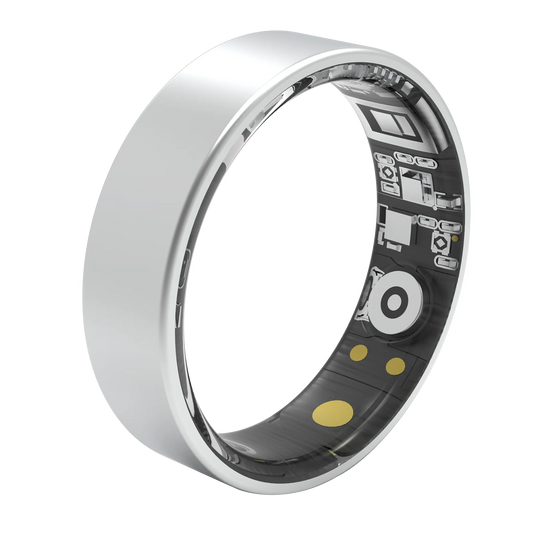
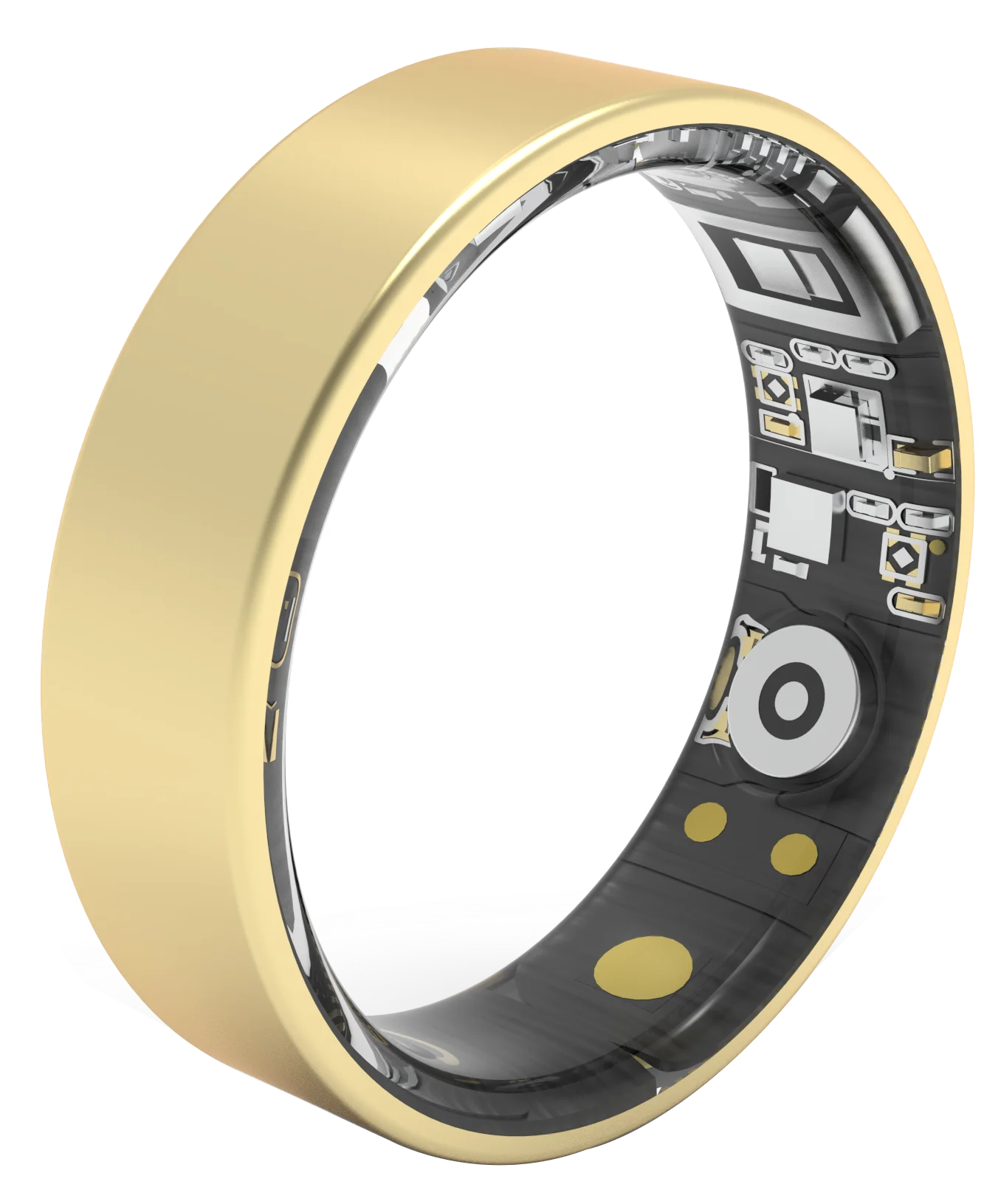
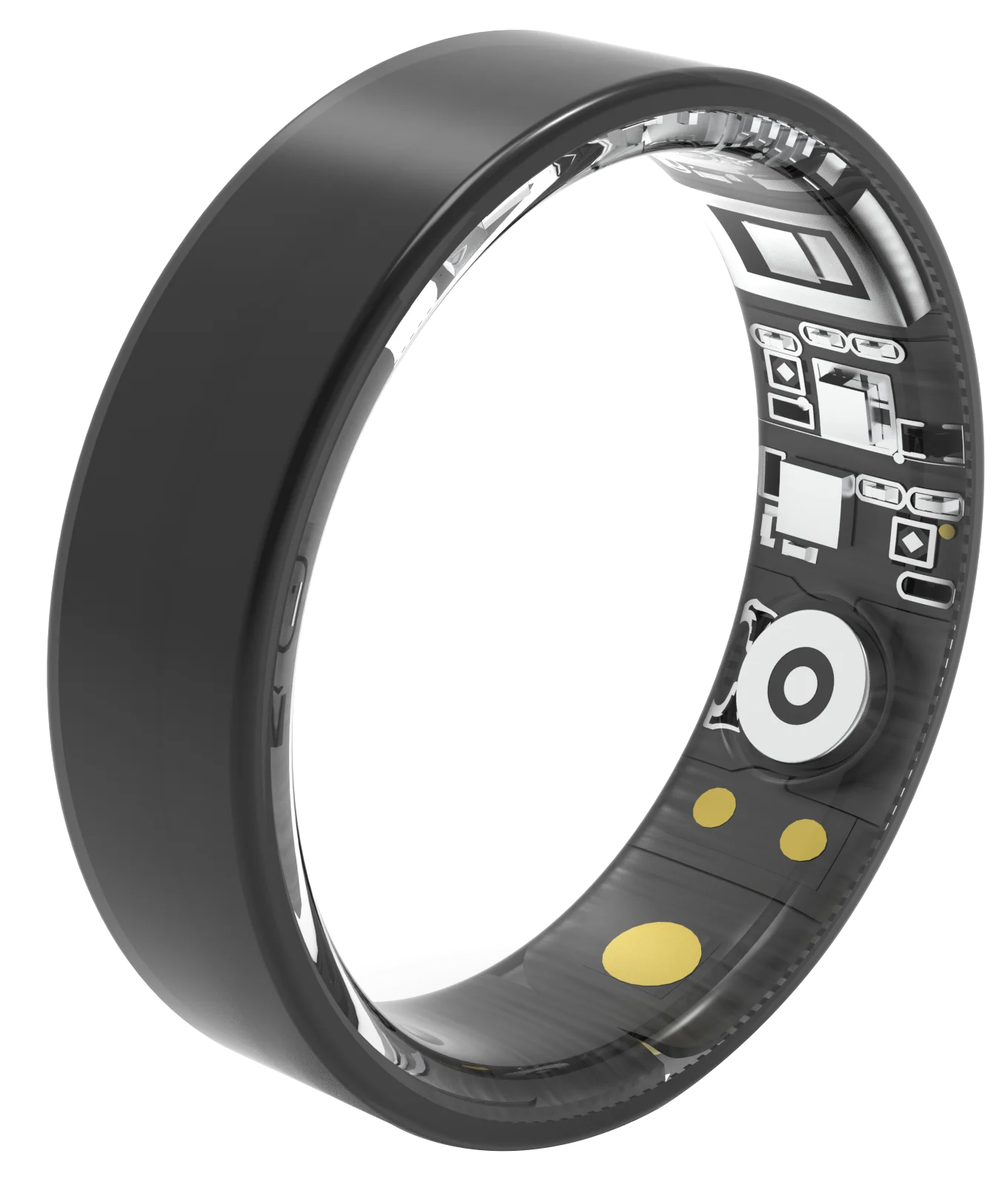
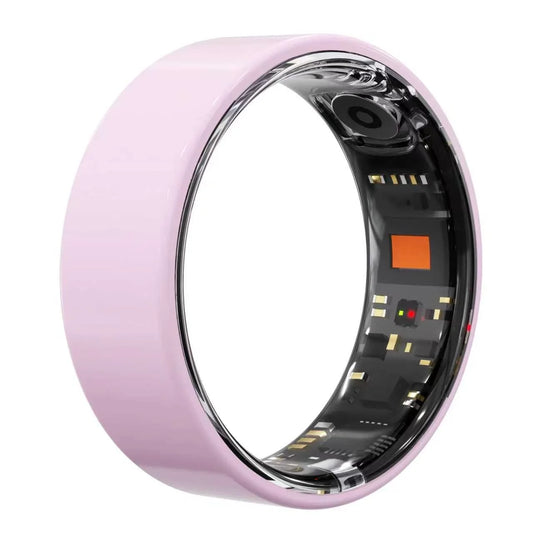
The bottom of the ring shines tiny green and red LEDs into the skin of your finger. Blood absorbs light differently depending on whether it's oxygenated and how much is flowing with each heartbeat. By measuring those changes, the ring reconstructs:
●Heart rate — beat by beat, through the night
●Blood oxygen (SpO₂) — to flag drops that may signal breathing disturbances
●Heart rate variability (HRV) — the small variations between beats that reveal stress, recovery, and nervous-system balance
The finger is one of the best places on the body to read these signals: thin skin, dense capillaries, very little motion artifact. That's why a smart ring often outperforms a wrist wearable on sleep metrics.
3-Axis Accelerometer (Motion + Position)
A tiny accelerometer inside the ring tracks micro-movements. When your hand has been still for 30+ minutes, the algorithm starts labeling that window as sleep. When the ring detects typical REM micro-twitches, your hand tends to move — even when you don't remember it. Combine stillness with your heart rate trends and the ring starts drawing the map: sleep onset → light sleep → deep → REM → wake.
Skin Temperature Sensor (Optional but Powerful)
Some rings, including the Osawalla RP01 and RP02, also read subtle skin temperature trends from the inside of the ring. A half-degree rise over a few nights can hint at illness, hormonal shifts, or recovery. Alone it doesn't mean much. Combined with HRV and sleep stages, it becomes a quietly brilliant signal.
External reference: The American Academy of Sleep Medicine notes that consumer wearables can be useful adjuncts for tracking sleep patterns, though they don't replace clinical polysomnography for diagnosis.
What a Smart Ring Actually Measures While You Sleep
Now that you know the sensors, here's what they produce in plain English.
Sleep Stages: Light, Deep, REM
Every night, you cycle through stages. A smart ring sleep tracker logs each one:
● Light sleep — the majority of your night. Body and brain are resting, but you're easy to wake.
● Deep sleep (N3) — physically restorative stage. Critical for muscle recovery, immune function, feeling truly rested.
● REM (Rapid Eye Movement) — dreaming stage. Critical for memory consolidation, mood regulation, learning.
A good ring tells you how long you spent in each stage, how many cycles you completed, and whether you woke during the night.
Heart Rate Trends Through the Night
A "calm" night looks like a steadily falling heart rate, hitting its lowest point an hour or two before you wake. A disrupted night looks like spikes and rebounds. Both are surprisingly easy to spot once you've worn a ring for a couple of weeks.
Heart Rate Variability (HRV)
HRV is the gap between heartbeats. Higher HRV generally = more recovered and resilient. A stressed night, alcohol, or an illness can drop HRV overnight — a clear signal that the body is asking for rest.
A Daily Sleep Score
Most apps — including the QRing app that pairs with Osawalla rings — translate all of this into a single sleep score (0–100). It's a quick way to compare nights without pouring over raw data, plus a few sentences about what went well and what to focus on.
How Accurate Is Smart Ring Sleep Tracking?
The honest answer: more accurate than you'd expect, less absolute than a sleep lab.
For everyday wellness tracking, studies show consumer smart rings match clinical polysomnography within roughly 80–90% for total sleep time and deep sleep. They're also better than most smartwatches at detecting awake time — because the finger is a calmer place to wear a sensor than the wrist.
What they can't do:
Diagnose sleep disorders (apnea, narcolepsy)
Track brain waves the way a clinical EEG can
Read blood oxygen to medical precision
What they can do:
Spot trends night after night
Catch when something's off (a sudden HRV drop, repeated SpO₂ dips)
Help you connect lifestyle choices (late caffeine, alcohol, late meals) to how you actually sleep
For most people, that's the entire point of smart ring sleep tracking — not to diagnose, but to understand.
Smart Ring vs. Smartwatch: Which One Sleep Tracks Better?
If you've been searching for the best smart ring for sleep, you've probably noticed the question comes up: why not just use my smartwatch?
Here's the case for the ring:
| Factor | Smartwatch | Smart Ring |
|---|---|---|
| Comfort at night | Bulky, can press into wrist | Lighter than a paperclip — forget it's there |
| Battery | 1–2 days, must charge nightly | 5–7 days per charge |
| Screen light | Notifications, blue-light risk | No screen, no distractions |
| Sensor placement | Wrist (thicker tissue) | Finger (thin skin, stable) |
| Sleep adherence | People take them off | People keep them on |
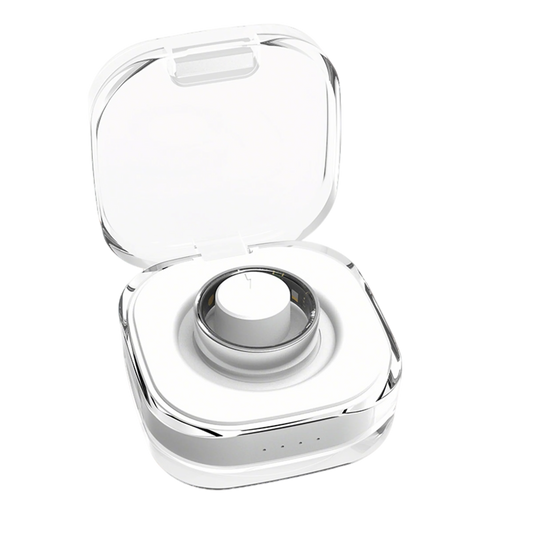
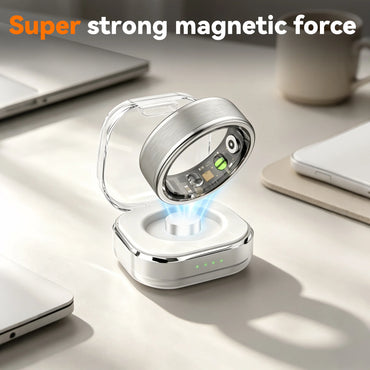
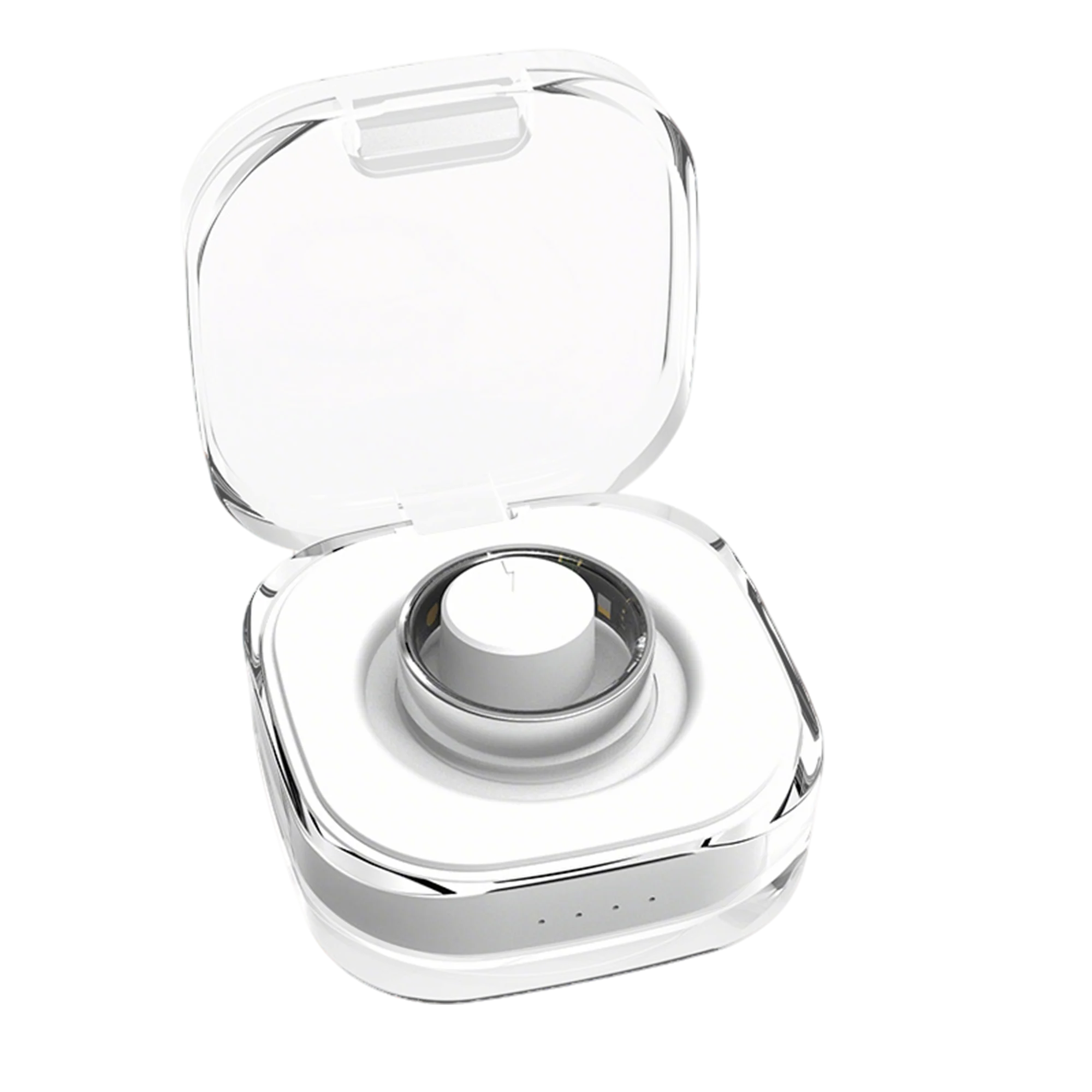
Two wins stand out. Comfort matters — if a watch is annoying, you'll take it off, and the data is gone. Battery matters — the Osawalla RP02 goes 5–7 days per charge, with a charging case that extends it to about 30 days. You'll never miss a night because the battery died.
Sleep Tracking on the Osawalla RP01 & RP02
Both Osawalla rings pair with the QRing app (free for life, no subscription) and log every sleep stage, HRV, heart-rate trend, and skin temperature shift automatically. They differ in priorities.
Osawalla RP01 — Best for Sleep Data That's Social
The RP01 was built around the Smarter Sleep Tracking feature, which captures full sleep cycles and naps, then renders them in a day/night view designed to be easy on your eyes first thing in the morning.
What you get every morning:
●A clear sleep score (0–100) with a one-line summary
●A breakdown of light / deep / REM for the night
●Heart rate and SpO₂ trends during sleep
●A day/night graph in the app
●Naps detected automatically
Where the RP01 goes further is sharing that data. Through QRing's social features, you can compare sleep scores with friends or family, share progress with a partner, or keep a loved one in the loop on a wellness journey. For people who care about sleep and the people in their lives, that's a meaningful differentiator.

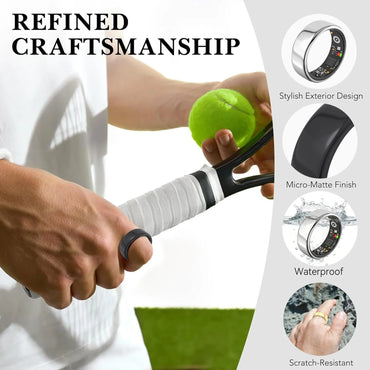
Other key RP01 specs: 3.6 g stainless steel, 5ATM waterproof, 24/7 health tracking (heart rate, SpO₂, HRV), 5–7 day battery, magnetic charger, and 24/7 wear-comfort that makes it genuinely easy to sleep in.
Explore the Osawalla RP01
Osawalla RP02 — Best for Effortless, No-Fuss Sleep Tracking
The RP02 isn't marketed primarily on sleep, but it ships with the same sensors and the Da Rings app, so it does the full job: sleep stages, HRV, SpO₂, naps, daily score. Where it shines:
●3.0 g ultra-light steel — about as light as smart rings get
●7-day battery, 45-minute charge — and a charging case that extends runtime to ~30 days
●No subscription, ever — full app access for the life of the ring
●Gift-ready box with magnetic charging case
If sleep tracking matters but you'd rather not think about charging, syncing, or paying monthly fees, the RP02 is the low-friction pick.
Explore the Osawalla RP02
Quick takeaway: the RP01 leads on rich, shareable sleep data; the RP02 leads on set-it-and-forget-it tracking. The sleep-tracking engine under the hood — the sensors and the algorithm — is the same on both.
5 Tips to Get the Most Accurate Sleep Data From Your Smart Ring
Even the best smart ring sleep tracker needs a few good habits to shine.
1.Wear it consistently. Sleep data gets clearer over weeks. Two weeks of nightly data beats any single "perfect" night.
2.Make it the first thing you put on, the last thing you take off. Don't remove it for showers — both Osawalla rings are 5ATM waterproof.
3.Keep it charged, but don't obsess. A 5–7 day battery means you shouldn't run out. But if you do forget, just charge during a morning routine; 45 minutes brings the RP02 back to full.
4.Don't trust any single night. Look at 7-day and 30-day trends instead. One bad night is just a bad night.
5.Pair it with a wind-down habit. The ring measures; you still have to actually rest. Dim screens, cooler rooms, and consistent bedtimes will show up in your data within a week.
For a deeper dive into what a smart ring is and how these sensors fit into a 24/7 health picture, see our Beginner's Guide to Smart Rings
Frequently Asked Questions
How accurate is smart ring sleep tracking?
Modern smart rings are within about 80–90% agreement with clinical polysomnography for total sleep time and deep sleep, and they're noticeably better than wrist wearables at detecting awake time. They're reliable for tracking trends — not for medical diagnosis.
Can a smart ring detect sleep apnea?
Not on its own. Some rings flag repeated drops in blood oxygen that suggest a breathing issue. If you snore loudly, gasp awake, or feel exhausted despite long sleep, bring the data to a doctor and ask about a clinical sleep study.
Do smart rings track naps and REM sleep?
Yes. As long as the ring is being worn, modern trackers — including the Osawalla RP01 and RP02 — automatically log short daytime naps and tag REM cycles alongside light and deep sleep in the app.
Which Osawalla ring is better for sleep tracking?
The Osawalla RP01 leads with the headline Smarter Sleep Tracking feature and built-in social sharing of sleep data. The Osawalla RP02 uses the same sensors and app, but pairs sleep tracking with a no-subscription, 30-day battery case lifestyle. Either is a strong pick — RP01 if sharing matters, RP02 if low-friction matters.
Will a smart ring help me sleep better?
A ring can't make you sleep. What it does is make your sleep visible, so you can see how caffeine, screen time, stress, and routines actually affect you — and adjust. Most users report better habits (and better nights) within the first 30 days.
Ready to See What Your Nights Actually Look Like?
You don't need a clinic or a chest strap to understand your sleep anymore. A featherlight stainless-steel ring, three sensors, and a free app are enough to turn every night into useful data.

Pick the ring that fits how you sleep:
Want rich sleep insights you can share with friends or family? Start with the Osawalla RP01.
Want zero subscription, zero hassle, and the longest battery life? Start with the Osawalla RP02.
Either way, your nights stop being a mystery tomorrow morning.


