








Smart Ring Data Explained: 7 Ways to Turn Your Numbers Into Smarter Daily Decisions
By the Osawalla Product Team · Reviewed by Clark Huang · Published: Oct 10, 2026 · Last updated: Oct 10, 2026
Health disclaimer: This article is for general wellness information only. Smart ring measurements are estimates, not clinical measurements. Osawalla rings are not medical devices and are not intended to diagnose, treat, cure, or prevent any condition. If you have persistent symptoms or health concerns, speak with a qualified healthcare professional.
Key takeaways
· One reading is noise. Three days is a signal. A single low score means very little; three metrics moving in the same direction across three or more days usually means something.
· Compare yourself to yourself. A 2025 systematic review of HRV reference values found no generally agreed normal range, so your own 30-day average is the only useful benchmark. PMC
· Anchor on real thresholds. The CDC recommends 7 or more hours of sleep for adults aged 18–60. The AHA puts a typical adult resting heart rate at 60–100 bpm. WHO recommends 150–300 minutes of moderate activity per week.
· Change one habit at a time. Adjust bedtime or activity — not both — then review after seven nights.
· Trends, not scores. Consumer wearables produce useful trend data, not clinical measurements. Use them to decide how to approach a day, not to diagnose anything.
What this guide covers
· What Is Smart Ring Data?
· 1. Use Sleep Data to Fix Your Evening, Not Your Morning
· 2. Read Resting Heart Rate as a Trend, Not a Verdict
· 3. Treat HRV as a Personal Baseline, Not a Scoreboard
· 4. Turn Activity Data Into One Small, Repeatable Habit
· 5. Combine Metrics: A Decision Table for Real Mornings
· 6. Build Your Baseline in 14 Days
· 7. Five Mistakes That Make Wearable Analytics Useless
· What to Look for in a Smart Ring + Osawalla models + FAQ + Sources
 What Is Smart Ring Data?
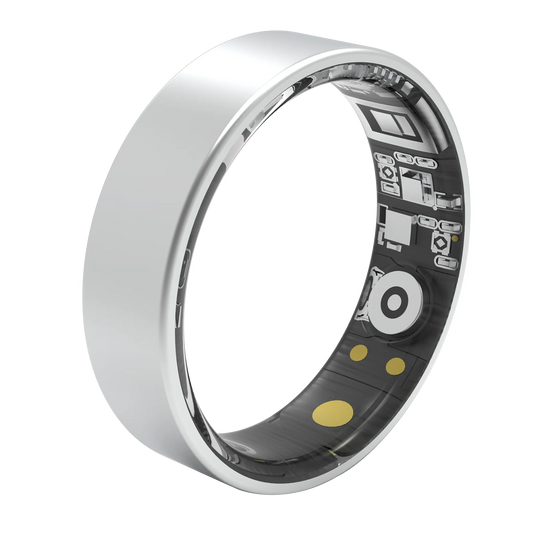
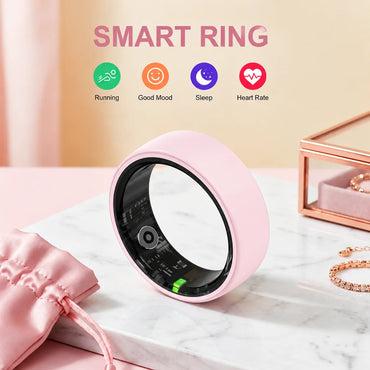
Smart ring data is the set of measurements and estimates a ring collects through its optical and motion sensors, then presents in a companion app. If you are new to the category, start with what a smart ring is — this guide assumes you already own one or are deciding between models.
Most rings report some version of the following:
|
Metric |
What it estimates |
What it is not |
How to use it |
|
Sleep duration and timing |
How long and when you slept, from movement plus heart-rate patterns |
A clinical sleep study. Rings cannot diagnose sleep disorders |
Compare your 7-day average to the CDC 7+ hour guideline |
|
Sleep stages |
Light, deep and REM proportions inferred from sensor data |
Polysomnography. Nightly stage splits carry wide error bars |
Watch the shape over weeks; ignore a single night |
|
Resting heart rate |
Your lowest sustained heart rate, usually overnight |
A measure of fitness on its own |
Track your 30-day average; note sustained shifts |
|
HRV |
Variation in the milliseconds between heartbeats |
A score with a target. No universal normal range exists |
Compare 7-day average against your own 30-day average |
|
Activity (steps, distance, calories) |
Movement volume and estimated energy expenditure |
An exact calorie count |
Use for week-over-week direction, not daily targets |
|
Blood oxygen (SpO₂) |
Overnight oxygen saturation estimates |
A medical pulse oximeter reading |
Context only — see the FDA note in Sources |
|
Skin temperature |
Relative deviation from your own nightly baseline |
A body-temperature reading in °C/°F |
Watch deviation, not absolute value |
The pattern across every row is the same: a ring is good at showing change over time and weak at producing absolute, clinical-grade values. Designing your habits around that distinction is most of the work.
1. Use Sleep Data to Fix Your Evening, Not Your Morning
Sleep is the highest-leverage metric on a ring because it is the one you can most reliably influence, and because it moves heart rate, HRV and activity the following day.
Start with the reference number. The CDC recommends that adults aged 18–60 get 7 or more hours of sleep per night, and advises avoiding caffeine in the afternoon or evening and turning off electronic devices at least 30 minutes before bed. The American Academy of Sleep Medicine gives the same 7+ hour figure for adults.
Then apply the rule that matters: judge a 7-day average, never a single night. One short night is an event. Seven short nights is a routine, and routines are what you can change.
A common pattern looks like this. Your 7-day average sits at 6 hours 10 minutes, you are tired most afternoons, and your bedtime drifts between 11:40 p.m. and 1:15 a.m. The tempting move is to add a supplement, a new mattress, or a wind-down app. The effective move is smaller:
1. Pick one fixed bedtime you can hit five nights out of seven, and move it 15 minutes earlier than your current average.
2. Stop caffeine eight hours before that bedtime.
3. Put the phone down 30 minutes before bed, per CDC guidance.
4. Re-check your 7-day average after one week. Change nothing else in that week.
If your ring reports sleep stages, treat them as context, not a verdict. Consumer sleep staging is an inference from movement and heart-rate patterns — we break down how a smart ring tracks sleep in detail. Sleep problems that persist for weeks, or that come with snoring, breathing pauses, or unrefreshing sleep despite adequate hours, warrant a clinician rather than an app.
 2. Read Resting Heart Rate as a Trend, Not a Verdict
Resting heart rate is the most recognizable number on any wearable, and the most misused. It moves with exercise, stress, temperature, hydration, alcohol, illness, medications and sleep — which is exactly why one reading tells you almost nothing.
Two anchors help. The American Heart Association puts a typical adult resting heart rate between 60 and 100 bpm, with trained athletes sometimes well below that. And resting heart rate is most stable shortly after waking, before caffeine and before your commute — read it at roughly the same time each morning.
The decision rule we use:
· Baseline: your 30-day average.
· Watch: your 7-day average.
· Act when: the 7-day average runs about 5 bpm or more above your 30-day baseline for three or more consecutive days, and sleep or HRV moved in the same direction.
· Do not act when: a single morning is high after a late night, a hard session, alcohol, travel, or a hot room.
Accuracy matters here too. Optical heart rate is reasonably reliable at rest and degrades with movement — a 2020 systematic review in JMIR mHealth and uHealth found that across commercially available wearables, no device kept energy expenditure within ±3% of criterion measures for more than a minority of conditions, though heart rate generally held up better. For structured intervals, a chest strap still wins. More detail in how accurate smart ring heart rate monitoring is.
If an unusual pattern persists for more than a week, or comes with chest pain, dizziness, unusual shortness of breath or palpitations, treat that as a reason to speak with a clinician — not as a data problem.
3. Treat HRV as a Personal Baseline, Not a Scoreboard
Heart rate variability measures the variation in time between successive heartbeats, usually reported in milliseconds. It is widely discussed as one input to recovery and autonomic activity, and it is the metric people misunderstand most.
Here is the finding that should shape how you use it: a 2025 systematic review of HRV reference values found no generally agreed normal range for HRV, while also finding that repeated measurements within the same individual are reproducible and comparable over time. Source
Read that carefully, because it cuts both ways:
· Comparing your HRV to a friend's number is meaningless.
· Comparing your HRV to your own last 30 days is meaningful.
· An HRV of 40 ms is neither good nor bad in isolation — it is only high or low relative to your range.
In practice: after several demanding workdays plus a harder-than-usual session, sleep shortens, resting heart rate rises and HRV dips below your 30-day average. Three signals, one direction. That is a reasonable day to choose a lighter session, protect the next night's sleep, and skip the extra interval work. If the readings drift back toward your normal range within a few days, that closes the loop. If they stay unusual, keep observing and consider other explanations before concluding anything.
For a fuller recovery framework built on the same three metrics, see how smart rings improve training recovery.
 4. Turn Activity Data Into One Small, Repeatable Habit
Activity data is most useful when it changes what you do on an ordinary Tuesday, not when it sets a number you will miss by Thursday.
The reference point worth knowing: the WHO 2020 guidelines recommend 150–300 minutes of moderate-intensity aerobic activity per week, or 75–150 minutes of vigorous-intensity activity, plus muscle-strengthening work on two or more days. That reframes activity as a weekly budget rather than a daily test.
The most common finding for desk-based work is not "not enough exercise" — it is very little movement between meetings. If your step count collapses on days full of calls, adding another hard workout is usually the wrong fix. Pick one of these instead and keep it for a week:
· A 10-minute walk at lunch. Two of those a day across five workdays is 100 minutes — roughly two-thirds of the WHO lower bound.
· Stand and move between meetings when practical.
· Take calls walking.
· Stairs where appropriate.
· A short evening walk after work.
Review the week, not the day. And remember that calories, distance and stage estimates are model outputs. How wearables estimate daily burn explains the method and why two devices can disagree on the same day.
 5. Combine Metrics: A Decision Table for Real Mornings
A sleep score, a heart rate reading or a step total is trivia on its own. The value appears when several measurements move together, because that is what distinguishes a real pattern from ordinary noise. For a metric-by-metric view, see smart ring health tracking: body metrics beyond sleep.
|
What you see |
Likely context |
What to do today |
What NOT to do |
|
Sleep down 3+ nights; afternoon fatigue |
Bedtime drift, late caffeine, late screens |
Fix bedtime first; cut caffeine 8 hours before bed; review after 7 nights |
Add supplements or overhaul the whole routine at once |
|
Resting HR up 5+ bpm vs baseline; HRV down; sleep shorter |
Accumulated load — training block, long hours, poor sleep |
Take a lighter session or a rest day; protect the next night |
Assume illness, or push through because one score looks fine |
|
RHR elevated; sleep normal; you feel fine |
Heat, hydration, alcohol, travel, a hard session yesterday |
Hydrate, keep the routine, re-check in 48 hours |
Treat it as a fitness regression |
|
Sleep consistent; activity very low on workdays |
Sedentary work pattern, not a sleep problem |
Add two short walks on workdays; review weekly totals |
Change your sleep routine, which is already working |
|
HRV spikes well above your range |
Often just a good week, or a quieter day |
Note it and carry on |
Assume you are suddenly fitter and jump training volume |
These are patterns, not diagnoses. Wearable measurements cannot tell you with certainty why something changed — they tell you that something changed, which is the useful half. A simple written log of sleep, activity and any major routine change makes the connection far easier to see after a month.
6. Build Your Baseline in 14 Days
The most common early mistake is reading meaning into the first few days. A handful of readings tells you about the device, not about you. Give it two weeks, then start adjusting.
Days 1–3 — learn the app. Find where sleep, resting heart rate, HRV and activity live. Do not try to optimize anything yet.
Days 4–7 — establish consistency. Wear the ring on the same finger every night, read your metrics at roughly the same time each morning, and note major routine changes. Switching fingers between index, ring and thumb changes sensor contact and introduces step changes that look like physiology but are not — see which finger to wear a smart ring on.
Days 8–14 — look for repeated patterns. Are you sleeping later on work nights? Moving less on meeting-heavy days? Do your overnight numbers shift after unusually hard sessions? Discard the first few days when you compute your average.
After day 14 — test one adjustment. Pick a single habit: a consistent bedtime, or a daily walk. Hold it for a week, then review. Fourteen days is enough to see a shape; thirty days is enough to trust it.
Two practical notes that decide whether any of this works. Fit is the highest-leverage variable — a loose ring rotates and degrades optical readings, and sizing is the most common reason a ring gets returned. Measure in the evening, do not assume your jewelry size matches, and use a smart ring sizer kit if you are between sizes. Full method in the smart ring size guide.
7. Five Mistakes That Make Wearable Analytics Useless
Mistake 1: chasing perfect scores. A lower sleep score or an unexpected HRV reading is not automatically a problem. Use the number as context and check it against how you actually feel.
Mistake 2: comparing your numbers with everyone else's. Age, fitness, physiology, medication and measurement conditions all differ. Your own trend is the useful comparison.
Mistake 3: changing too many habits at once. If you change bedtime, diet, training and caffeine in the same week, you will not know which change did what. One variable at a time.
Mistake 4: assuming every reading is exact. Motion, fit, skin characteristics, ambient temperature and sensor limits all affect readings. The 2020 JMIR systematic review found meaningful error in consumer wearable estimates, particularly for energy expenditure. Treat trends as supporting information, not as fact.
Mistake 5: treating a wellness device as a clinician. Rings are not medical devices and do not replace medical testing, diagnosis or treatment. The FDA notes that over-the-counter devices sold for general wellness or fitness use are not intended for medical purposes. Do not ignore symptoms because an app shows a reassuring number.
What to Look for in a Smart Ring for Everyday Data Tracking
The best ring is not the one with the most metrics. It is the one you will still be wearing in month three.
|
Criterion |
What to check |
Why it matters |
Where to verify |
|
Metrics you will actually use |
Sleep, resting HR, HRV, activity as standard |
Unused metrics add cost, not insight |
|
|
Comfort and fit |
Weight, thickness, size range, sizer availability |
A ring you remove at 11 p.m. collects no overnight data |
|
|
Battery life |
Rated days per charge vs your charging habits |
Frequent charging breaks the data chain |
Product page |
|
Ongoing cost |
Whether the core app needs a subscription |
A low sticker price can still cost more over two years |
|
|
Data portability |
Apple Health, Google Fit, Strava support |
Your history should outlive the device |
Still deciding between form factors? Smart ring vs fitness tracker and smart ring vs smartwatch cover the trade-offs.
Osawalla Signature Pro Smart Ring — $49.99
The accessible all-rounder, and the model most people should start with.
· Heart rate, HRV, blood oxygen, stress, sleep duration and stages
· Steps, distance, calories, activity and cycle insights
· Up to 5–7 days of battery life per charge; around one hour to full
· 5ATM / IP68 water resistance; US sizes 6–13; iPhone and Android
· No app subscription fee — one-time purchase
Best for: someone who wants the widest tracking set per dollar and does not need the ring to read as jewellery. → Shop the Osawalla Signature Pro Smart Ring
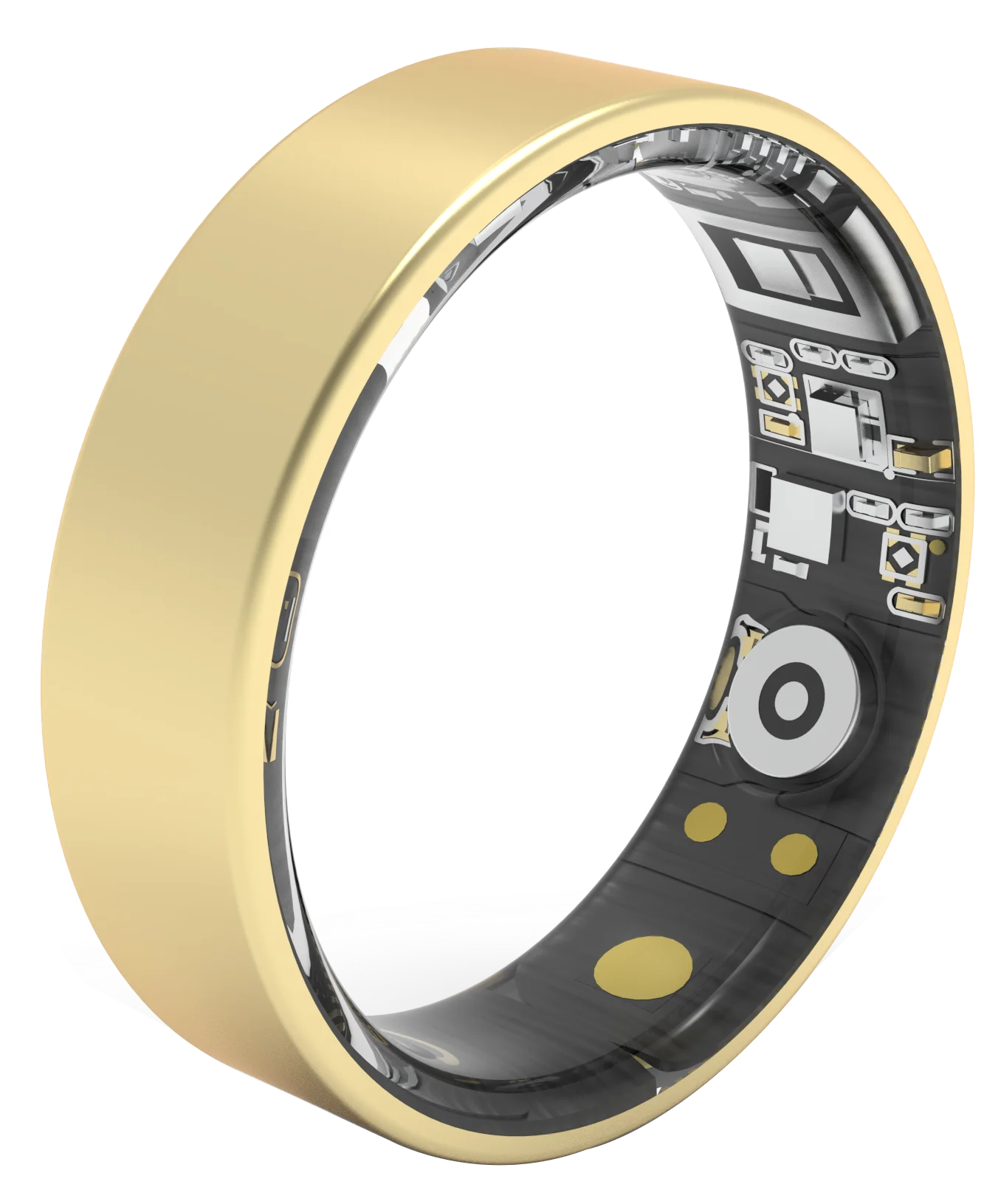
Osawalla Ceramic Pro Smart Ring — $69.99
The same tracking in a lighter, more refined ceramic build.
· 4 g ultra-light body, 2.6 mm slim profile
· Sleep and HRV tracking, cycle and ovulation insights
· Heart rate, blood oxygen, stress, activity
· Up to 5–7 days of battery life; 5ATM / IP68; iPhone and Android
· No app subscription fee
Best for: anyone who wants the tracker to look like jewellery rather than equipment — and for gifting. Comfort is not cosmetic here; a lighter ring is a ring you keep on overnight, and overnight is where the data comes from. → Shop the Osawalla Ceramic Pro Smart Ring
Prices and specifications verified 10 October 2026 from osawalla.com and subject to change — check the product page before ordering. Sizing is the most common reason a ring is returned, so budget for a sizer kit if you are between sizes. Prefer to see both side by side? Read the Osawalla smart ring comparison or the broader best smart ring without a subscription in 2026.
Frequently Asked Questions
*Add FAQPage schema to this block. Each question becomes a Question, each answer an Answer.*
What can smart ring data tell you?
Depending on the model: sleep duration and stage estimates, resting and continuous heart rate, HRV, activity, blood oxygen and skin-temperature trends. Reviewed as trends, these can help you recognise patterns in your routine and make more informed everyday wellness decisions.
How long does it take to understand smart ring data?
You can learn the app in a few days. Recognising meaningful personal patterns usually takes longer. Fourteen days is enough to see a shape; about thirty days is enough to trust a baseline.
Is smart ring data accurate?
Accuracy varies by metric, device, fit, finger choice, motion and skin contact. Rings are generally useful for resting and overnight trends and weaker for exact values during movement. Read patterns across weeks rather than individual readings.
What is a good HRV number?
There is no universally accepted target. A 2025 systematic review of HRV reference values found no generally agreed normal range, though within-person measurements are reproducible over time. Use your own 7-day or 30-day average as the reference point.
What is a normal resting heart rate?
The American Heart Association cites 60–100 bpm as typical for adults, with trained athletes sometimes lower. Your own sustained baseline is more informative than the population range.
What is the difference between smart ring data and wearable analytics?
Smart ring data is the raw measurement the device records. Wearable analytics is what you do with it — organising and interpreting those measurements to spot patterns and support decisions. A ring recording seven nights of sleep is data; comparing those nights against your bedtime is analytics.
Should you check smart ring data every day?
A brief daily check is fine, but constant checking is unnecessary and often counterproductive. Focus on two or three metrics, review weekly and monthly trends, and do not read meaning into ordinary day-to-day fluctuation.
Are Osawalla smart rings medical devices?
No. Osawalla rings are intended for general wellness and fitness tracking, not for diagnosing, treating, curing or preventing any medical condition. Consult a qualified healthcare professional for medical concerns.
Sources
11. Sleep FAQs — Sleep Education, American Academy of Sleep Medicine. Adult sleep recommendations.
Final Thoughts: Make Your Data Work for You
The value of smart ring data is not the number of charts in an app. It is the small number of decisions those charts help you make: go to bed 15 minutes earlier, take the lighter session today, walk at lunch, leave the routine alone.
Start with the basics. Compare your sleep against 7 hours. Compare your resting heart rate against your own 30-day average. Treat HRV as a personal baseline rather than a score. Build the baseline before you change anything, and change one habit at a time.
Most importantly, let the data inform your judgement rather than replace it. A ring is good at noticing change. You are still the one who knows why.
Whether you choose the Osawalla Signature Pro Smart Ring at $49.99 or the Osawalla Ceramic Pro Smart Ring at $69.99, look for a ring you will wear every night, that covers the metrics you care about, and that does not add a monthly fee to read your own data. Compare the full lineup in the Osawalla smart ring collection.
Collect less noise. Notice better patterns. Make more informed daily decisions.
*Health disclaimer: This article is for general informational and wellness purposes only. Smart ring measurements are estimates and are not intended to diagnose or treat medical conditions. Osawalla rings are not medical devices. Consult a healthcare professional for medical advice or concerns. Prices and specifications verified 10 October 2026 and subject to change.*


