









What Are Sleep Stages? Light, Deep & REM Sleep Explained
Last updated: September 11, 2026
Sleep is more than the number of hours you spend in bed.
Throughout the night, your body moves through different stages of sleep. These stages include Light Sleep, Deep Sleep, and REM Sleep, and each plays a different role in the way your body and brain recover.
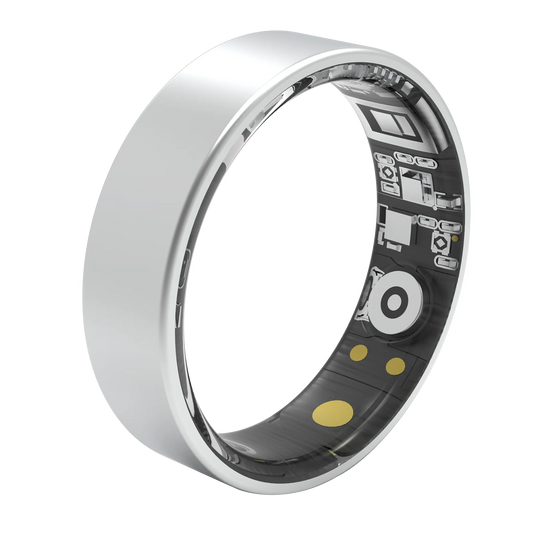
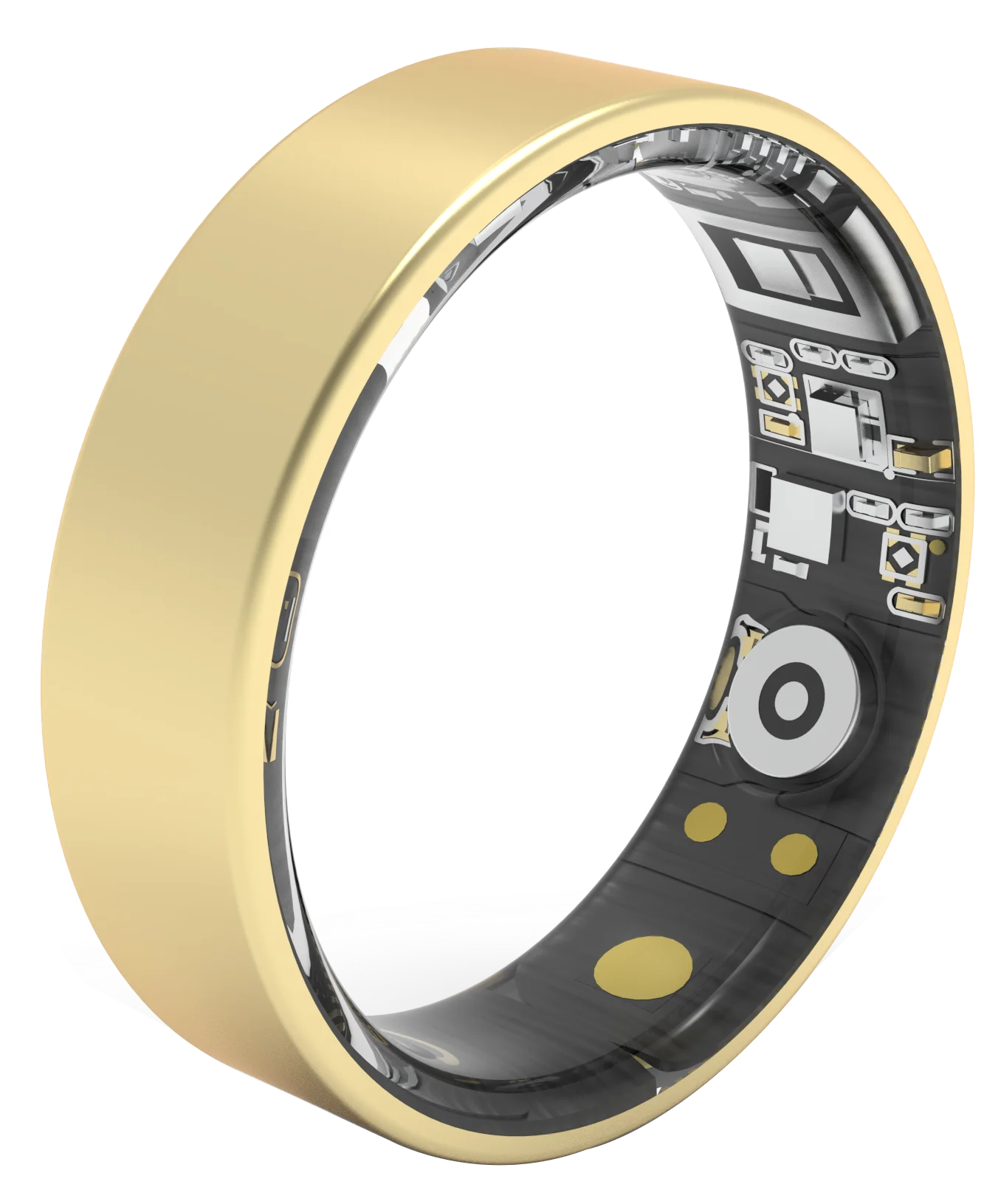
If you use a smart ring such as the Osawalla Slim Core Smart Ring, you may see these stages displayed in your sleep report. But what do they actually mean? And should you be concerned if one stage is higher or lower than usual?
This guide explains the three main sleep stages, how smart rings estimate them, and how to make sense of your sleep data.
What Are Sleep Stages?
Sleep is generally divided into non-REM (NREM) sleep and REM sleep.
For everyday sleep tracking, these stages are commonly presented as:
- Light Sleep
- Deep Sleep
- REM Sleep
- Awake
You don't stay in one stage throughout the night. Instead, your body moves through a repeating pattern of different stages.
Deep sleep tends to occur more during the earlier part of the night, while REM sleep generally becomes more prominent later in the night.
This means that your sleep isn't simply about being "asleep" or "awake." The structure of your sleep changes throughout the night.
Light Sleep: An Important Part of Normal Sleep
Light sleep is sometimes misunderstood.
Seeing a large amount of light sleep in your Osawalla sleep report does not automatically mean that you had poor-quality sleep.
Light sleep is a normal part of the sleep cycle and acts as a transition between wakefulness and deeper stages of sleep. Your body begins to relax, your heart rate and breathing generally slow, and you become less responsive to your surroundings.
Because light sleep can occur throughout the night, it can make up a significant portion of your total sleep.
Why Does Light Sleep Matter?
Light sleep is part of normal sleep architecture.
Instead of trying to reduce light sleep, look at your overall sleep pattern. Your total sleep time, sleep continuity, deep sleep, REM sleep, and sleep schedule all provide important context.
A single night with more light sleep isn't necessarily something to worry about.
Deep Sleep: Your Deepest NREM Sleep
Deep sleep is also known as slow-wave sleep or N3 sleep.
This is the deepest stage of NREM sleep. During deep sleep, your heart rate and breathing slow, your muscles are relaxed, and you are generally harder to wake.
Deep sleep is more common during the first part of the night.
Because deep sleep is associated with physical restoration, it is one of the sleep stages people often pay the most attention to when reviewing data from a smart ring.
However, more deep sleep isn't automatically better.
Your sleep needs change depending on factors such as age, activity, sleep history, and your daily routine. Your sleep pattern can also vary naturally from one night to another.
The more useful approach is to look at your deep sleep trend over time rather than judging one night's number.
REM Sleep: The Stage Associated With Dreams
REM stands for Rapid Eye Movement.
During REM sleep, brain activity increases and becomes more similar to wakefulness. Your eyes move rapidly behind closed eyelids, breathing becomes more variable, and most vivid dreaming occurs during this stage.
REM sleep is associated with several important processes, including:
- Memory processing
- Learning
- Emotional processing
- Cognitive function
- Dreaming
REM sleep usually becomes more common during the later part of the night.
This is one reason getting enough sleep throughout the entire night matters. Waking up significantly earlier than usual can reduce the amount of REM sleep you experience toward the end of your sleep period.
Light vs. Deep vs. REM Sleep
Understanding the difference between the three stages makes your sleep data easier to read.
| Sleep Stage | What It Means | Typical Pattern |
|---|---|---|
| Light Sleep | A lighter stage that connects wakefulness with deeper sleep | Appears throughout the night |
| Deep Sleep | The deepest stage of NREM sleep | More common earlier in the night |
| REM Sleep | A stage of increased brain activity associated with dreaming and memory processing | More common later in the night |
There isn't one sleep stage that you should try to maximize.
Healthy sleep depends on the overall pattern.
Your body naturally moves between different stages as the night progresses.
How Does a Smart Ring Track Sleep Stages?
A smart ring cannot directly measure brain activity in the same way as a clinical sleep study.
Instead, it uses sensors to collect signals from your body and algorithms to estimate your sleep stages.
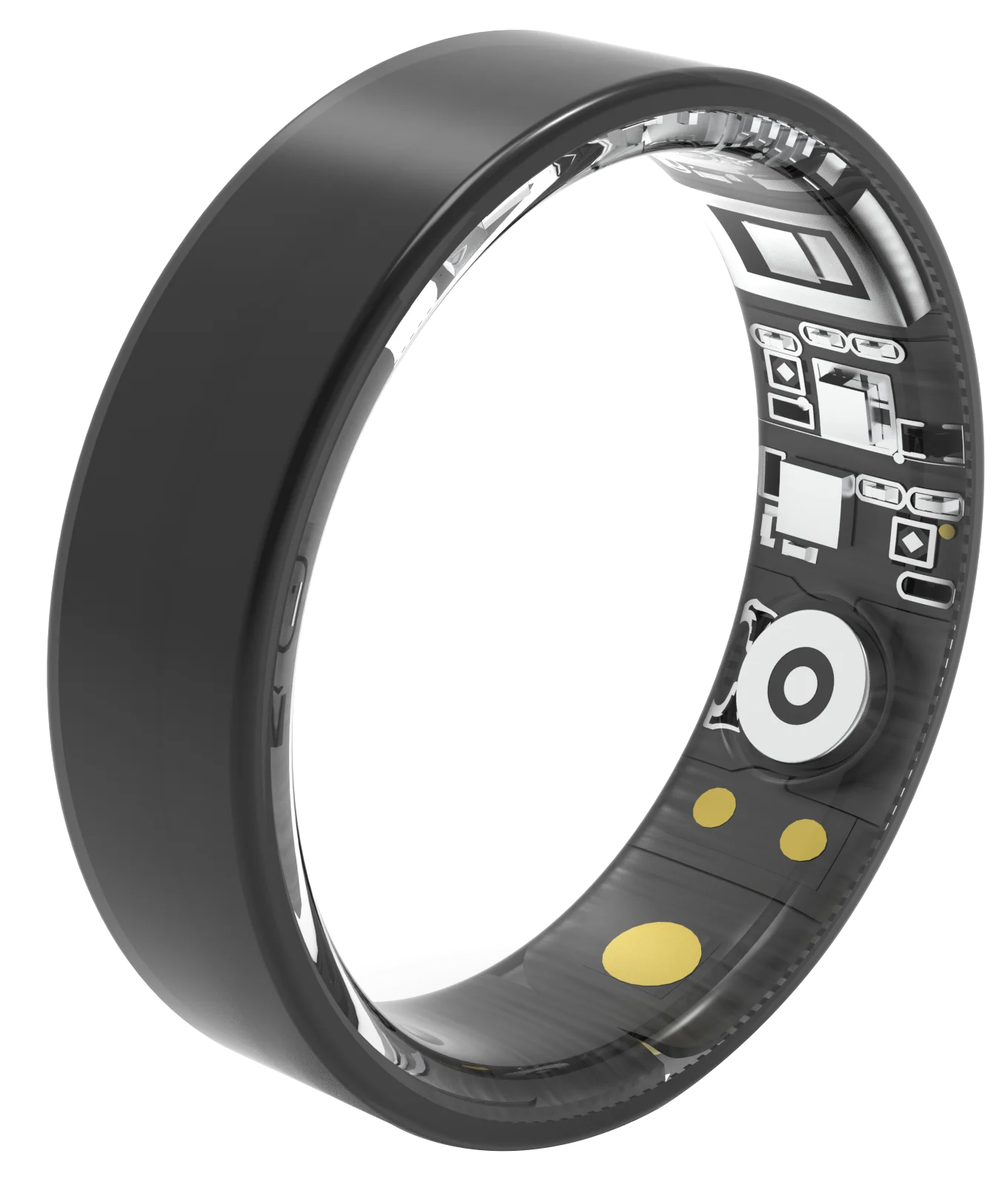
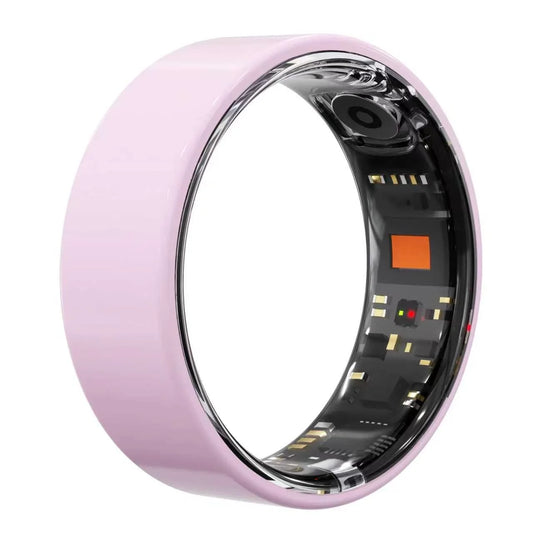
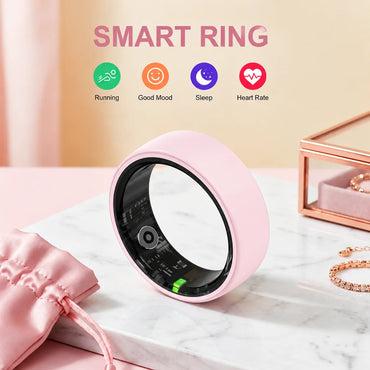
The Osawalla Slim Core Smart Ring uses its onboard sensors to collect sleep-related data while you wear it overnight. The OWRing app then presents your sleep information, including Light Sleep, Deep Sleep, REM Sleep, and other sleep-related measurements.
Depending on the device and algorithm, sleep-stage estimation can take into account signals such as:
- Movement
- Heart rate
- Heart rate variability (HRV)
- Blood oxygen
- Other physiological signals
This is an important distinction: consumer smart rings estimate sleep stages rather than directly measuring brain waves.
Clinical sleep studies use methods such as polysomnography to directly measure brain activity and other physiological signals.
For that reason, smart-ring sleep data is best used for observing personal patterns and trends, rather than as a medical diagnosis.
How Accurate Are Smart Ring Sleep Stages?
No consumer wearable can perfectly determine your sleep stages every night.
Different smart rings use different sensors, algorithms, and methods to estimate sleep. Results can therefore vary between devices.
The value of a smart ring is less about achieving perfect stage-by-stage accuracy and more about consistent tracking over time.
For example, if your Osawalla sleep data shows that your sleep duration, bedtime, or sleep-stage pattern has changed over several weeks, that trend can be more meaningful than a single night's result.
This is also how smart rings such as Oura and RingConn approach sleep tracking: sleep stages are presented as part of a broader picture that includes other sleep and health measurements.
Osawalla Sleep Tracking vs. Other Smart Rings
Sleep-stage tracking has become a standard feature across the smart-ring category.
Oura helped popularize sleep-focused smart rings and provides Light, Deep, and REM sleep information through its app.
RingConn also provides sleep-stage tracking, including Light, Deep, and REM sleep, as part of its broader sleep-monitoring features.
The Osawalla Slim Core Smart Ring offers the same core sleep-stage categories through the OWRing app, including:
- Light Sleep
- Deep Sleep
- REM Sleep
- Sleep duration
- Sleep quality
- Average sleeping heart rate
- Average HRV
- Nighttime blood oxygen
- Sleep activity
- Circadian-related insights
The difference is primarily the overall product positioning and price.
Osawalla is designed to provide core smart-ring health and sleep tracking at a more accessible price, without requiring users to pay a recurring subscription to access the ring's core tracking experience.
So if your main goal is to understand your sleep patterns rather than pay for a premium brand name, Osawalla provides another option worth considering.
Why You Should Look at Sleep Trends, Not Just One Night
Sleep naturally changes.
You may sleep differently after:
- A late night
- Travel
- Exercise
- A stressful day
- Changes in your routine
- Sleeping at a different time
For this reason, don't judge your sleep based on one unusually high or low number.
Instead, use the OWRing app to look at your sleep data over time.
Ask questions such as:
Am I getting enough total sleep?
Is my sleep schedule relatively consistent?
Has my sleep pattern changed recently?
Am I waking up more often than usual?
Do my sleep numbers match how I feel the next day?
Looking at several nights or weeks of data gives you a much better understanding of your personal sleep pattern.
What Should You Look For in a Sleep Tracking Ring?
If you're comparing smart rings for sleep tracking, sleep stages are only one part of the decision.
Sleep Stage Tracking
Look for support for Light, Deep, and REM sleep, along with a clear way to view the information.
Comfort
You need to be comfortable wearing the ring throughout the night. A device that stays in a drawer cannot provide useful sleep trends.
Battery Life
Several days of battery life can make continuous overnight tracking more convenient.
Broader Sleep Data
Sleep stages become more useful when viewed alongside sleep duration, heart rate, HRV, blood oxygen, and activity data.
App Experience
The app should make your data easy to understand rather than simply displaying a collection of numbers.
Long-Term Cost
Consider the total cost of ownership, including whether a subscription is required for access to important features.
The Bottom Line
Light, Deep, and REM sleep are all normal and important parts of your sleep cycle.
Light sleep helps you transition between different levels of sleep. Deep sleep is the deepest stage of NREM sleep and is associated with physical restoration. REM sleep is associated with dreaming, learning, memory, and other aspects of brain function.
Smart rings such as Osawalla Slim Core Smart Ring can estimate these sleep stages using signals collected from your body and present the results through a companion app.
The goal isn't to achieve a perfect sleep-stage breakdown every night.
The goal is to understand your own sleep patterns.
With Osawalla and the OWRing app, you can monitor your sleep stages alongside other sleep and health metrics and use those trends to better understand how you sleep over time.


