





Can You Wear a Smart Ring While Lifting Weights? Grip, Comfort, and Safety
Key Takeaways
· Yes for some activities, no for heavy lifting. A smart ring is usually fine for walking, cycling, and bodyweight work. Take it off before barbells, dumbbells, kettlebells, pull-ups, and anything requiring a tight, sustained grip.
· The real risk is not scratches — it is ring avulsion. Cleveland Clinic classifies these as injuries that "frequently lead to amputation," and they account for roughly 5% of emergency-room visits for arm and hand injuries each year.
· Grip pressure corrupts the optical signal, not just your comfort. Independent research on wrist-worn optical sensors found error rates substantially higher during resistance exercise than during cycling in the same session — so the heart-rate number you get mid-set is the least trustworthy reading of your day.
· Scratch-resistant is not scratch-proof. Zirconia ceramic resists scratching but can chip under impact; stainless steel takes visible marks but rarely fractures. Neither is protective equipment.
· You lose very little data by removing it. Log sets, reps, and load manually, and let the ring do what it is genuinely best at: overnight recovery and all-day trends.
· Check the manufacturer's guidance before assuming. Osawalla has not published a load, impact, or weightlifting rating for its rings, so treat strength training as outside the stated use case.
Table of Contents
· 01 — Can You Wear a Smart Ring While Lifting Weights?
· 02 — How a Smart Ring Affects Your Grip
· 03 — Is a Smart Ring Comfortable During Gym Workouts?
· 04 — Can Weightlifting Scratch or Damage a Smart Ring?
· 05 — Smart Ring Safety: The Injury Nobody Expects
· 06 — What Your Ring Actually Measures During a Lift
· 07 — How to Track Your Workout Without Wearing Your Ring
· 08 — How to Protect Your Smart Ring at the Gym
· 09 — A Practical Routine for Lifters Who Track
· 10 — Frequently Asked Questions
A smart ring is easy to wear all day. It tracks sleep, resting heart rate, and daily activity without the bulk of a watch, and because it sits on a finger it rarely gets in the way of typing, driving, or cooking.
The gym is a different environment. The moment you wrap your hand around a knurled barbell, the ring stops being invisible and starts being a hard object compressed between your finger and several hundred pounds of metal.
So, can you wear a smart ring while lifting weights?
1. Can You Wear a Smart Ring While Lifting Weights?
You can wear one for some gym activities, but you should remove it before heavy lifting and before any exercise that requires a firm, sustained grip. The three things that make the gym different from the rest of your day are concentrated pressure on the finger, friction against metal, and the possibility of the band catching on equipment.
That is a practical recommendation, not a claim that any specific activity is risk-free with a ring on.
A practical guide by exercise
|
Workout activity |
Recommended approach |
Main consideration |
|
Walking or incline treadmill |
Usually fine |
Comfortable fit; minimal hand loading |
|
Stationary or road cycling |
Usually fine |
Handlebar pressure on the palm, not the ring |
|
Bodyweight squats and lunges |
Usually fine |
Little to no ring contact |
|
Machine-based leg work |
Usually fine |
Hands are stabilising, not gripping hard |
|
Cable machine exercises |
Prefer removing it |
Handle friction and sustained tension |
|
Dumbbell training |
Remove before lifting |
Ring compressed against the handle |
|
Barbell squats, deadlifts, bench |
Remove before lifting |
Heavy grip and finger safety |
|
Kettlebell swings and cleans |
Remove before lifting |
Repeated impact and handle rotation |
|
Pull-ups and heavy rows |
Remove before lifting |
Firm gripping plus bodyweight load |
|
Farmer's carries |
Remove before lifting |
Sustained maximal grip |
If your session mixes cardio and strength, keep the ring on for the parts that suit it and take it off before you move to loaded work. The transition is the moment most people forget.
Everyday durability is not gym durability
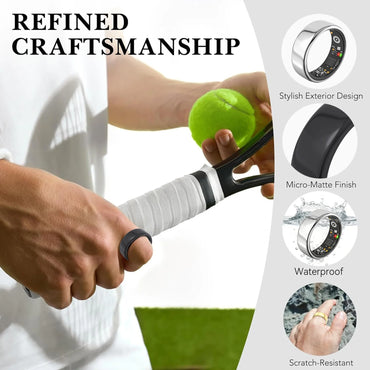
The distinction worth internalising: a smart ring designed for 24/7 wear is not necessarily designed for the mechanical load of weightlifting. Water resistance, a scratch-resistant finish, and a lightweight body are real features, but none of them describes what happens when a bar presses the band into your finger at the bottom of a deadlift.
Osawalla publishes detailed specifications for its rings — weight, profile, water resistance, battery life, sensor features — but it has not published a load rating, impact rating, or weightlifting guidance for any model. When a manufacturer has not addressed a use case, the honest position is that the use case sits outside what has been validated.
That is not a criticism of the hardware. It is simply the correct reading of what "5ATM water resistant" and "scratch-resistant finish" do and do not cover.
2. How a Smart Ring Affects Your Grip
Grip is the first thing to consider, because it changes both your safety and your technique.
When you close your hand around a handle, pressure is distributed across the palm and the pads of your fingers. A ring inserts a rigid band into that load path, and it changes the mechanics in three ways.
Concentrated pressure on one finger
During a heavy lift the handle presses into the hand. Depending on the ring's width, thickness, and position, that pressure concentrates around the band instead of spreading across soft tissue.
A ring that feels weightless while typing can become genuinely uncomfortable when your grip tightens. The effect is most noticeable during deadlifts, rows, carries, and any movement where you hold load for more than a few seconds.
A changed contact surface
Even a slim ring changes the shape of your finger. You notice it most on knurled barbells, textured dumbbell handles, and narrow cable attachments.
Some lifters barely register it. Others find it distracting enough to adjust their hand mid-set. Neither reaction tells you anything about safety — comfort and risk are separate questions, and the second one does not care how the first one feels.
Split attention
Strength training depends on controlled movement and a reliable grip. If you are adjusting your hand because the ring digs in, your attention is on the jewellery rather than the bar.
You should never have to change your grip, tolerate pain, or compromise technique to keep a wearable on your finger.
Practical rule: if an exercise needs a tight, sustained grip on a loaded handle, take the ring off before the set rather than waiting for discomfort to develop.
Why fit does not solve this
A correctly sized ring still occupies space in your grip. Getting the fit right matters for sensor accuracy and for everyday comfort — Osawalla's How to Choose the Correct Smart Ring Size and Smart Ring Size Guide cover this in detail — but a perfect fit removes rotation, not pressure.
3. Is a Smart Ring Comfortable During Gym Workouts?
Comfort depends on more than weight, and the gym is where that becomes obvious.
Weight is not the deciding factor
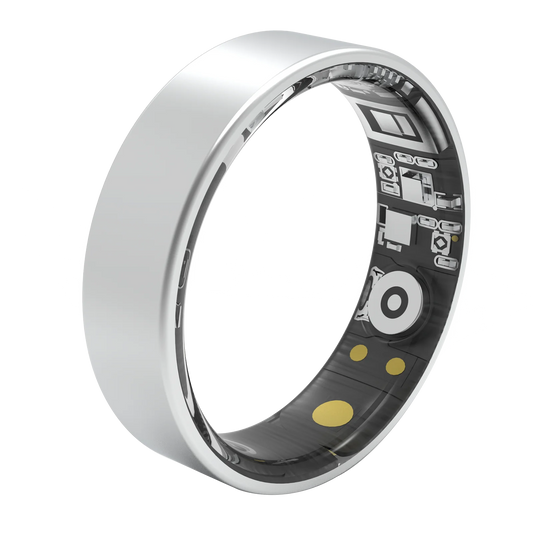
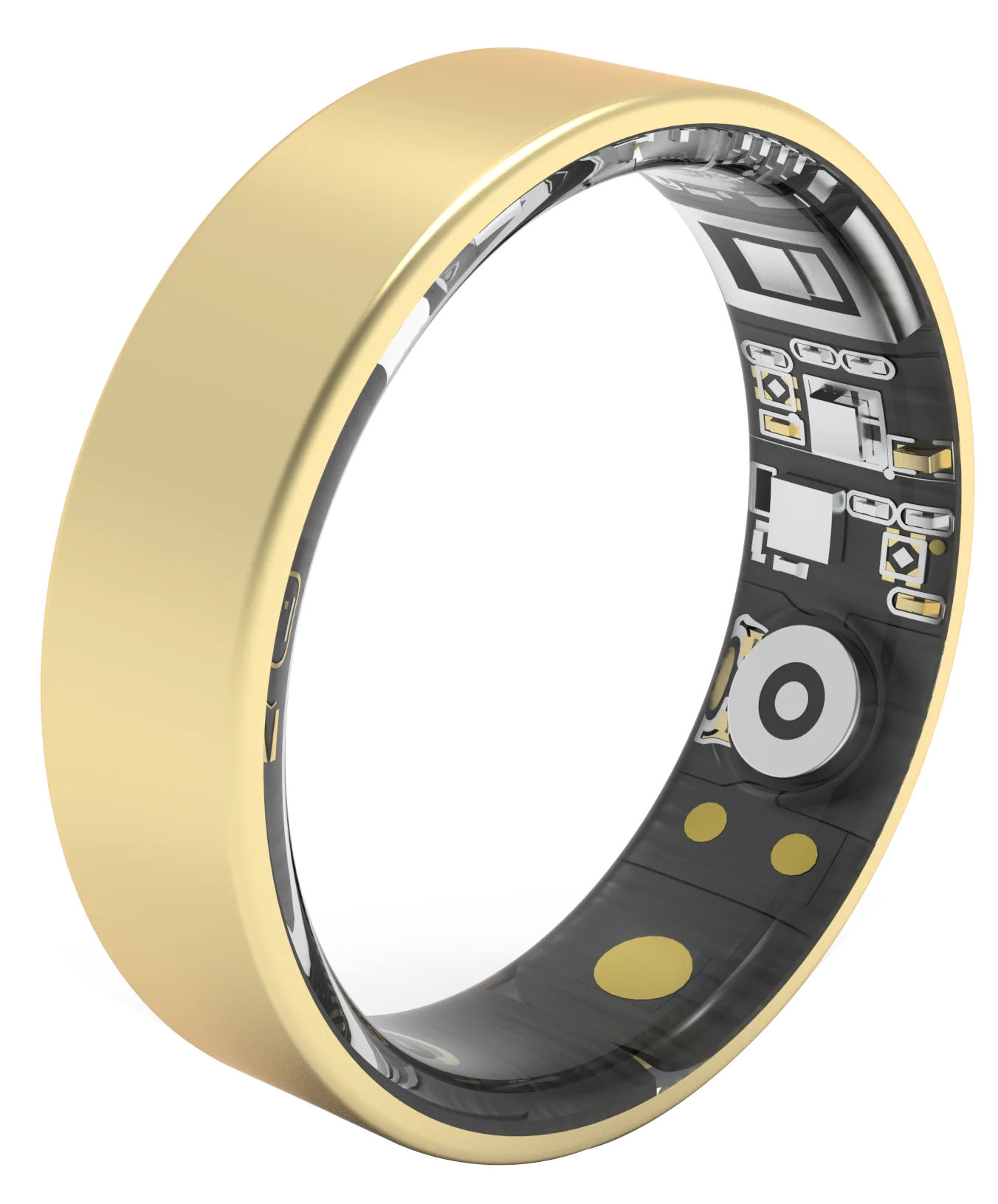
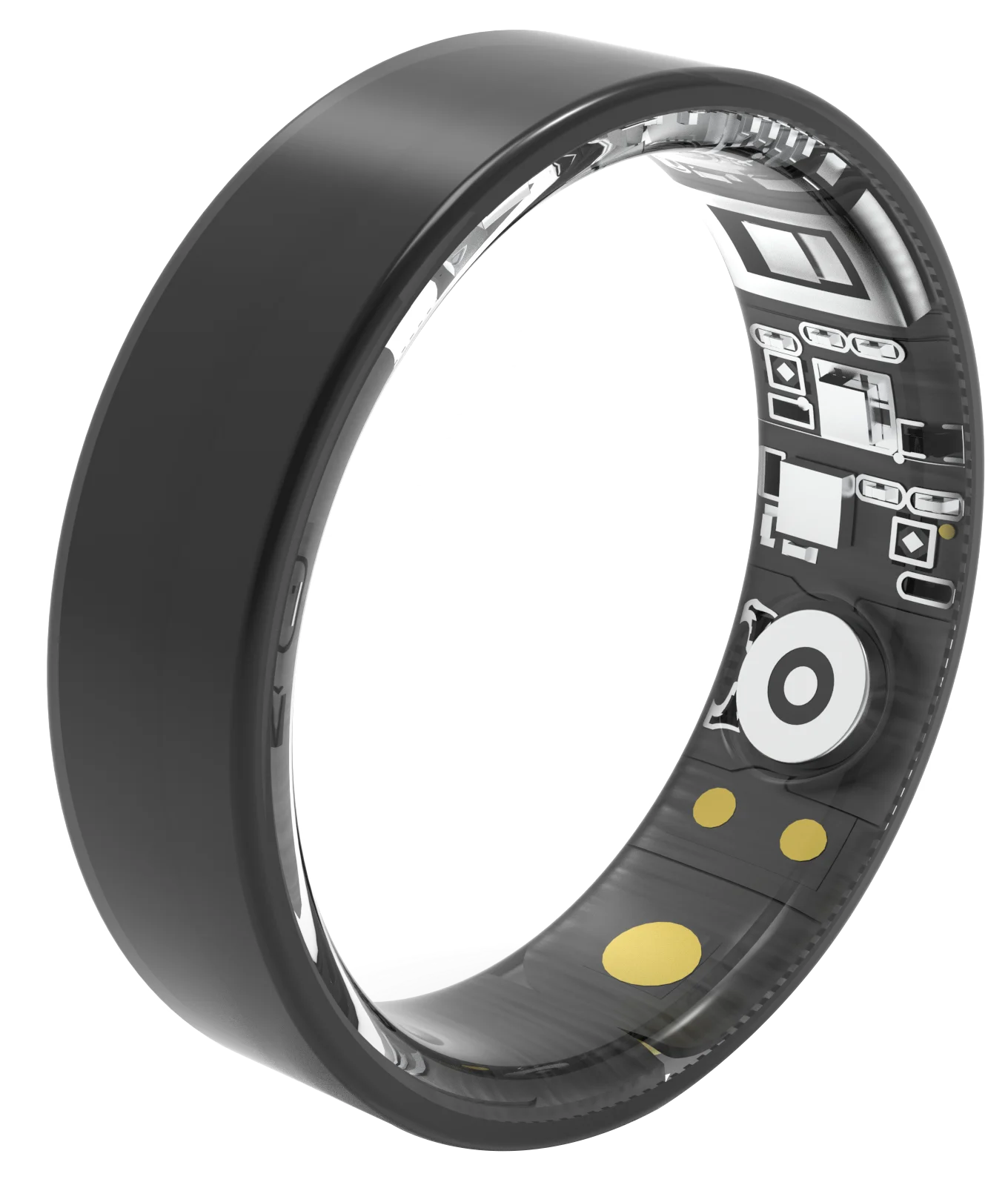
The Osawalla Signature Pro Smart Ring is listed at 3.0 g, lighter than a paperclip. The Osawalla Ceramic Pro Smart Ring is listed at 4 g with a 2.6 mm profile.
Both numbers are excellent for all-day wear. Neither tells you how the ring behaves when your finger is compressed against a steel handle, because the problem at that point is not mass — it is geometry and hardness.
If you want the full picture on what makes a ring wearable for long stretches, Osawalla's guide to what makes a smart ring comfortable for 24/7 wear breaks down profile, inner sensor shape, and fit.
Finger swelling during exercise
Fingers swell during exercise. Warm gyms, prolonged activity, and the vascular demands of a hard set all push fluid into the extremities, and a ring that felt fine at the start of a session can feel tight by the end.
This matters for two reasons. First, a tight ring under load is uncomfortable and can restrict movement. Second, a ring that becomes difficult to remove is a genuine medical problem — do not force a tight ring off a swollen finger. If you cannot remove it comfortably, stop training and seek medical help.
Sweat and residue
Sweat, skin oils, and gym-floor dust collect under the band. Combined with repeated movement, this makes the ring feel grimy and can irritate the skin underneath.
Clean the ring after training following the manufacturer's instructions and dry it fully before charging. Osawalla's How to Clean a Smart Ring covers the safe method, including what not to use on the sensor window.
Where you wear it matters
Ring placement on the hand also affects both comfort and data quality — see Osawalla's guide on which finger to wear a smart ring on. Index and middle fingers tend to sit closer to the grip surface during pulling movements, which is one more reason to remove the ring rather than reposition it mid-workout.
4. Can Weightlifting Scratch or Damage a Smart Ring?
Yes. Weightlifting exposes a ring to contact that everyday wear simply does not produce.
How rings get marked in the gym
· Barbell knurling. The ring is dragged across a textured steel surface every rep.
· Dumbbell handling. Fingers shift as you lift, lower, and re-rack the weight.
· Loading plates. Your hands pass close to hard metal edges and cast-iron surfaces.
· Kettlebell work. The handle rotates and moves against the ring through ballistic reps.
· Rack and bench contact. An incidental knock against a squat rack or bench edge.
· Floor contact. Setting a dumbbell down while your hand is still wrapped around it.
Even when the ring stays fully functional, cosmetic wear is visible and permanent.
Scratch-resistant is not scratch-proof
This is where material choice gets interesting, and where the marketing language needs translating.
Stainless steel with a hardened finish — the construction listed for the Signature Pro — tends to develop fine surface scratches with repeated metal contact. It looks marked fairly quickly, but it is tough and rarely fractures.
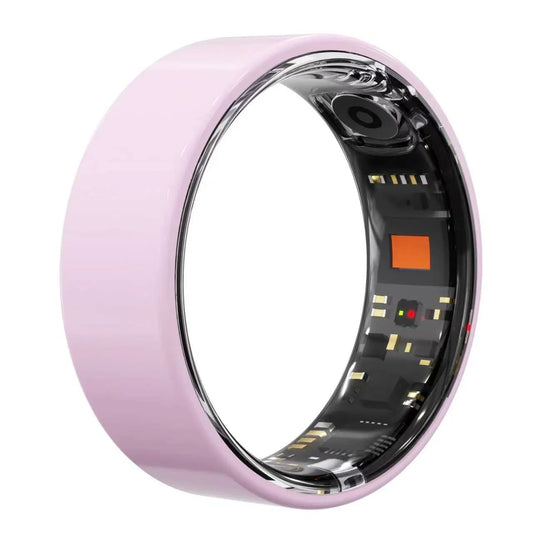
Zirconia ceramic, used in the Ceramic Pro, sits much higher on the hardness scale and resists scratching extremely well. The trade-off is brittleness: ceramic resists abrasion but can chip or crack under a sufficiently sharp impact.
The important point is that hardness and toughness are different properties. A material can be excellent at resisting scratches and still fail under a point impact. Osawalla's Ceramic Smart Rings Explained: Why Material Matters covers this trade-off in detail.
For strength training, the useful conclusion is not "buy the harder material." It is "avoid contact in the first place." A dent you can see is annoying; a crack in a sealed electronics housing is a dead device.
Metal transfer looks like a scratch but is not
One practical tip worth knowing: a grey mark on a steel ring is often metal transfer from the equipment rather than damage to the ring. It can usually be cleaned off. A genuine scratch has depth you can feel with a fingernail; a chip exposes a different surface.
Do not attack either with abrasive pads, harsh chemicals, or sharp tools. If you see a crack, a chip, a loose component, or unusual behaviour, stop wearing the ring and check the manufacturer's guidance.
5. Smart Ring Safety: The Injury Nobody Expects
This is the section that should decide the question for you.
Ring avulsion, explained
A ring avulsion — sometimes called degloving — happens when a ring is caught on an object and pulled with sudden force. According to Cleveland Clinic, these injuries are "rare, but they're serious," and they "frequently lead to amputation." They account for around 5% of emergency-room visits for arm and hand injuries each year.
The severity is graded with the Urbaniak classification, described in this clinical review of ring avulsion injuries:
· Class I — circulation is adequate; soft-tissue repair and fixation if a bone is involved.
· Class II — circulation is inadequate; urgent surgical assessment and possible revascularisation.
· Class III — complete degloving or complete amputation.
Cleveland Clinic notes that almost all ring avulsions require surgery, that many Class III cases require permanent amputation, and that recovery can run from several weeks to more than a year.
Why the gym qualifies as a risk environment
Cleveland Clinic lists the most common causes as workplace accidents, falls, and sports injuries, and specifically flags that "athletes who wear rings while playing sports — especially contact sports — have a higher risk."
A loaded gym is a machine environment. Barbells, cable attachments, rack hooks, kettlebell handles, and weight-plate edges are all objects a band can catch on. Add bodyweight momentum — a kettlebell swing, a drop from a pull-up bar — and you have exactly the sudden-force mechanism the injury requires.
Banner Health states the prevention plainly: remove rings "when engaging in activities like exercising, playing sports or handling heavy equipment."
Remove your ring before
· Heavy barbells, dumbbells, or kettlebells.
· Any tight grip under substantial load.
· Repeated friction between fingers and metal handles.
· Weight plates, racks, or equipment that could catch the band.
· Any movement where the ring feels uncomfortable or restricts your finger.
· Ballistic or swinging movements, where momentum multiplies force.
What about lighter weights?
Lighter loads reduce pressure but do not eliminate the mechanism. A 10 kg dumbbell still requires a grip, and cable handles still generate friction.
If you keep the ring on for a low-load movement, watch how your hand contacts the equipment. Remove it immediately if you feel pressure, pinching, numbness, pain, or restricted movement. Being able to close your hand around a handle is not evidence that the ring is safe.
Gloves are not a workaround
Weightlifting gloves change how the handle fits your hand. They do not remove pressure between the ring and your finger, and they do not stop the band catching.
If an exercise involves heavy gripping, remove the ring before putting your gloves on.
Where to put it
Decide before you start training. A rigid case in your gym bag is far better than a loose ring on a bench, on the floor, or next to a sink.
A dedicated ring case is the cleanest option — Osawalla sells a clear and a pink smart ring charging case, and its guide to ring charging cases explains how they work. Avoid pockets shared with keys, coins, or carabiners.
If you experience finger pain, swelling, or a ring that will not come off, stop and seek medical assistance. Do not force it.
6. What Your Ring Actually Measures During a Lift
Here is the part most articles on this topic skip, and it is the strongest argument for taking the ring off: the data you get from a smart ring during resistance training is the least reliable data you will collect all day.
Why grip pressure breaks optical sensing
Smart rings measure heart rate the same way wrist wearables do: green and infrared LEDs shine into the skin, a photodiode measures what comes back, and the pulse is extracted from the rhythmic change in absorption.
Two things happen under a barbell that do not happen during a walk.
First, gripping hard compresses the vessels and tissue directly under the sensor, shrinking the optical signal's amplitude. The algorithm may respond by holding its last confident reading — which is why you sometimes see a number freeze mid-set and then jump once you release the bar.
Second, lifting is not periodic motion. A running stride is rhythmic and predictable, which makes motion artefacts easy to filter out. A rep has a concentric phase, a pause, and an eccentric phase, at a cadence that overlaps the frequency band of a resting or light-activity heart rate. When the motion frequency sits close to the true pulse frequency, the algorithm can lock onto rep cadence and report it as your heart rate.
What the research found
The evidence base is consistent. Boudreaux et al. (2018), published in Medicine & Science in Sports & Exercise, tested wearable monitors during actual resistance exercise — squat, bench, and deadlift — against a chest-strap ECG reference in trained lifters. Error was substantially higher during resistance exercise than during cycling in the same session.
A 2023 review in Bioengineering reached the same direction of travel: optical heart-rate accuracy degrades as exercise intensity increases, with a tendency toward underestimation at higher intensities. The same review notes that one device tested across multiple activities recorded its lowest accuracy during circuit weight training.
Put plainly: your ring is likely to under-report effort exactly when you are working hardest.
What this means in practice
· Do not use in-set heart rate from a finger-worn optical sensor to pace intervals or judge exertion.
· If you want reliable heart rate during strength work, use a chest strap, or accept rest-period readings taken with an open hand.
· Treat the ring's value as recovery and trend data, not live performance metrics.
For a fuller explanation of where optical sensing is strong and where it struggles, see Osawalla's Smart Ring Heart Rate Monitoring: How Accurate?, and for why readings move around between days, Smart Ring Data Fluctuations.
7. How to Track Your Workout Without Wearing Your Ring
You can build a complete picture of your training without wearing the ring through a single set — but you have to be deliberate about it, and you have to accept one hard limit.
The limit, stated plainly
If the ring is off your finger, it cannot measure your finger. It cannot reconstruct what it did not sample. Do not assume a companion app will fill the gap retrospectively.
What the app can usually do is retain everything recorded before and after the session, so your daily summary, sleep data, and longer-term trends stay intact. The precise behaviour varies by product — check your device's documentation rather than assuming every metric survives.
Separate workout tracking from health tracking
|
What you want to track |
Best approach |
Role of the ring |
|
Sets and repetitions |
Workout log or training app |
None — log manually |
|
Load lifted |
Record weight per exercise |
None — log manually |
|
Rest periods |
Timer or workout app |
None |
|
Heart rate during a set |
Chest strap |
Poor fit for finger optics (see Section 6) |
|
Heart rate between sets |
Ring, with an open relaxed hand |
Useful, with caveats |
|
Steps and daily movement |
Ring, worn outside the gym |
Strong |
|
Calorie burn estimate |
Ring, all-day |
See calorie-tracking caveats |
|
Sleep and overnight recovery |
Ring, worn overnight |
This is where it earns its place |
|
Training consistency over months |
Log plus ring trends |
Combined view |
|
Readiness and recovery |
Ring, overnight HRV and resting HR |
Strong |
The pattern is simple: the ring is excellent at the 23 hours around your workout and weak during the one hour inside it.
For how wearable calorie estimates are actually produced — and why gym sessions are the hardest part to estimate — see Smart Ring Calorie Tracking. If you want your ring data and your training log in one place, check Smart Ring Apple Health and Strava Sync: What to Check.
Why this trade is worth making
Strength training is recommended for adults on two or more days per week, according to the World Health Organization's physical activity guidance. That means the ring is coming off regularly, and a routine built around that fact will outlast one built on hope.
Recovery is where the ring genuinely pays for itself. Osawalla's Smart Ring Training and Recovery Guide covers how overnight data informs training load, and How a Smart Ring Tracks Sleep explains the underlying measurement.
8. How to Protect Your Smart Ring at the Gym
You do not need an elaborate maintenance routine. You need a few habits applied consistently.
Before training
· Decide in advance which exercises require removal, and do it before you warm up.
· Store the ring in a hard case, not loose in a bag or pocket.
· Check the band and sensor window for existing cracks or chips before you put it back on.
After training
· Rinse off sweat and residue using the manufacturer's recommended method.
· Dry the ring completely before charging it.
· Inspect the band, inner sensor area, and finish for new marks or damage.
· Store it away from hard objects.
What not to do
· Do not use abrasive pads, scouring powders, or metal polish on the housing.
· Do not use sharp tools to pick at marks.
· Do not charge a ring that is still damp.
· Do not keep wearing a ring that has cracked, chipped, or started behaving unusually.
Choosing a ring for a life that includes the gym
When you compare models, look at weight, profile, material, fit, battery life, sensor coverage, and whether there is a subscription. Osawalla's smart ring comparison and its review of the Signature Pro go through the current lineup.
One thing worth checking before you buy: fit. Rings with internal sensors need consistent skin contact, and a ring that is too loose will produce poor data as well as rotating during a grip. A sizing kit is the only reliable way to get this right, and Osawalla's guide to the six core features of smart rings explains why sensor contact sits at the top of the list.
And be realistic about the use case. If you need live measurements during strength training, the right answer is a device designed to be worn during that activity — see Smart Ring vs Fitness Tracker: Which One Should You Actually Wear?
9. A Practical Routine for Lifters Who Track
If you use an Osawalla smart ring for everyday health tracking and you lift two or more times a week, this five-step routine keeps the data and removes the risk.
1. Wear it through the day and overnight. This is where the ring produces its best data — sleep stages, resting heart rate, HRV, and activity trends. Osawalla's rings run 5–7 days per charge with no subscription, and the case for subscription-free tracking is worth reading if you are comparing brands.
2. Remove it before you touch loaded equipment. Not after the warm-up set, and not when it starts to hurt — before. Put it straight into a case.
3. Log the session separately. Sets, reps, load, and rest. A notebook or a training app does this better than any ring.
4. Clean and dry the ring after training. Sweat and gym dust are the two things that degrade both comfort and sensor contact over time.
5. Put it back on once your hands are back to normal size. If your fingers are still swollen, wait. Do not force it.
This gives you the full picture: accurate recovery data from the ring, accurate performance data from your log, and no compromised grip.
For anyone deciding between devices, Smart Ring vs Smartwatch covers the broader comparison, and Smart Ring Data Explained is the best starting point for understanding what each metric actually means.
 10. Frequently Asked Questions
Can you lift weights with a smart ring?
You can wear one during some light activities, but removing it before heavy lifting, barbell work, dumbbell exercises, kettlebell work, and any movement involving forceful gripping is the safer approach. A ring can create pressure, sustain damage, or catch on equipment. Cleveland Clinic lists sports injuries among the most common causes of ring avulsion.
Will lifting weights scratch my smart ring?
It can. Repeated contact with knurled handles, weight plates, racks, and hard floors leaves marks. The extent depends on the ring's material and finish and on the type of contact. Stainless steel tends to show fine scratches; ceramic resists scratching but can chip under impact.
Is a ceramic smart ring better for weightlifting?
Not necessarily. Zirconia ceramic is highly scratch-resistant but more brittle, so it can chip or crack under a sharp impact. Scratch resistance and impact resistance are different properties, and neither makes a ring protective equipment for lifting.
Can I wear a smart ring during gym workouts if I use lifting gloves?
Gloves do not remove the pressure between the ring and your finger, and they do not eliminate the risk of the band catching. For exercises requiring heavy gripping, take the ring off before putting gloves on.
Will I lose workout tracking data if I remove my ring?
Partly. A ring cannot measure your finger while it is off, and apps do not reconstruct unsampled data. You keep everything recorded before and after the session, and you can log sets, reps, and load manually. The practical loss is one hour of continuous measurement; the practical gain is safer lifting.
Does my smart ring measure heart rate accurately during a set?
Less accurately than at rest. Independent testing found optical heart-rate error is substantially higher during resistance exercise than during cycling in the same session, with a tendency to under-report at higher intensities. Use a chest strap if you need reliable in-set heart rate.
Should I remove my smart ring for every gym exercise?
No. Activities that do not require forceful gripping — walking, cycling, machine-based leg work, bodyweight movements — are usually fine if the ring is comfortable. Remove it for loaded resistance work and for anything that puts pressure on the band.
Can I put my smart ring back on immediately after lifting?
Usually, once your hands are comfortable, the ring fits normally, and you have checked it for damage. Fingers commonly swell during training, so if the ring feels tight or your finger is sore, wait until the swelling subsides. Do not force a ring onto a swollen finger.
What should I do if my ring gets stuck on a swollen finger?
Stop training and seek medical assistance. Do not force it off. Elevating the hand may help while you wait, but a ring that cannot be removed comfortably is a medical issue rather than a gym inconvenience.
Do Osawalla smart rings have a weightlifting or impact rating?
No published rating. Osawalla lists weight, profile, water resistance, battery life, and sensor features for its rings, but it has not published load, impact, or weightlifting guidance for any model. Treat strength training as outside the validated use case and check the product listing for the latest specifications.
Does removing the ring affect sleep tracking?
Only if you forget to put it back on. Sleep tracking depends on wearing the ring overnight, so make step five of the routine in Section 9 a habit. Sleep data is the single most valuable thing a ring measures for a lifter.

Final Thoughts: Train Hard, Track Smart, Protect Your Fingers
Smart rings make everyday health tracking effortless, and that convenience is exactly why it is easy to forget the ring is there. In the gym, forgetting is the problem.
The answer to "smart ring weightlifting" is not a simple yes or no. It is a rule: wear it for the 23 hours, remove it for the loaded hour. Keep it on for walking, cycling, machine work, and sleep. Take it off for barbells, dumbbells, kettlebells, pull-ups, and carries. Store it in a case, clean it afterwards, and log your sets by hand.
Two things make this worth the small inconvenience. The first is that ring avulsion injuries are rare but genuinely serious, and prevention costs you ten seconds. The second is that the data you give up is the data you would trust least anyway — optical sensing under a heavy grip is the weakest measurement your ring will make all day.
Your recovery data will be there in the morning, and your fingers will be too.
Editor's note: sources and fact-checking
Product specifications were taken from Osawalla's live product data (23 October 2026): Signature Pro listed at 3.0 g; Ceramic Pro listed at 4 g with a 2.6 mm profile and 5ATM / IP68 water resistance; both 5–7 days of battery life with no subscription. Osawalla has not published a load, impact, or weightlifting rating for either model — this article states that explicitly rather than implying a rating exists.
External sources (all verified as reachable on 23 October 2026):
|
Source |
Used for |
|
Definition, prevalence, causes, Urbaniak class outcomes |
|
|
Urbaniak classification detail |
|
|
Prevention guidance for exercise and heavy equipment |
|
|
Optical HR error during resistance exercise vs cycling |
|
|
Accuracy degradation with intensity; circuit weight training |
|
|
Muscle-strengthening frequency guidance |


