






Why Smart Ring Data Changes From Day to Day: What Counts as Normal
Quick answer: Smart ring readings change every day because your body is not identical each day and your ring does not measure under identical conditions. Routine changes, normal biological variation, and sensor fit all move HRV, resting heart rate, and sleep scores. Judge tonight's number against your own multi-week baseline — not against yesterday's.
Key takeaways
· Daily fluctuation is expected. HRV, resting heart rate, and sleep estimates are all influenced by sleep timing, activity, stress, alcohol, and recording conditions.
· One reading is a snapshot. A single low HRV or one bad sleep score does not establish a trend on its own.
· Consumer sleep staging is an estimate, not a clinical measurement. A 2023 multicenter validation study found wide variation between 11 devices and lab polysomnography.
· Baselines are personal. There is no universal "good" HRV number to chase.
· Wearables are wellness tools. They are not diagnostic devices, and they should not replace clinical assessment.
Reading time: ~9 minutes.
Contents
Part I · Why your numbers move
01 — Why Smart Ring Data Naturally Changes From Day to Day
Part II · Reading the three core metrics
02 — Heart Rate Variability Trends: Why One Low Reading Does Not Tell the Whole Story
03 — Resting Heart Rate: Why a Few Beats Can Make a Difference
04 — Sleep Tracking Accuracy: Why Your Sleep Score Can Change
Part III · Turning readings into decisions
05 — Normal Fluctuation or a Meaningful Pattern?
06 — Five Ways to Make Your Wearable Data More Consistent
07 — What Smart Ring Data Can — and Cannot — Tell You
08 — A Smarter Way to Use Your Smart Ring Every Day
Reference
— Related reading on the Osawalla blog
Introduction: Your Numbers Changed. Should You Be Concerned?
You go to bed at your usual time, wear your smart ring overnight, and wake up expecting familiar results. Instead, your heart rate variability (HRV) is lower, your resting heart rate is slightly higher, or your sleep score has dropped — even though nothing seems particularly different.
It is one of the most common experiences in wearable ownership, and it is also one of the most commonly misinterpreted.
Understanding smart ring data fluctuations starts with one idea: your body does not operate at exactly the same level every day, and your wearable does not measure every signal under perfectly identical conditions. Small changes in your results can reflect ordinary biological variation, differences in your routine, or the limits of the measurement process itself.
The more useful question is not "Why did my number change?" It is "Does this change fit into a broader pattern?"
In this guide, we cover why wearable data shifts from day to day, how to interpret heart rate variability trends and resting heart rate, what sleep tracking accuracy really means, and how to use your smart ring data without overreacting to every new score.
Medical note: This article is general wellness information. It is not medical advice, and it cannot diagnose any condition. If you have symptoms such as chest pain, fainting, unusual shortness of breath, or persistent palpitations, seek medical care rather than relying on a wearable reading.
1. Why Smart Ring Data Naturally Changes From Day to Day
A smart ring collects signals over time and uses sensors and algorithms to estimate aspects of your activity and rest. But your body is a dynamic system, not a machine that produces identical readings every morning.
Three broad sources of variation explain most day-to-day movement: your routine, your biology, and your measurement conditions.
Your daily routine is never exactly the same
Even when your schedule looks consistent, small differences can shift your overnight measurements.
You might have eaten dinner later than usual, exercised in the evening, spent more time sitting, traveled across time zones, or gone to bed after a demanding day. Sleep timing, activity, stress, and alcohol consumption can all influence physiological measurements.
These factors do not affect every person the same way, and a single changed reading cannot identify one specific cause on its own. They do, however, provide useful context.
A practical example. Imagine your resting heart rate is slightly higher after a late dinner and a shorter night of sleep. Rather than reading that single result as a definite sign of a problem, look back at the previous evening and compare the reading with your usual pattern. One data point plus one context note tells you far more than the number alone.
For a deeper look at the signals behind these numbers, see how a smart ring tracks sleep.
Biological variation is part of everyday life
Your heart rhythm, autonomic nervous system activity, and sleep architecture naturally vary. HRV in particular reflects small differences in the intervals between successive heartbeats — so by definition it is a measurement of variation, not a fixed value.
According to the Cleveland Clinic's guide to heart rate variability, HRV can be influenced by factors including sleep, stress, and age.
That helps explain why the same person can record different HRV values on different nights with no single obvious explanation.
The key takeaway: a daily reading is a snapshot of one period, not a complete description of your overall well-being.
Measurement conditions can change, too
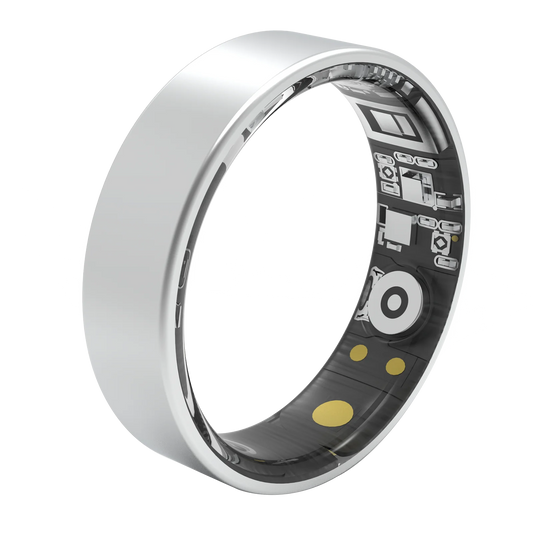
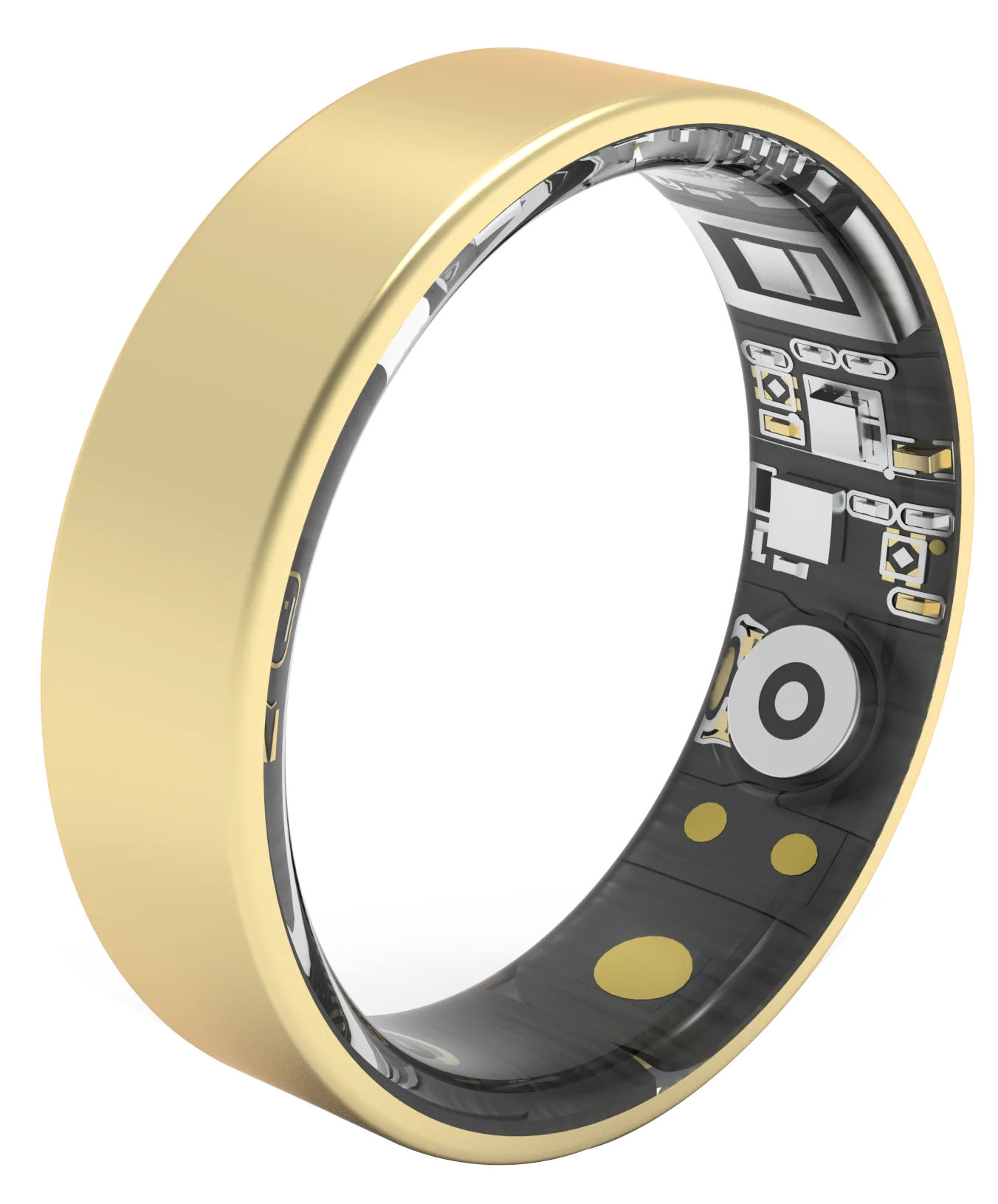
Wearable sensors collect signals through physical contact with your skin. Signal quality can vary with ring fit, movement, sensor positioning, skin characteristics, and other recording conditions.
A ring that rotates during the night — or that fits differently because of temporary finger swelling — may not collect signals under the same conditions as it did the night before. Battery level, recording duration, synchronization, and software processing can also affect whether data appears and how it is presented.
This means that not every difference between two readings represents a meaningful physiological change. Fit is one of the few variables you can actually control, which is why choosing the correct smart ring size matters more than most buyers expect.
2. Heart Rate Variability Trends: Why One Low Reading Does Not Tell the Whole Story
HRV is one of the most discussed measurements in wearable technology. It is also one of the easiest to misunderstand.
What does HRV actually measure?
Heart rate variability refers to variation in the time intervals between consecutive heartbeats. It is different from heart rate, which simply counts beats per minute.
Although HRV can provide information about autonomic nervous system activity, interpretation depends on context. A higher value is not automatically better for every person in every circumstance, and a lower value does not independently establish that something is wrong.
Different devices also use different measurement windows, processing methods, and HRV metrics. For that reason, values from two different products should not automatically be treated as interchangeable — a point worth remembering if you are comparing devices in our 2026 smart ring comparison.
Why can HRV change overnight?
Your HRV reading may shift following differences in sleep, emotional stress, physical exertion, alcohol consumption, or other routine changes.
But HRV is influenced by multiple factors at once, and the same factor can produce different results in different people. A lower reading cannot tell you exactly what happened, and a higher reading does not guarantee that you are fully recovered.
Consider this illustrative week:
|
Night |
HRV reading |
Context |
|
Monday |
48 ms |
Typical workday |
|
Tuesday |
41 ms |
Later bedtime, one drink |
|
Wednesday |
45 ms |
Usual schedule resumed |
|
Thursday |
47 ms |
More consistent sleep |
|
Friday |
39 ms |
Hard evening training session |
|
Saturday |
46 ms |
Rest day |
Illustrative figures only. These are not clinical reference ranges or recommended HRV targets.
Tuesday is lower than Monday, but the following readings move back toward the earlier level. Friday dips again after hard training, then recovers. Read as a sequence, this looks like a system responding normally to load. Read one night at a time, it looks like two alarms.
How to interpret heart rate variability trends
Instead of chasing a universal HRV number, start by learning what is typical for you.
1. Establish your personal baseline. Collect consistent measurements over several weeks, following your device's recommended wearing and recording practices.
2. Look for repeated changes. A series of readings is more informative than one unusually high or low result.
3. Review your routine alongside the data. Note changes in sleep duration, training load, travel, stress, or illness.
4. Avoid comparing unrelated numbers. Device, algorithm, and measurement-period differences make direct comparisons misleading.
5. Judge direction over days, not position on a single morning. A baseline is a reference point, not a medical threshold.
If you use HRV to shape training decisions, our smart ring training and recovery guide goes deeper on load and recovery signals.

3. Resting Heart Rate: Why a Few Beats Can Make a Difference
Resting heart rate is another core smart ring metric. It generally refers to beats per minute while the body is at rest, although the exact definition and measurement window depend on the device.
A change of a few beats per minute draws attention fast, especially when an app highlights the difference from the previous night. Before drawing conclusions, it helps to understand what moves the measurement.
Factors that may affect resting heart rate
Resting heart rate can vary with sleep, physical activity, emotional stress, hydration, illness, medications, and other individual circumstances. Environmental temperature and late meals can also play a role.
A demanding workout followed by insufficient rest may coincide with a different resting heart rate the next morning. A stressful day or disrupted sleep may appear alongside a change as well.
These are possible associations, not proof of cause and effect. Your ring cannot determine from a single reading which factor — if any — explains the difference.
Is a higher resting heart rate always a bad sign?
No. A single higher reading does not automatically indicate a problem, just as a lower reading does not automatically indicate improved fitness or recovery.
Context matters. Ask three questions:
1. Does the reading differ substantially from my personal pattern?
2. Does the change persist over several days?
3. Have I noticed relevant changes in how I actually feel?
It is also worth distinguishing a device's overnight estimate from a heart rate measured under standardized clinical conditions. The two may not use the same sampling method or definition.
When to stop watching the app
If readings remain unusual, or you experience chest pain, fainting, unusual shortness of breath, or persistent palpitations, seek appropriate medical advice rather than relying on wearable data to decide whether care is needed. Severe or sudden symptoms warrant urgent attention. Persistent disrupted sleep alongside daytime sleepiness is also worth raising with a clinician — the National Institute of Neurological Disorders and Stroke has more on sleep disorders that a consumer wearable cannot detect.
4. Sleep Tracking Accuracy: Why Your Sleep Score Can Change
You may feel you slept reasonably well, yet your ring reports less deep sleep, more interruptions, or a lower overall score. On another night, the app shows a better result even though you remember waking several times.
This highlights an important distinction: sleep tracking estimates are not the same as direct clinical measurements of sleep.
What does a smart ring measure during sleep?
Depending on the model, a smart ring may use optical heart-rate sensing, movement sensors, temperature sensing, and other available signals to estimate sleep timing, duration, stages, and related metrics. An algorithm then classifies periods of sleep and wakefulness and, where supported, estimates sleep stages.
Unlike clinical polysomnography, which can record brain activity and other physiological signals, a typical consumer smart ring does not directly measure all the signals used in a comprehensive sleep assessment. The reported results should therefore be read as estimates based on the data available.
For background on how sleep is structured and why stages matter, the Sleep Foundation's overview of sleep stages is a useful reference.
What the research actually says about sleep tracking accuracy
Research has found that consumer sleep trackers vary considerably in how closely their estimates agree with polysomnography, the standard clinical method for comprehensive sleep assessment.
A 2023 prospective multicenter validation study — Accuracy of 11 Wearable, Nearable, and Airable Consumer Sleep Trackers, published in JMIR mHealth and uHealth (2023;11:e50983) — compared 11 consumer sleep technologies against lab polysomnography in 75 participants across two medical centers, using 543 hours of PSG recording.
The findings are worth quoting precisely, because they explain a lot of everyday frustration:
· Accuracy varied enormously between devices. Overall macro F1 scores ranged from 0.2588 to 0.6863.
· The only ring in the study — Oura Ring Gen 3 — scored a macro F1 of 0.5186, with a Cohen's kappa of 0.3492, placing it in the "fair agreement" band (κ 0.2–0.4) rather than the "moderate agreement" band (κ 0.4–0.6) reached by five devices.
· Even the best-performing devices only reached moderate agreement with polysomnography. None achieved near-perfect staging.
· Devices systematically biased toward light sleep. The study notes a general tendency to classify epochs as light sleep, and wearables in particular tended to misclassify wake as light — which helps explain why trackers often overestimate sleep and underestimate time awake.
This does not mean consumer sleep trackers are useless. Observing your routine and identifying patterns over weeks is exactly what they are good at. It does mean an estimated change in deep or REM sleep should not be treated as an exact measurement of what happened in your brain.
Why can sleep data look different from one night to the next?
Several factors may contribute:
· Actual changes in sleep — bedtime, wake time, interruptions, and total duration all vary.
· Movement during the night — movement affects how a device interprets sleep versus wake.
· Signal quality — ring fit and sensor contact may differ between nights.
· Algorithmic estimates — different devices and software versions classify the same signals differently.
· Scoring methods — a sleep score usually combines several estimated metrics, so a shift in one component moves the final number.
A lower sleep score might reflect shorter estimated duration, a different distribution of stages, or a change in any other component the app weighs. The score alone does not establish why.
When evaluating sleep tracking accuracy, prioritise consistency of recording and longer-term patterns over the pursuit of a perfect nightly score. Our breakdown of what a sleep quality score actually contains explains which components move it most.
5. Normal Fluctuation or a Meaningful Pattern? How to Tell the Difference
The most practical way to read smart ring data is to separate an isolated change from a persistent pattern. A single reading offers limited context; repeated observations, paired with information about your routine and how you feel, provide a more useful picture.
|
What you notice |
A useful next step |
|
One unusual reading |
Check wearing conditions and recent routine changes. |
|
A metric changes for several days |
Review sleep, activity, stress, and other relevant factors. |
|
Several metrics change together |
Consider a shared change in routine or recording conditions, without assuming a specific cause. |
|
Data is missing or inconsistent |
Check fit, battery, and synchronisation, plus the device's recording guidance. |
|
Unusual readings persist or symptoms develop |
Seek medical advice when appropriate rather than relying on the app alone. |
This framework is designed to encourage thoughtful interpretation, not self-diagnosis.
Why trends beat daily scores
Imagine your HRV drops for one night and returns toward its usual level the next. That is a different pattern from a sustained change across five consecutive nights.
Similarly, one short sleep estimate says less than a repeated pattern of reduced sleep duration across a week.
Neither example proves your health improved or declined. The longer sequence simply helps you identify questions worth exploring — such as whether your schedule changed, or whether you consistently allow enough time for sleep.
The purpose of tracking is not to eliminate every fluctuation. It is to build a clearer understanding of your habits and of how your measurements behave under different circumstances.
6. Five Ways to Make Your Wearable Data More Consistent
You cannot remove normal biological variation, but you can reduce avoidable inconsistency in how data is collected and interpreted.
1. Wear your ring consistently
Follow the manufacturer's guidance for ring sizing, sensor positioning, and overnight wear. A comfortable, secure fit supports consistent signal collection without restricting circulation or causing discomfort.
If the ring frequently rotates, feels loose, or becomes uncomfortable, review the fit guidance for your model. If you are between sizes, a sizer is worth using before you commit — see the smart ring sizer kit and our ring size guide. Which finger you use also matters; we compare options in smart ring finger choice.
2. Keep your measurement routine consistent
Wear the ring during the recommended periods and follow its guidance for charging and synchronisation. Avoid treating a complete overnight recording and a partial recording as equivalent — they are not comparable data.
Consistency makes comparisons more meaningful, even though it cannot remove all measurement error.
3. Record context, not just numbers
A short note about bedtime, exercise, travel, alcohol, or unusual stress helps you understand why a particular night differed from your baseline.
You do not need to document everything. Start with a few factors relevant to your routine and look for recurring associations rather than assuming one event caused a change. Physical activity is one of the strongest; the World Health Organization's physical activity guidance is a good reference point for what a normal week of movement looks like.
4. Review trends at a practical interval
Checking data every morning can help you understand your routine, but reacting repeatedly to small changes creates unnecessary concern. Review weekly patterns, and occasionally look at a longer window. The right interval depends on the metric, the device, and how consistently you collect data.
5. Use the same device and metric for comparisons
If your goal is to understand personal trends, using the same device and app over time removes one major source of inconsistency. Different devices may define, sample, or calculate a metric differently — even when they use the same label, their results may not be directly comparable.
Consistency in measurement is more useful than chasing a higher score from one product to another.
7. What Smart Ring Data Can — and Cannot — Tell You
Smart rings make it easier to observe patterns in sleep, activity, heart rate, and other supported measurements. Their value lies in helping you reflect on your routine and notice changes you might otherwise miss.
However, wearable data is not a diagnosis.
A low HRV value does not independently identify a medical condition. A higher resting heart rate does not establish its cause. An estimated change in sleep stages cannot confirm a sleep disorder.
Accuracy also varies by device, metric, recording conditions, and individual characteristics. The U.S. Food and Drug Administration's General Wellness: Policy for Low Risk Devices guidance provides useful context for separating low-risk general wellness functions from medical-device claims — a distinction worth understanding before you treat any app output as clinical.
If a measurement concerns you, consider the full context, including symptoms and medical history, and consult a qualified healthcare professional when appropriate. Do not use a consumer wearable as a substitute for clinical assessment.
8. A Smarter Way to Use Your Smart Ring Every Day
The best way to use a smart ring is to treat it as a source of observations rather than a daily verdict.
Start by learning your personal baseline. Wear the ring consistently, review several days of data at a time, and note relevant changes in your routine. When a result looks unusual, check whether the recording was complete and whether there is a straightforward contextual explanation.
Most importantly, give individual readings room to vary.
A useful wearable experience is not one where every number stays the same. It is one where you gradually learn which patterns are typical for you, which changes deserve a closer look, and where the limits of the technology begin.
If you are choosing a ring now, two things matter more than any single metric: whether the fit is right for your finger, and whether the ongoing cost works for you. Our guides to smart rings without a subscription and the Osawalla Signature Pro review cover both. You can also compare the Osawalla smart ring collection and see how a ring compares to a watch for sleep tracking in our smart ring vs smartwatch guide.
Final thoughts
Smart ring data fluctuations are part of using a technology that observes a changing human body through indirect measurements. HRV, resting heart rate, and sleep estimates all vary, and no single number tells the whole story.
By focusing on consistent measurement, personal baselines, and longer-term trends, you can make your wearable data genuinely useful — without treating every change as a warning.
Track the pattern, understand the context, and remember that your wearable provides estimates, not the final word on your health.
Frequently Asked Questions
Why does my smart ring data change every day?
Your measurements may change because of normal biological variation, differences in sleep and activity, stress, environmental factors, sensor conditions, and the algorithms used to estimate each metric. Not every fluctuation has an identifiable cause.
How long should I track HRV before looking for a trend?
There is no single period that works for every person or device. Collecting consistent measurements over several weeks can help establish a personal reference range, though interpretation depends on the metric and recording method. Avoid treating that baseline as a clinical threshold.
Is a lower HRV reading always bad?
No. A single lower reading does not independently establish a health problem or poor recovery. Consider your usual pattern, recent routine, measurement conditions, and how you feel. Persistent unusual readings or concerning symptoms deserve appropriate medical attention.
Why does my smart ring show different sleep stages each night?
Sleep itself varies, and consumer devices estimate sleep stages from available sensor signals and algorithms. Differences in movement, signal quality, and classification methods also affect results. Estimated sleep stages should not be treated as exact clinical measurements — in one 2023 validation study, the ring tested reached only "fair agreement" with lab polysomnography (κ = 0.3492).
Can I compare smart ring data with smartwatch data?
You can compare broad patterns cautiously, but numerical readings may differ because devices use different sensors, algorithms, sampling periods, and metric definitions. For personal trend tracking, consistent use of the same device and metric is much easier to interpret. See our smart ring vs smartwatch comparison.
Does a poor ring fit really change my readings?
It can. Optical sensors need consistent skin contact, and a ring that rotates or sits differently may not collect signals under the same conditions as the night before. If readings look erratic, fit is one of the first things to check — start with our smart ring size guide.
Should I be worried if my resting heart rate suddenly changes?
A single change does not automatically indicate a medical problem. Check recording conditions and recent context, and see whether the difference persists. If you experience concerning symptoms or persistent unusual readings, seek appropriate medical advice rather than relying on the wearable alone.
Do I need a subscription to use these features?
It depends on the brand. Some rings require a monthly fee to access full analytics, while others include the app without an ongoing charge. Read our guide to smart rings without a subscription before you buy.
 References
1. Cleveland Clinic — Heart Rate Variability (HRV)
2. Lee T, Cho Y, et al. — Accuracy of 11 Wearable, Nearable, and Airable Consumer Sleep Trackers: Prospective Multicenter Validation Study. JMIR mHealth and uHealth, 2023;11:e50983. PMID: 37917155.
3. U.S. Food and Drug Administration — General Wellness: Policy for Low Risk Devices
4. Sleep Foundation — Stages of Sleep
5. National Institute of Neurological Disorders and Stroke — Sleep Apnea
6. World Health Organization — Physical Activity
Related reading on the Osawalla blog
· How a smart ring tracks sleep
· How accurate is smart ring heart rate monitoring?
· Smart ring blood oxygen (SpO₂) monitoring
· What affects your sleep quality
Last updated: October 2026. General wellness information only — not medical advice. Product specifications and app features may change; verify details on the current product page before purchasing. Wearable readings are estimates and are not a substitute for clinical assessment.


