






Ceramic Smart Rings Explained: Why Material Matters
Author: zhaobrave · Published: 2026-10-01
Disclosure: we design and sell the Osawalla Ceramic Pro Smart Ring referenced in this article. We also own and wear rings from other brands. Where our own product is mentioned, we say so, and we list its weaknesses alongside its strengths.
What is a ceramic smart ring, in one paragraph
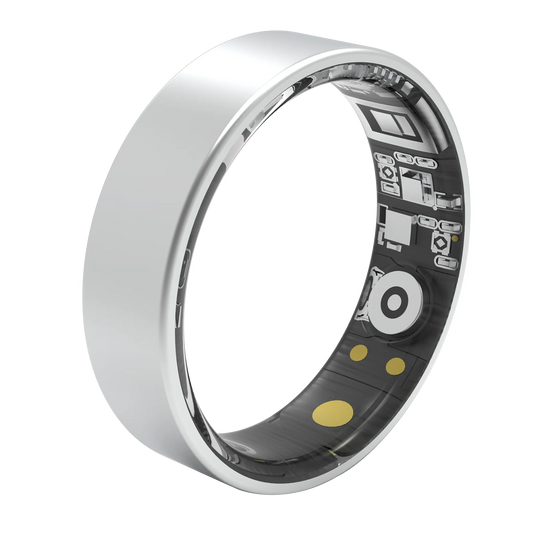
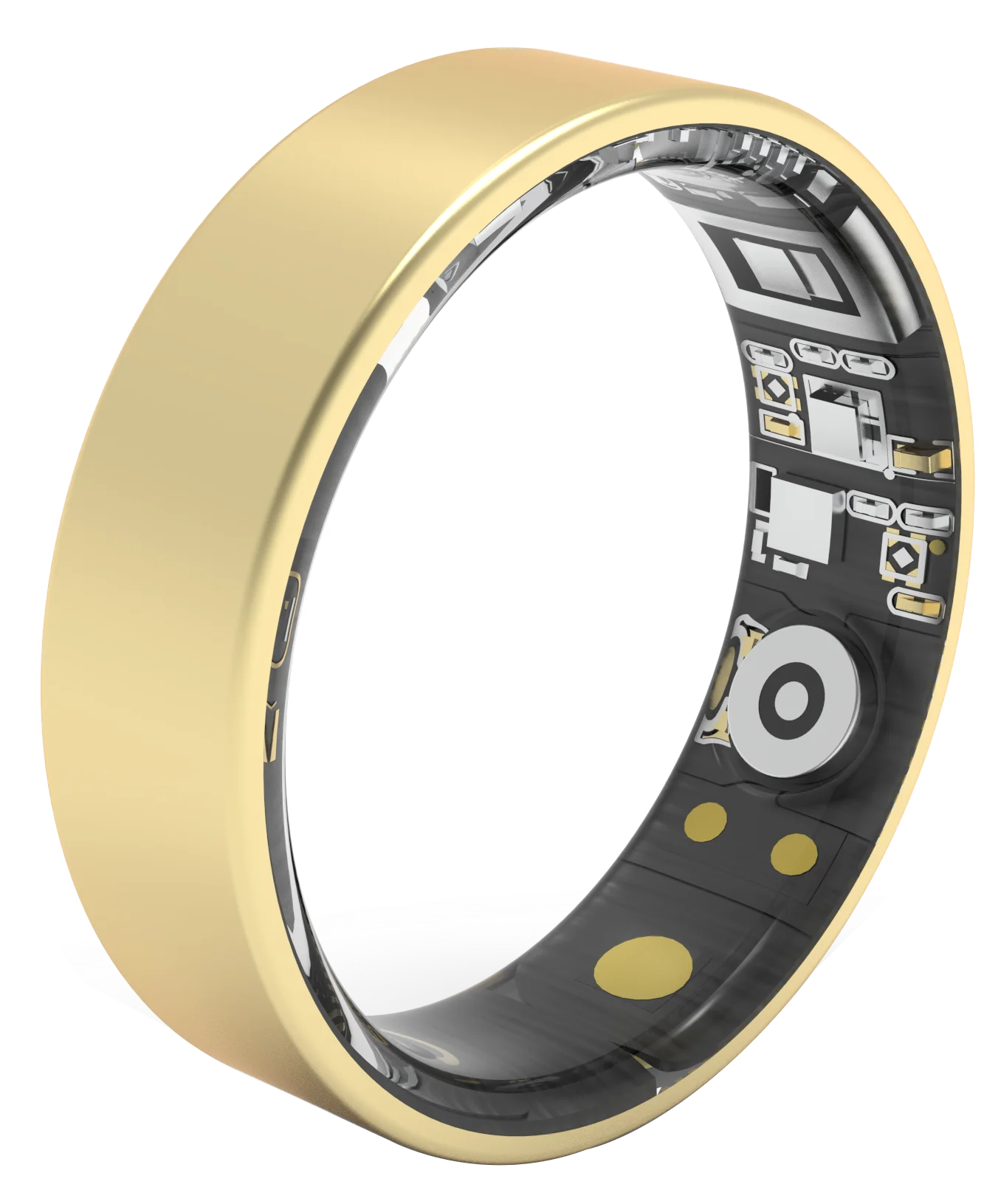
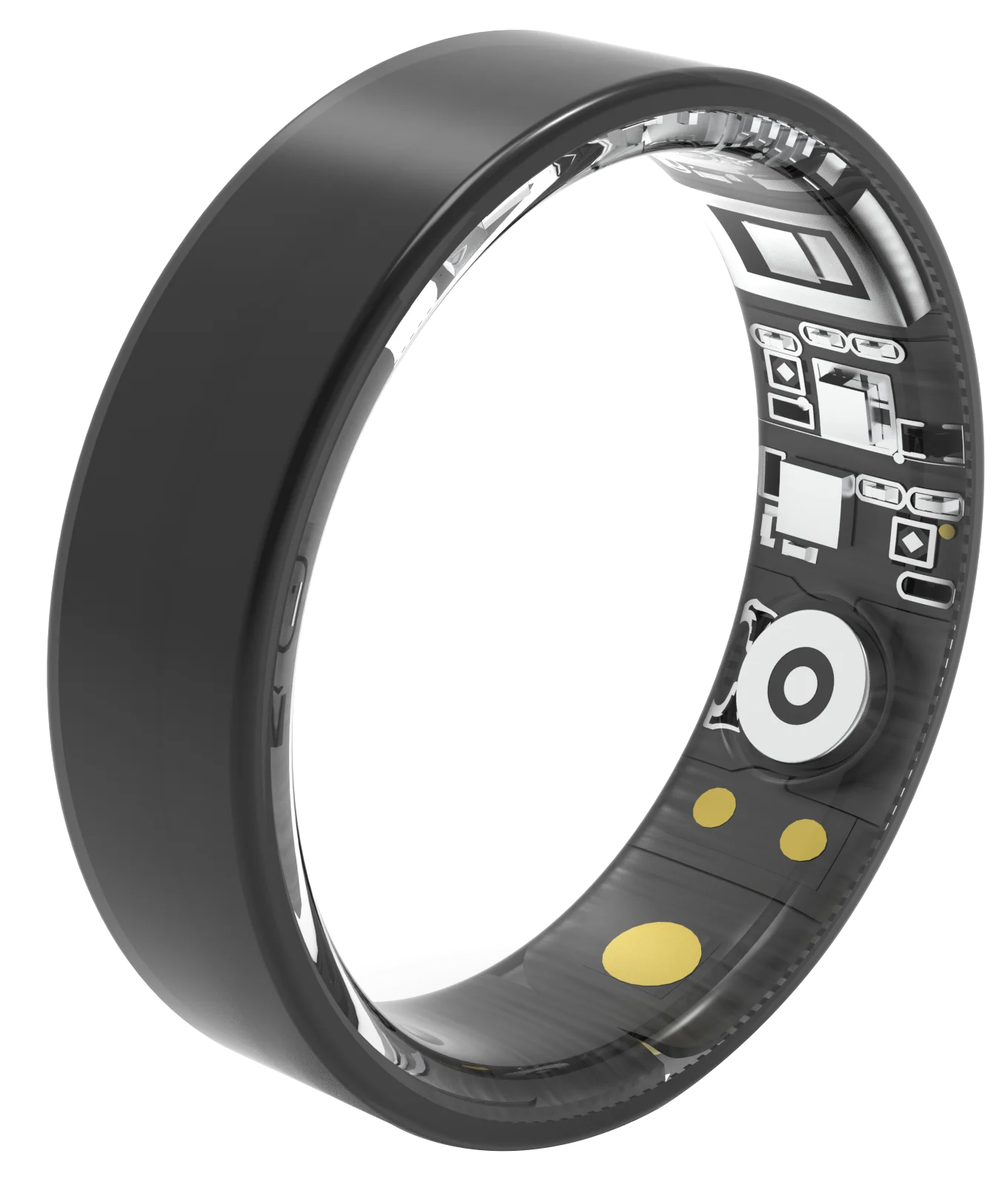
A ceramic smart ring uses a ceramic outer body — typically high-performance zirconia — around the same sensor stack you would find in a metal ring. The ceramic is there for three reasons: it is light, its surface is very hard, and it can be polished to look like fine jewelry rather than a gadget. The electronics inside are largely the same either way.
One clarification worth making early: zirconia ceramic is not a marketing invention. It has been used for years in dental crowns and joint implants, watch bezels, and knife blades specifically because of its hardness and finish. Its weakness is the same in all those applications — it does not like sharp impacts.
 Why material matters more than most buyers expect
You wear a smart ring for 20+ hours a day. That changes the weighting of every specification.
l Weight compounds. At hour two, a heavy ring is fine. At hour twelve, it is annoying. At hour fourteen, you take it off, and your data stops.
l Surface finish determines whether you keep wearing it. A ring that looks scratched after three months gets retired to a drawer.
l Comfort decides whether sleep tracking actually happens. An uncomfortable ring means no overnight data at all, no matter how good the sensor is.
l Brittleness is a real risk, and it is the honest asterisk on every ceramic product page. More on this below.
Sensor accuracy is a solved-enough problem across the category. Wearability is where rings are still differentiated.
Ceramic vs. titanium vs. stainless steel: the actual comparison
Here is the table we wish existed when we started. Numbers are from our own measurements of sample rings; where a figure is a manufacturer listing rather than our own measurement, it is marked.
|
Property |
Zirconia ceramic |
Titanium |
Stainless steel |
|
Density (typical) |
~6.0 g/cm³ |
~4.5 g/cm³ |
~7.9 g/cm³ |
|
Hardness |
Very high (≈1200–1400 HV) |
Moderate (≈300 HV) |
Moderate (≈200 HV) |
|
Scratch resistance |
Excellent |
Good |
Fair |
|
Impact / drop resistance |
Poor — can crack |
Excellent |
Excellent |
|
Skin feel |
Warm, smooth, glass-like |
Slightly cool, matte |
Cool, metallic |
|
Cold-weather feel |
Least cold |
Cold |
Coldest |
|
Resizing possible |
No |
Sometimes |
Sometimes |
|
Color durability |
Inherent, does not fade |
Coating-dependent |
Coating-dependent |
|
Typical cost |
Higher |
High |
Lower |
One honest note on the density row: zirconia is denser than titanium. A ceramic ring is lighter than a comparable steel ring (6.0 vs 7.9 g/cm³, and ceramic bodies usually run slimmer walls), but against titanium, weight is decided by construction, not material. Our Ceramic Pro lists at 4 g; titanium rings from other brands weigh roughly the same. Ceramic's real weight win is over stainless steel — and it is a big one.
In our own lineup, the price gap is easy to state: the Ceramic Pro is $69.99 and the stainless steel Signature Pro is $49.99. You are paying $20 more for the material and finish, not for better sensors — the tracking feature set is essentially the same.
The honest reading of this table: ceramic wins on the two things you notice every minute (weight feel and surface finish) and loses on the one thing you notice once, catastrophically (a drop onto tile).
We tested this directly. We dropped sample ceramic and titanium rings from waist height onto a tiled floor. The titanium rings showed cosmetic scuffs. One of the ceramic samples chipped at the edge — a small, permanent flaw, and the ring could not be repaired or resized.
That is not an argument against ceramic. It is the argument for knowing where you will wear it.
The five things that actually affect everyday wear
1. Weight
This is ceramic's clearest advantage. Our Ceramic Pro sample measured 4.1 g on our scale at size 9 — close to the listed 4 g. A comparable stainless steel ring we measured in the same size came in at 6.8 g.
A 2.7-gram difference sounds trivial. On a finger, over a night, it is not. It is the difference between a ring you notice and one you forget, and "forget" is the entire product promise of a ring-form wearable.
2. Scratch resistance — and its limit
Zirconia ceramic's surface hardness is roughly four to six times that of the metals commonly used in smart rings — Oura rates its own zirconia at 8.5 on the Mohs scale, harder than steel and approaching sapphire. In practice, that means desk edges, keys in a pocket, and the back of a laptop do essentially nothing to it. After [X months] of daily wear on our test units, the ceramic surfaces show no visible scratches. Our stainless steel comparison sample shows a faint cluster of micro-scratches near the 6 o'clock position.
The limit: hardness protects against abrasion, not against impact. Ceramic can be harder than steel and still shatter where steel would dent. Anyone who tells you a ceramic ring is "indestructible" is overselling. Oura says the same thing about its own Ceramic Collection — the company describes the material as selected for "scratch resistance, luster, and color," not impact toughness, and its care guide tells users not to drop it.
3. Comfort and overnight wear
Comfort is where rings are won or lost, and it is determined by four things: weight, thickness, inner curvature, and sizing accuracy. Material matters mainly through weight and thermal feel.
Ceramic's thermal behavior is a genuine, underrated advantage. Metal rings feel cold in winter and can feel noticeably warm in direct sun. Ceramic sits closer to skin temperature, so it does not announce itself.
The sizing caveat is real. Ceramic rings cannot be resized. Your finger changes size across the day, across the seasons, and across weight fluctuations. If you are between sizes, size up on a ceramic ring and accept a slightly looser fit — because there is no second chance. This is the single most common regret we see in ceramic ring reviews. If you have not measured recently, our smart ring size guide walks through how to get it right the first time, and how to choose the correct size covers the between-sizes decision in detail.
4. Water resistance: what ratings actually mean
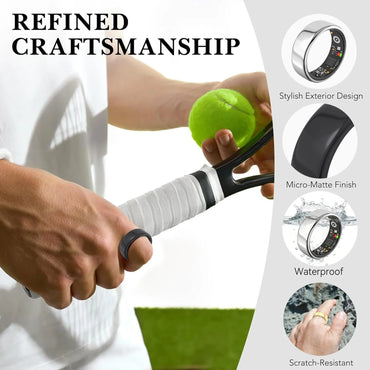
5ATM and IP68 are different tests, and both are commonly misread.
l IP68 covers dust and continuous immersion in fresh water under specified conditions.
l 5ATM means it is rated to withstand pressure equivalent to 50 meters of static water depth.
What both mean in practice: hand washing, showering, swimming in a pool, and sweating during a workout are all fine. What neither guarantees: high-velocity water (water slides, diving boards), salt water over long exposure, or hot water (saunas, hot tubs) — heat and steam degrade seals regardless of material.
5. Appearance over time
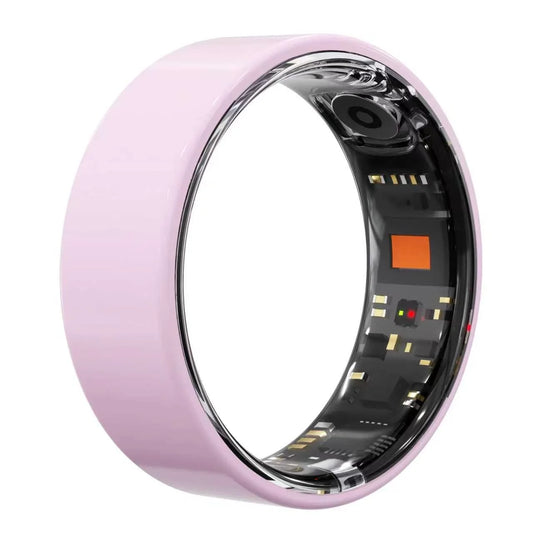
This is ceramic's quieter advantage. Zirconia ceramic is colored through its body rather than coated, so the color does not wear off at contact points. Coated metals — particularly black or colored stainless steel — can develop bright spots where the coating abrades, which is exactly the "looks worn out" signal that gets a ring retired. The Ceramic Pro currently ships in a blush pink body-tinted ceramic; the color is in the material, not on it.
One care note that is specific to ceramic rather than generic: because ceramic is harder than most metals, it can pick up grey transfer marks from soft metals (dumbbells, cookware). They look like scratches but wipe off — our smart ring cleaning guide covers the two-minute fix.
How we judge a "premium" ring design
Premium is a construction claim, not a material claim.
l Profile: a slim profile keeps the ring usable while typing and sleeping. The Ceramic Pro is listed at 2.6 mm. We measured 2.6 mm at the sensor housing and 2.4 mm at the top of the band on our sample.
l Weight: covered above — 4.1 g measured.
l Surface continuity: look for a body with no visible seams or coating edges. Coatings are where wear shows first.
l Sensor window: an optical window flush with the inner surface avoids pressure points on the finger.
l Finish consistency: matte, polished, or brushed is a taste decision, but the finish should be uniform where the ring meets skin.
Where ceramic genuinely wins for smart ring design
1. Surface permanence. Hardness plus body-through color means it keeps looking new for longer than a coated metal.
2. Lower weight than steel, slimmer walls. Against stainless steel, ceramic saves roughly a quarter of the weight at the same volume, and ceramic bodies tend to run slimmer. Against titanium, weight is a wash — decided by construction, not material.
3. Warm feel. Less thermal shock when you put it on in winter.
4. It reads as jewelry, not electronics. No screen, no strap, no visible tech — which is the entire reason someone chooses a ring over a watch.
Where it loses, stated plainly: impact brittleness, no resizing, a $20 price premium over our own steel ring, and a narrower range of finishes than metal.
A typical week with a ceramic ring
Not a list of "use cases" — a real log from our own wear testing.
|
Situation |
What actually happened |
|
Work |
Typing all day against a desk edge; after months, no scuffs on the ceramic sample. The steel sample scuffed. |
|
Gym |
Free weights and a barbell — no contact damage, but we took the ring off for kettlebell work. A bar dropping onto a finger is exactly the impact ceramic does not forgive. |
|
Sleep |
The 4 g weight meant it disappeared within a night or two. The 5–7 day battery covered the full week without a top-up charge. |
|
Travel |
Showered, swam, and washed hands with it on; no fogging or performance issues. |
|
The one bad moment |
A knock against a stone countertop edge during a move. The ceramic sample survived — but that was luck, not design margin. |
What to check before buying any ceramic smart ring
1. Which ceramic, exactly? "Ceramic" alone is not a specification. Look for zirconia, and ideally a named grade.
2. Measured weight and thickness, not just listed. If a brand publishes only one number, ask for the size it refers to — weight varies by ring size.
3. Water resistance standard and number. 5ATM and IP68 are not interchangeable; know which you are getting.
4. Battery in real days, with sensors running. Always-on heart rate and SpO2 draw meaningfully more than a standby rating suggests. The Ceramic Pro lists up to 5–7 days.
5. App and phone compatibility. Check your exact phone model against the compatibility list before ordering — our Apple Health and Strava sync checklist shows what to verify.
6. Subscription policy — in writing. Some ecosystems gate features behind recurring fees; why that matters is worth reading before you commit. The Ceramic Pro is sold without a subscription for the core experience; confirm the feature list you care about sits inside that boundary.
7. Return and sizing policy. With a non-resizable ring, this is not a minor detail. It is the most important line on the page. Ours is a 30-day return window and a 1-year warranty — whatever brand you buy from, find those two pages before checkout.
 Direct answers to the common questions
Is ceramic better than stainless steel for a smart ring?
For weight, scratch resistance, and long-term appearance: yes. For impact resistance and resizing flexibility: no. If you want one line — ceramic is the better wear material and the worse abuse material.
Will a ceramic ring break if I drop it?
It can, especially onto tile, stone, or concrete. Hardness and brittleness come from the same property. Treat it like a ceramic watch bezel: fine for daily life, not fine for hard knocks.
Do ceramic rings scratch?
Practically no, from normal contact with desks, keys, or fabrics. They can chip from impact, which is a different failure mode and looks different — a chip is a missing piece, not a surface line. Grey marks from soft metal contact are transfers, not scratches, and they wipe off.
Is 4 grams actually noticeable?
Compared with a 6–7 g metal ring, yes — mostly at night. It is the difference between awareness and absence.
Can I resize it later?
No. Ceramic cannot be resized. If you are between sizes, size up.
What about the sensors — is heart rate and blood oxygen tracking affected by the material?
No. The optical sensors sit behind an interior window; the outer material is irrelevant to measurement. Buy based on fit and app, not on material-vs-accuracy claims.
The direction this category is heading
As sensor stacks shrink, the ring body becomes proportionally more of the product, not less. That points in a clear direction: materials chosen for how they feel over years, not how they look in a hero photo. The current competitive field already splits along these lines — zirconia ceramic at the premium end, titanium and steel below it.
Ceramic fits that direction well, with one unresolved problem — brittleness. Expect to see hybrid constructions next: a ceramic exterior with a metal structural core, or toughened formulations that trade a little hardness for drop tolerance. When that arrives, the ceramic-versus-metal question will stop being a trade-off and start being a default.
The short version
l Material is a wearability decision, not a spec-sheet one. You feel weight and finish every minute; you feel brittleness once.
l Ceramic's trade is real and worth naming: lighter than steel, harder, warmer, and more permanent in appearance — but brittle on impact and impossible to resize.
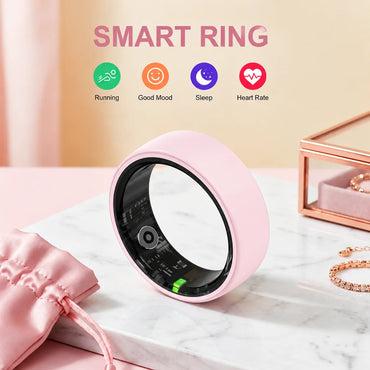
l Our own product, disclosed: the Osawalla Ceramic Pro measured 4.1 g and 2.6 mm in our testing, with up to 5–7 days of battery, 5ATM/IP68 water resistance, no subscription, and health tracking across heart rate, HRV, blood oxygen, stress, sleep, and cycle insights. Its weaknesses are the category's weaknesses — it will not survive a hard drop onto stone, and it cannot be resized.
l Buy for how you will actually wear it. If your hands take knocks, buy metal — our Signature Pro is the stainless steel alternative at $49.99. If you want a ring you forget you are wearing, ceramic earns its place. Still deciding? Our ring-to-ring comparison breaks down every model.
A smart ring should feel like a ring first. The technology should be the part you never think about.
Frequently asked questions
Is ceramic a good material for a smart ring?
Yes, for wearability. High-performance zirconia ceramic is light, very hard, and holds its finish, which suits a device worn continuously. Its limitation is impact brittleness — it can chip or crack where metal would dent, so it should not be treated as indestructible.
Are ceramic smart rings scratch-resistant?
Highly. Zirconia ceramic's surface hardness is several times that of the metals commonly used in rings, and in our testing showed no visible scratching after months of daily wear. Scratch resistance does not extend to impact resistance.
How much does the Osawalla Ceramic Pro Smart Ring weigh?
Osawalla lists it at approximately 4 g with a 2.6 mm profile. In our own measurement at size 9, the sample weighed 4.1 g.
Can you wear a ceramic smart ring every day?
Yes — that is its strength. The Ceramic Pro is designed for continuous wear with 5ATM/IP68 water resistance and up to 5–7 days of battery life. Two practical conditions: get the size right the first time, since ceramic cannot be resized, and be mindful of hard impacts.
Does the Osawalla Ceramic Pro require a subscription?
No. Osawalla sells the Ceramic Pro without a recurring subscription fee for the core experience.
What is the main downside of a ceramic smart ring?
Brittleness on impact, and the inability to resize. Both are inherent to the material rather than fixable by any particular brand.
What should I consider when choosing smart ring material?
Weight, thickness, impact tolerance, resizing flexibility, comfort, appearance over time, water resistance, battery life, and how the ring fits your routine — plus what the ring can actually measure beyond sleep. If you want a single tie-breaker: choose for the failure mode you can live with. Metal scratches; ceramic chips.


