





How Smart Rings Improve Training Recovery: A 2026 Guide for Athletes
 Key takeaways
- Recovery is where adaptation happens — training breaks the body down, recovery builds it back up.
- A smart ring adds value through long-term trends, not single daily scores.
- The three signals worth watching: sleep, resting heart rate, and HRV — always against your own baseline.
- Sleep loss hits skill control and aerobic endurance hardest (effect sizes −0.87 and −0.76 in a 2025 meta-analysis).
- A recovery score cannot diagnose injury. Persistent pain or fatigue needs a healthcare professional, not an app.
Table of contents
1. What Training Recovery Actually Means
2. How Smart Ring Recovery Tracking Works
3. Sleep: The Foundation of Training Recovery
4. Resting Heart Rate: Context for Your Recovery
5. HRV: Your Body's Recovery Signal
6. Breaking the "Train Harder Every Day" Mindset
7. Recovery Is About Patterns, Not Perfect Scores
8. Before, During, and After a Workout
9. Choosing an Athlete Wearable You'll Actually Wear
10. Osawalla Smart Rings for Everyday Recovery
11. What Smart Rings Cannot Tell You
12. FAQ
Training hard is only one part of getting stronger, faster, and fitter. What happens after the workout can matter just as much.
You can follow a carefully designed plan, add mileage, lift heavier, or stack more hard sessions into your week. But if your body never gets the time and resources to recover, more training rarely produces better results. It usually produces fatigue.
This is where smart ring recovery tracking becomes genuinely useful.
A smart ring is not a replacement for a coach, a physician, or your own perception of how you feel. It adds one more layer of information — continuous, passive measurement of selected physiological signals. Read as trends over weeks, those signals help you see the relationship between your training, your sleep, and your recovery.
For anyone who exercises regularly, that turns a ring from a gadget into an athlete wearable that actually connects training to recovery.
In this guide: what recovery really means, which measurements matter, how to use recovery data without becoming obsessed with it, and how Osawalla smart rings fit into an everyday training routine.
What Training Recovery Actually Means
Training recovery is the process your body goes through after physical activity.
During exercise, your body takes on stress: muscles are challenged, energy stores are drawn down, heart rate climbs, and the nervous system responds to the load.
Recovery is when adaptation happens. It is not the absence of training — it is the part of training that makes the next session productive.
Good recovery involves:
· Getting enough quality sleep
· Allowing appropriate rest between hard sessions
· Replacing energy and fluids
· Managing training intensity across the week
· Keeping daily habits consistent
· Paying attention to how your body actually feels
· Adjusting when fatigue accumulates
Why "I Feel Fine" Isn't Always Reliable
The hard part is that recovery is not easy to judge from the inside.
You may feel great after one hard session and unexpectedly flat after another that looks identical on paper. Sleep varies night to night. Stress, travel, and nutrition all shift the picture.
This is precisely the gap a smart ring can fill. It does not replace your perception — it calibrates it against measured data.
How Smart Ring Recovery Tracking Works
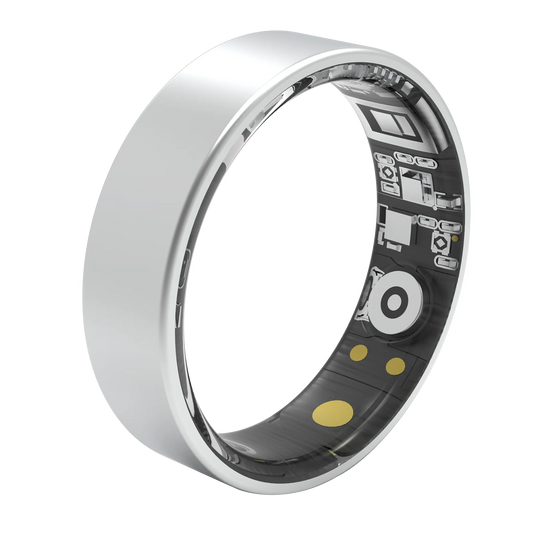
A smart ring places sensors against the skin of your finger, an area with good blood perfusion and far less motion artifact than a wrist during sleep.
Depending on the device, measurements can include:
· Heart rate and resting heart rate
· Heart rate variability (HRV)
· Sleep duration, timing, and disruptions
· Activity and movement
· Blood oxygen (SpO₂) on some models
· Skin temperature trends on some models
The Value Is in the Trend, Not the Number
The value is almost never in one isolated reading.
Consider this common pattern: you normally sleep seven to eight hours with stable overnight metrics. After several consecutive hard training days, your sleep shortens, your resting heart rate drifts away from its usual range, and you feel unusually tired during the day.
No single one of those measurements proves you need a rest day.
Together, they give you a reason to look more closely. That is the practical way to think about smart ring recovery.
If you're weighing a ring against a wrist-based tracker, we break down the accuracy and comfort trade-offs in Smart Ring vs Fitness Tracker: Which One Should You Actually Wear in 2026?
Sleep: The Foundation of Training Recovery
If you are serious about fitness recovery, sleep is the first variable to address — before supplements, before ice baths, before compression gear.
What the Research Actually Says
The evidence here is unusually consistent.
A 2025 systematic review and meta-analysis found that sleep deprivation impaired sport performance across nearly every domain, with the largest effects on skill control (effect size −0.87) and aerobic endurance (−0.76), followed by speed (−0.58), explosive power (−0.46), and maximal strength (−0.24). Perceived exertion rose in parallel (0.51). Read the full analysis: Effects of sleep deprivation on sports performance and perceived exertion.
A separate review on sleep hygiene for optimizing recovery in athletes reached a practical conclusion: measurable performance decrements appeared with as little as two to four hours of sleep restriction per night, and most studies supported increasing sleep by around two hours for athletes — with up to nine hours as a target for elite performers.
Sleep extension studies in that review showed improvements in sprint times, tennis serve accuracy, swim sprint performance, basketball shooting accuracy, and time to exhaustion.
Why a Ring Helps With Sleep Specifically
Most people underestimate how inconsistent their sleep actually is.
"I slept pretty well last night" is a guess. Three weeks of recorded data is a measurement.
A smart ring stays on your finger overnight, so tracking is automatic rather than self-reported. Over a month you may notice patterns such as:
· Sleep duration drops after late-evening workouts
· Bedtime shifts by two or more hours on weekends
· Consistent bedtimes correlate with better next-day energy
· Two or three poor nights in a row tend to precede your worst training days
Start With Habits, Not Products
If your ring consistently shows shorter sleep after intense training, the answer is rarely another supplement.
Start with the basics: a consistent sleep window, a wind-down routine, and enough time in bed. The U.S. Centers for Disease Control and Prevention outlines the fundamentals in About Sleep.
The goal is not to chase a perfect sleep score. It is to build habits that make recovery predictable.
Resting Heart Rate: Context for Your Recovery
Heart rate rises during exercise because working muscles need more oxygen and fuel. Useful, but not especially informative on its own.
Resting heart rate is the more interesting signal.
Suppose your usual resting heart rate is stable week to week. After several days of unusually demanding training, you notice it sitting consistently above your normal range.
That does not automatically mean you are overtrained. Resting heart rate responds to many things:
· Psychological stress
· Sleep quantity and quality
· Hydration status
· Illness or early infection
· Caffeine and alcohol
· Training intensity
· Heat, humidity, or altitude
So the useful question is not "Is this number good or bad?"
It is "How does this compare with my normal pattern?"
That single shift in framing is what separates wearable data you act on from wearable data you worry about.
HRV: Your Body's Recovery Signal
Heart rate variability (HRV) is the variation in time between consecutive heartbeats.
Higher beat-to-beat variability generally reflects stronger parasympathetic ("rest and digest") activity, while a sustained drop can reflect accumulated stress — physical or otherwise. HRV is influenced by sleep, training, stress, hydration, and overall physiological state.
 Measure It Properly or Don't Bother
HRV is highly sensitive to measurement conditions, which is why the Australian Institute of Sport's best-practice guidelines insist on standardized acquisition: same time of day, same posture, resting state, and consistent artifact handling.
Two implications for everyday athletes:
· Overnight measurement beats spot checks. A ring measuring while you sleep meets the standardization requirement far better than a daytime reading taken while you are moving, caffeinated, or stressed.
· Individual longitudinal comparison is the only valid comparison. HRV varies enormously between people. Comparing your number to someone else's is meaningless; comparing it to your own rolling baseline is the whole point.
Putting HRV to Work
Consider two mornings:
|
|
Normal training day |
Demanding recovery day |
|
Sleep |
Good |
Poor |
|
Energy |
Normal |
Unusual fatigue |
|
HRV vs. your baseline |
Stable |
Noticeable drop |
|
Workout feel |
Comfortable |
Harder than expected |
The second column does not mean you must stop training. It means a lighter session, an extra rest day, or better recovery habits may be the smarter call.
This is the logic behind HRV-guided training — using your own readings to decide whether today's planned intensity matches today's readiness. The published effect on performance is modest and context-dependent, but the value in avoiding unnecessary high-intensity exposure is well supported.
Breaking the "Train Harder Every Day" Mindset
One of the easiest mistakes in fitness is assuming more training automatically means better results. It does not.
Your body needs a workable balance between training stress and recovery.
Here is what a balanced running week looks like:
|
Day |
Session |
|
Monday |
Easy run |
|
Tuesday |
Interval workout |
|
Wednesday |
Recovery |
|
Thursday |
Tempo run |
|
Friday |
Rest |
|
Saturday |
Long run |
|
Sunday |
Easy activity |
The recovery days are not wasted days. They are part of the plan.
Training-load science backs this up. The International Journal of Sports Physiology and Performance consensus statement on monitoring athlete training loads recommends combining external load (what you did) with internal load and subjective wellbeing (how your body responded) — because load alone does not predict adaptation, illness, or injury.
An athlete wearable lets you see both halves of that equation in one place: what you trained, and how you recovered from it.
The mindset shift looks like this:
Train → Recover → Adapt → Train again
rather than:
Train → Train harder → Train harder again
Recovery Is About Patterns, Not Perfect Scores
The most common mistake with wearable technology is obsessing over daily scores.
Your ring shows a lower recovery-related score one morning. That does not mean something is wrong. You may simply have:
· Stayed up later than usual
· Had a stressful workday
· Trained harder than planned
· Travelled across time zones
· Slept in an unfamiliar bed
Human bodies are not machines, and single readings are noisy.
So instead of asking "Why is my score lower today?", ask:
"What has changed over the past week?"
Most consumer rings need roughly two to four weeks of consistent wear before a personal baseline is stable enough to interpret. Before that, you are mostly looking at noise.
Before, During, and After a Workout
Recovery tracking is not only retrospective. It can inform the session you are about to do.
Three Questions Before You Train
1. How do I feel?
Your subjective experience matters. Energetic, normal, tired, or unusually flat?
2. What does my recent data show?
Look at the last few nights of sleep and your resting heart rate trend. Has anything moved meaningfully away from your baseline?
3. What does today's session require?
A hard interval session places very different demands on your body than a 30-minute walk.
How These Combine
If you slept poorly but feel energetic and today's session is light, proceed as planned.
If you have several nights of poor sleep, unusual fatigue, and a demanding session scheduled — that is a reasonable moment to reduce intensity.
The ring does not make the decision. It gives you better information for making it yourself.
After Training
Give your body time to recover rather than automatically adding more volume. Check your activity and movement through the day, and pay attention to hydration, nutrition, and stress.
Choosing an Athlete Wearable You'll Actually Wear
The best recovery tracker is the one you wear consistently.
If a device is uncomfortable, has poor battery life, or demands a subscription you resent, you will stop using it — and then it produces nothing.
This is the main argument for ring-based wearables. A ring fits into ordinary life without friction:
· Sleeping
· Walking
· Working
· Travelling
· Exercising
· Relaxing
For recovery specifically, overnight wear matters most, because sleep is the largest single input to the recovery picture. A lightweight, screen-free design also means no notifications competing for your attention at 11 p.m.
Battery life of roughly five to seven days and no recurring subscription fee are worth checking before you buy — both determine whether a device survives month three.
For a broader look at which features earn their place, see The Best Smart Ring Features for Busy Professionals.
Osawalla Smart Rings for Everyday Recovery
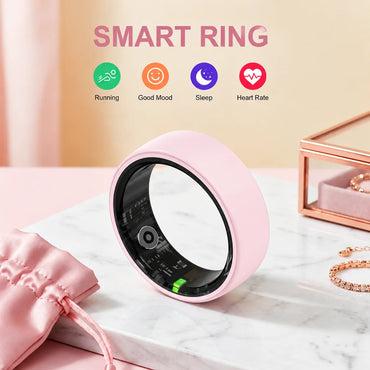
If you want to explore smart ring recovery tracking without spending flagship money, Osawalla offers two options at different price points.
Osawalla Signature Pro Smart Ring — $49.99
→ View the Signature Pro Smart Ring
The Signature Pro is the accessible entry point: 24/7 health monitoring, fitness tracking, and advanced sleep tracking in a lightweight design, with up to 5–7 days of battery life and no subscription.
It suits athletes who want wearable tracking as part of an everyday routine rather than as specialized equipment they have to remember to use.
Osawalla Ceramic Pro Smart Ring — $69.99
→ View the Ceramic Pro Smart Ring
The Ceramic Pro is the premium option: a 4 g ultra-light ceramic body with a 2.6 mm profile, built around sleep and HRV tracking, plus cycle and ovulation tracking. Also 5–7 days of battery, no subscription, and 5ATM water resistance.
If material and design matter to you — if you want the tracker to look like jewellery rather than equipment — this is the one to consider. Our breakdown of why ceramic material matters in a smart ring covers the durability and comfort differences in detail.
Both are designed to be worn to the gym, on a run, at work, and overnight. That continuity is what makes the trend data usable.
→ Compare Osawalla smart rings and start tracking your recovery
A Simple Smart Ring Recovery Routine
You do not need to spend twenty minutes analysing data each morning. This is enough:
|
Time |
Habit |
|
Morning |
Check how you slept and compare recent trends with how you feel |
|
Before training |
Ask whether today's planned session matches your current energy |
|
During the day |
Stay aware of movement, hydration, nutrition, and stress |
|
After training |
Allow recovery time instead of automatically adding more exercise |
|
At night |
Wear your ring consistently to build a long-term picture |
Consistency beats frequency. Wearing the ring every night for a month tells you more than checking the app a dozen times a day.
What Smart Rings Cannot Tell You
Smart rings produce useful information, and they have real limits.
A recovery score cannot tell you exactly how your body will perform in today's workout. It cannot diagnose an injury, illness, or medical condition.
If you experience persistent pain, unusual symptoms, significant fatigue, dizziness, or other health concerns, speak with an appropriate healthcare professional rather than relying on wearable data.
Equally, no single wearable score should override obvious physical warning signs.
Wearable data is additional context, not the final answer. Your own experience remains the most important input you have.
Final Thoughts: Use Data to Train Smarter, Not Just Harder
Better fitness is rarely about pushing harder every day. It is about knowing when to push, when to hold, and when to give your body more time.
A smart ring supports that by helping you monitor patterns across sleep, resting heart rate, HRV, activity, and other wellness measurements.
For runners, gym-goers, and everyday athletes, that becomes one useful input into a larger recovery strategy.
The key is consistency: wear it regularly, look for trends rather than fixating on single numbers, and always combine wearable data with how you actually feel.
Recovery is not separate from training. It is part of training.
Whether you choose the Osawalla Signature Pro Smart Ring at $49.99 or the Osawalla Ceramic Pro Smart Ring at $69.99, the goal is the same: make your everyday habits legible so you can build a more informed approach to recovery.
Train with purpose. Recover with intention. Use your data to understand your body — not to replace it.
Frequently Asked Questions
Add FAQPage schema to this block. Each `<h3>` becomes a `Question`, each answer becomes an `Answer`.
Can a smart ring help with recovery?
Yes. A smart ring can provide information related to sleep, heart rate, HRV, activity, and other wellness measurements that may help users identify recovery-related patterns. It should be used as a source of additional information rather than a medical diagnostic tool.
What is smart ring recovery?
Smart ring recovery refers to using data collected by a smart ring to better understand factors associated with recovery, such as sleep duration and consistency, resting heart rate, HRV, and daily activity — interpreted as trends rather than single-day scores.
Is a smart ring useful for athletes?
It can be. An athlete wearable helps athletes and recreational exercisers monitor trends across training, sleep, activity, and recovery. The most useful approach is combining wearable data with training history and personal experience rather than treating either one alone as decisive.
Should I train if my recovery score is low?
Not necessarily — but a single low reading should not automatically cancel your session either. Consider your recent sleep, fatigue level, and cumulative training load alongside how you feel. If symptoms persist or you have health concerns, consult a healthcare professional.
Is sleep important for fitness recovery?
Yes. Sleep is one of the most important components of physical and mental recovery. A 2025 meta-analysis found sleep deprivation degraded sport performance across skill control, aerobic endurance, speed, and power, while increasing perceived exertion.
How often should I wear a smart ring?
For recovery tracking, consistent wear is more useful than occasional use, because trends become interpretable only with continuous personal data. Expect roughly two to four weeks before a stable personal baseline emerges.
References
13. Effects of sleep deprivation on sports performance and perceived exertion in athletes and non-athletes: a systematic review and meta-analysis. Frontiers in Physiology, 2025. — https://pmc.ncbi.nlm.nih.gov/articles/PMC11996801/
14. Sleep Hygiene for Optimizing Recovery in Athletes: Review and Recommendations. — https://pmc.ncbi.nlm.nih.gov/articles/PMC6988893/
15. Australian Institute of Sport. Best Practice Guidelines: Measurement, analysis and interpretation of resting heart rate and heart rate variability in athletes. — https://www.ausport.gov.au/ais/position_statements/heart-rate-variability
16. Bourdon PC, Cardinale M, Murray A, et al. Monitoring Athlete Training Loads: Consensus Statement. Int J Sports Physiol Perform, 2017. — https://doi.org/10.1123/IJSPP.2017-0208
17. Centers for Disease Control and Prevention. About Sleep. — https://www.cdc.gov/sleep/about/index.html
Author: Osawalla Editorial Team
Last updated: October 8, 2026
Medical disclaimer: This article is for general information only and is not a substitute for professional medical advice, diagnosis, or treatment. Always consult a qualified healthcare provider with questions about a medical condition, injury, or training programme.


