





Smart Ring Sleep Tracking vs. Sleep Diary: Which Sleep Details Are Worth Tracking?
Key Takeaways
· The two tools answer different questions. Smart ring sleep tracking estimates duration, timing, nighttime heart rate and — on supported models — sleep stages. A sleep diary records caffeine, stress, meals, bedtime behaviour and how rested you actually feel. Neither one replaces the other.
· Treat stage estimates as trend lines, not measurements. In a 2023 JMIR validation study of 11 sleep trackers against polysomnography, agreement with lab-scored stages ranged widely (macro F1 of roughly 0.26–0.69 across devices); one ring tested reached only "fair" agreement. A single night's deep-sleep number carries very little information.
· Sleep consistency is the higher-value metric. Regular bedtimes and wake times tell you more about your routine than any single score — and both tools can reveal schedule drift, each in a different way.
· Track five things, not fifteen. Bedtime and wake time, caffeine timing, stress level, unusual evening events, and morning restfulness are enough to generate a testable hypothesis about your own sleep.
· Two weeks is a starting point, not proof. A 14-day observation week plus one single-variable change week is a practical personal experiment — it cannot establish causation, and travel, illness and stress routinely contaminate it.
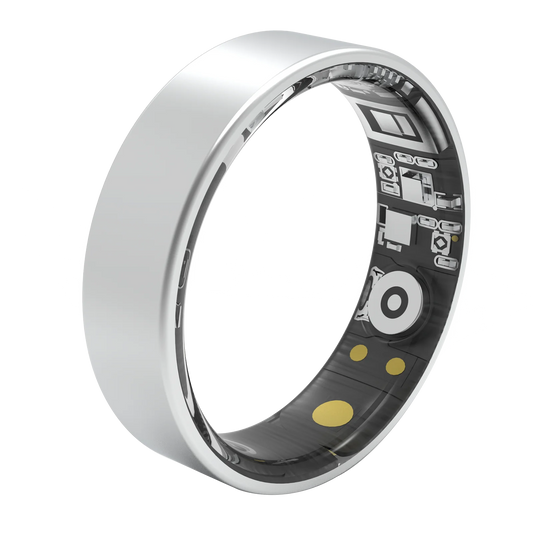
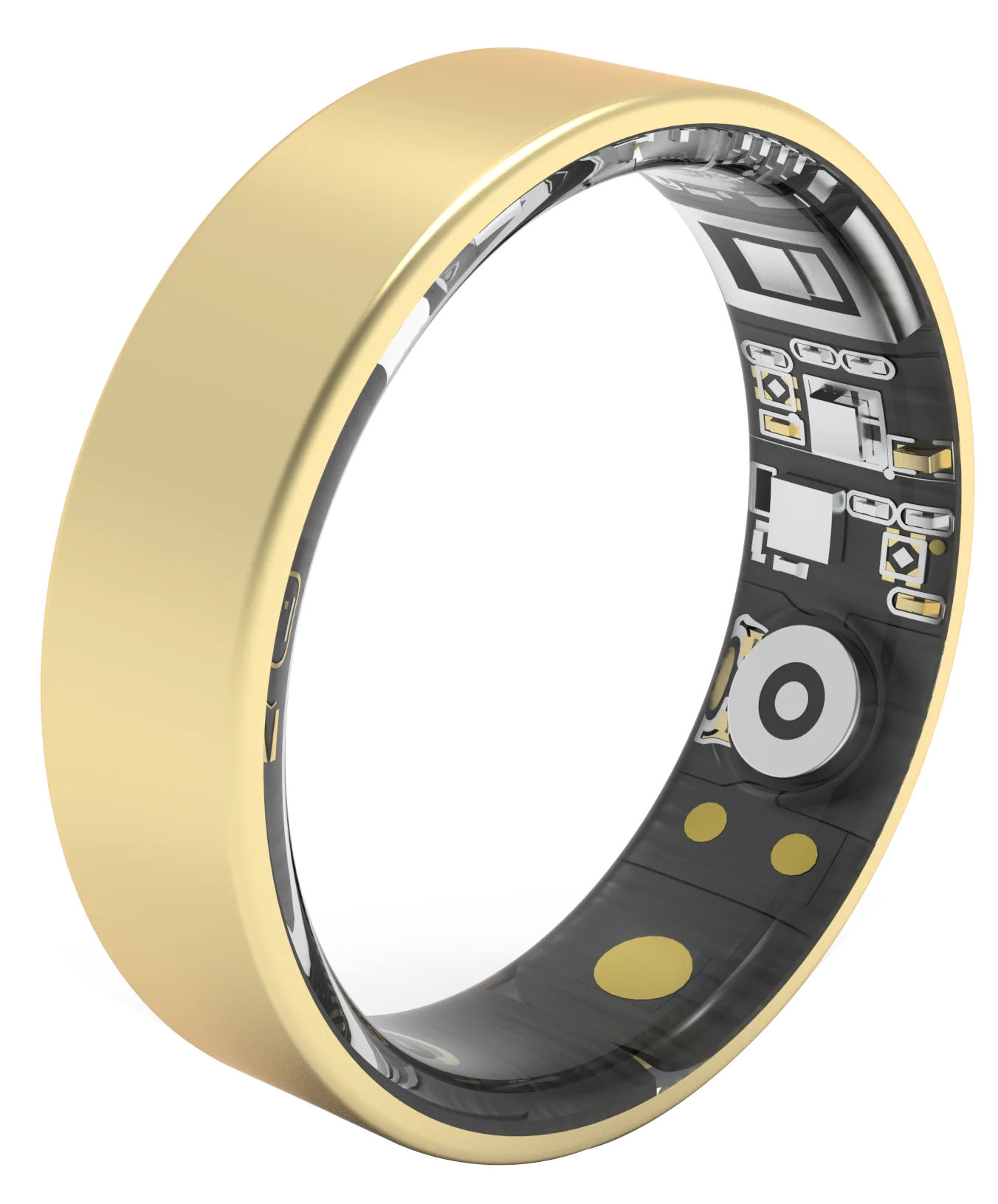
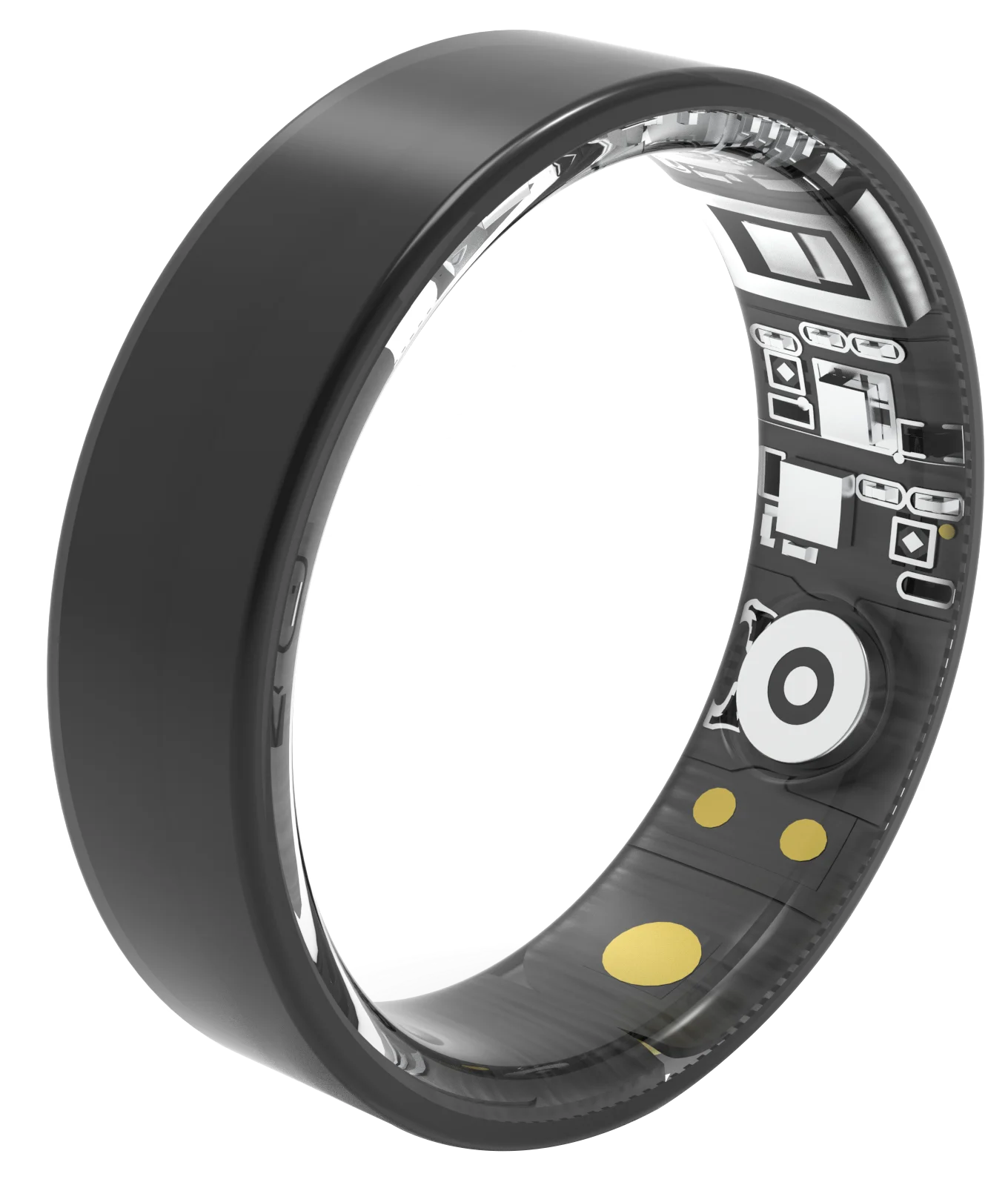
· Your ring's context is where Osawalla adds value. The Osawalla Signature Pro Smart Ring is listed at $49.99 with a 3.0 g shell and 5–7 days of battery life with no subscription, which is exactly the kind of low-friction device that makes multi-week tracking realistic.
Table of Contents
· 01 — What Does Smart Ring Sleep Tracking Tell You? — duration, timing, overnight physiology and where the estimates come from
· 02 — What Can a Sleep Diary Reveal That a Smart Ring Cannot? — behaviour, environment and how rested you actually feel
· 03 — Smart Ring vs. Sleep Diary: Which Details Are Worth Tracking? — a nine-row comparison table for each decision
· 04 — Why Sleep Consistency May Matter More Than One Night's Score — reading schedule drift instead of daily score noise
· 05 — How to Interpret Sleep Stages Estimates Without Overthinking Them — what validation research says and how to use the numbers
· 06 — Five Sleep Habits Worth Recording Every Day — the minimum viable sleep diary
· 07 — A Simple 14-Day Experiment: Combine Your Ring and Diary — a baseline week plus a one-change week
· 08 — Common Sleep-Tracking Mistakes to Avoid — six habits that turn useful data into stress
· 09 — How Osawalla Smart Rings Fit Into a More Useful Sleep Routine — current models, pricing, comfort and fit
· 10 — Conclusion: Track the Numbers, Record the Context
· 11 — Frequently Asked Questions
· 12 — References and Further Reading
Introduction: Your Sleep Score Is Only Part of the Story
You wake up after eight hours in bed, check your smart ring, and discover that your sleep score is lower than expected. The previous night, you slept for only six and a half hours, yet you felt more refreshed the next morning. Which night was actually better for you?
This is where smart ring sleep tracking and a sleep diary can work together.
A smart ring provides measurements and estimates based on signals collected while you sleep. Depending on the device and its supported features, these may include sleep duration, nighttime heart rate, heart rate variability (HRV), movement, and estimated sleep stages. A sleep diary captures information a wearable cannot reliably determine on its own, such as your last cup of coffee, a stressful meeting, a late dinner, or how refreshed you felt after waking.
Neither method tells the entire story. Wearable data helps you observe physical patterns, while personal notes provide context for interpreting them.
If you are new to the category, our explainers on what a smart ring is and the six core features of smart rings cover where sleep tracking sits among everything else these devices do. And if you are still deciding between device types, see smart ring vs. smartwatch for health and sleep tracking.
For Osawalla smart ring users, the goal is not to chase a perfect sleep score every morning. It is to identify which patterns consistently appear in your own life and decide which everyday habits are worth adjusting.
Introduction summary: A low score after a long night and a good morning after a short one are both normal. Rings measure signals; diaries record context. You need both to explain any single night.
1. What Does Smart Ring Sleep Tracking Tell You?
A smart ring can collect physiological and movement signals during the night and use algorithms to estimate different aspects of your sleep. These measurements are useful for observing patterns over time, although they should not be treated as perfect measurements of every moment you spend asleep. See how a smart ring tracks sleep, explained honestly for the sensor-level detail behind this section.
The most useful information often falls into three categories.
Sleep duration and timing
Your ring may estimate when you fell asleep, when you woke up, and how long you slept. Over several weeks, this information can help reveal whether your schedule is relatively stable or frequently shifts.
For example, you might discover that you regularly go to bed later on weekends and struggle to wake up on Monday mornings. The pattern is more informative than any single night's result.
Sleep stages estimates
Depending on the ring and its app, you may see estimates for light, deep, and REM sleep. These sleep stages estimates can help you observe changes across multiple nights, but they are not equivalent to a direct measurement of brain activity in a sleep laboratory.
If your app reports less deep sleep after a late night, treat that result as a possible pattern to investigate — not proof that a particular habit caused a specific change. Our primer on light, deep and REM sleep explained describes what each stage actually is, independent of any device's estimate of it.
Overnight physiological trends
Some smart rings also track nighttime heart rate and HRV, with additional metrics depending on the model. These measurements can provide useful context when viewed alongside sleep duration and your morning experience. Heart rate monitoring accuracy on Osawalla rings explains how optical readings behave during sleep versus exercise, and body metrics beyond sleep covers the other overnight signals that may be available.
HRV in particular is widely reported but often poorly understood. The Cleveland Clinic's overview of heart rate variability is a good baseline reference: values are highly individual, so your own trend line matters far more than any population "normal."
For example, a night with an unusually elevated resting heart rate compared with your normal pattern may coincide with alcohol consumption, illness, travel, or a demanding day. The measurement alone cannot identify the cause.
The key takeaway: Your smart ring is best used as a trend-tracking tool. It can help you notice changes, but it cannot automatically explain why those changes happened.
Section summary: A ring estimates sleep duration and timing, may estimate stages, and can record overnight heart rate and HRV depending on the model. All three are most useful as multi-week trends — none of them can identify why a night went the way it did.
2. What Can a Sleep Diary Reveal That a Smart Ring Cannot?
A sleep diary is a simple record of your sleep schedule, daily activities, and personal experience. Unlike a wearable, it does not rely on sensors. Its value comes from recording details that may explain why one night feels different from another.
This is not an improvised idea. Sleep researchers use structured versions of it: the Consensus Sleep Diary is a standardised paper and electronic diary developed with clinical and research input, and the Sleep Foundation's sleep diary guide shows how the same structure works for everyday users. You do not need to be that formal — but copying their categories makes your notes far easier to review later.
You do not need to write a long journal entry every morning. A few consistent notes are enough to make the exercise useful.
Consider these examples:
· Caffeine: Did you drink coffee or an energy drink late in the afternoon?
· Stress: Did you feel worried, mentally overloaded, or unusually relaxed before bed?
· Exercise: Did you work out earlier in the day or complete an intense session close to bedtime?
· Meals: Did you eat a large dinner shortly before going to bed?
· Screen time: Did you spend a long time working or scrolling on your phone at night?
· Morning experience: Did you wake up naturally, feel refreshed, or struggle to get out of bed?
These details add context to your wearable data. For a deeper look at the behaviours that move sleep outcomes, see the sleep contributors that affect your sleep quality.
Imagine that your ring records a shorter estimated sleep duration on three consecutive nights. Your diary reveals that you drank coffee later than usual on those evenings. This does not prove that caffeine caused the change, but it gives you a specific hypothesis to test.
The opposite can happen, too. Your ring might report relatively consistent sleep duration, while your diary shows that you felt exhausted each morning. That mismatch is worth paying attention to rather than dismissing your experience because the numbers look acceptable.
A sleep diary is not necessarily more accurate than a smart ring for every detail. It simply captures a different type of information: your behavior, environment, and subjective experience.
Section summary: Diaries record caffeine timing, stress, exercise, late meals, screen use and morning restfulness — the variables no sensor can see. Standardised versions like the Consensus Sleep Diary show what to capture; three nights of matching notes turn coincidence into a testable hypothesis.

3. Smart Ring vs. Sleep Diary: Which Details Are Worth Tracking?
The best tracking method depends on the question you want to answer. Some details benefit from sensor-based estimates, while others require personal observation.
|
Sleep detail |
Smart ring |
Sleep diary |
Best use |
|
Estimated sleep duration |
Provides an estimate |
Records bedtime and wake time |
Compare estimated sleep with your actual schedule |
|
Sleep stages estimates |
Estimates stages where supported |
Usually cannot identify stages |
Observe trends without treating them as exact measurements |
|
Nighttime heart rate |
Measures or estimates, depending on device |
Cannot measure it directly |
Notice departures from your own usual baseline |
|
HRV trends |
Measures or estimates where supported |
Cannot measure it directly |
Add physiological context to your sleep patterns |
|
Caffeine and alcohol |
Cannot reliably identify consumption |
Records what and when you consumed |
Explore possible behavioural associations |
|
Stress before bed |
Cannot identify the reason for stress |
Records how you felt |
Connect daily experiences with nighttime patterns |
|
Morning energy |
Cannot measure how refreshed you feel |
Records your personal experience |
Evaluate how sleep affects your day |
|
Sleep consistency |
Helps reveal timing trends |
Records intended and actual routines |
Identify irregular schedules across the week |
|
Bedroom disruptions |
May detect movement or awakenings imperfectly |
Records noise, temperature, interruptions |
Investigate possible environmental factors |
The distinction is straightforward: a ring helps quantify selected signals, while a diary records context and perception.
If two columns look useful for the same question, use both. For example, a diary entry saying "woke twice, room was hot" is far more actionable when you can also see whether the ring detected movement at those moments — and our guide to smart ring data fluctuations explains why overnight readings move even when your routine does not.
Neither method needs to capture every possible variable. Focus on the details most likely to help you answer a specific question about your own sleep.
Section summary: Match the tool to the question: sensors win for duration, heart rate, HRV and stage estimates; a diary wins for caffeine, stress, morning energy, schedule intent and bedroom disruptions. Overlap is useful — especially the nights where both records disagree.
4. Why Sleep Consistency May Matter More Than One Night's Score
Many people check their sleep score immediately after waking. It is understandable to want a simple number, but focusing too heavily on individual scores can make normal nightly variation feel like a problem. For a breakdown of how those scores are actually assembled, see how your sleep quality score is calculated.
Sleep consistency is a more useful long-term area to examine.
It includes how regularly you go to bed, how regularly you wake up, and whether your sleep schedule changes substantially between workdays and weekends. Consistent sleep timing can support a stable daily routine and help align sleep with your body's circadian rhythms. The U.S. National Institute of Neurological Disorders and Stroke explains how those rhythms interact with sleep, including why shifting schedules can leave you feeling out of step.
For example, imagine two weeks of tracking:
· During the first week, you go to bed around 10:45 p.m. and wake up around 6:45 a.m.
· During the second week, bedtime ranges from 10:30 p.m. to 1:00 a.m., while wake-up time changes from 6:30 a.m. to 9:00 a.m.
Your sleep duration may look reasonable on several individual nights, but the second week's schedule is much more variable. On how much sleep adults generally need in the first place, the Sleep Foundation's review of sleep duration recommendations is a useful, footnoted reference.
A smart ring may help you recognize those shifts. A sleep diary can show whether they coincide with late work, social plans, travel, or weekend habits.
Neither tool should be used to enforce an inflexible schedule. Work demands, family responsibilities, and individual sleep needs differ. Instead, look for a routine that allows you to obtain sufficient sleep and function well during the day.
When reviewing sleep consistency, ask three questions:
1. Is my bedtime relatively stable?
2. Do I wake up at a similar time on most days?
3. Do changes in my schedule coincide with how I feel the following morning?
These questions often provide more actionable information than trying to improve every individual sleep metric.
Section summary: Judge your week, not your night. A schedule that swings between 10:30 p.m. and 1:00 a.m. hides more useful information than any score reveals — and only a diary can tell you whether the swing came from work, travel or weekend habits.
5. How to Interpret Sleep Stages Estimates Without Overthinking Them
Sleep stages are a common source of confusion for wearable users. You might see a shorter estimate of deep sleep and immediately assume that your night was poor. However, a single estimated stage duration cannot fully describe sleep quality.
Consumer smart rings infer sleep stages from signals such as movement, heart rate, and other physiological patterns, depending on the device. These signals can support useful estimates, but they do not directly measure the brain activity used in clinical sleep studies. Our guide to smart ring data explained walks through how a raw signal becomes a number in your app.
That distinction matters when interpreting nightly results — and independent research puts numbers on it.
What the validation research actually found. A 2023 study published in JMIR mHealth and uHealth evaluated 11 sleep-tracking wearables against polysomnography — the multi-sensor lab standard — in a multi-centre protocol covering roughly 75 participants and 543 hours of recorded sleep. Device agreement with lab-scored stages varied substantially: reported macro F1 scores ranged from about 0.26 to 0.69, and several devices reached only moderate agreement. One ring in the test set reached a macro F1 of roughly 0.52 with Cohen's kappa around 0.35, which researchers classify as "fair" rather than good agreement. (Read the study: JMIR mHealth and uHealth, 2023;11:e50983.)
Two conclusions follow directly from those figures. First, a tracker is considerably better at telling sleep from wake than at telling deep sleep from light sleep. Second, a single night's stage breakdown — in either direction — is close to uninformative.
Look for patterns rather than isolated numbers
Suppose your ring estimates less REM sleep on one night than the previous night. The difference may reflect normal variation, algorithmic uncertainty, or a genuine change in your sleep. One reading cannot distinguish among those explanations.
Instead, review several weeks of data and ask whether a recurring pattern appears.
Compare the data with your experience
If your sleep-stage estimates vary considerably but you generally feel rested and function well, there may be little reason to react to each change.
If you repeatedly feel tired despite what appears to be adequate sleep, consider your total sleep opportunity, schedule, stress, environment, and other relevant factors. Persistent daytime sleepiness deserves attention even when a wearable produces reassuring numbers — the NHLBI's overview of sleep deprivation lists the daytime signs that warrant more than a tracker's reassurance.
Avoid trying to optimize every stage independently
There is no need to turn every nightly metric into a target. Sleep stages vary naturally, and consumer estimates have limitations.
A more practical goal is to establish a sustainable routine, obtain enough sleep, and use stage estimates as supporting information rather than a daily performance score.
For Osawalla smart ring users, this means treating the sleep information available in your model's app as one part of a broader picture — not as a medical diagnosis or a guarantee of sleep quality. Consumer wellness devices are regulated differently from medical devices; the FDA's general wellness policy for low-risk devices explains that boundary in detail.
Section summary: Rings estimate stages from movement and heart-rate patterns, not brain activity, and independent PSG validation shows only fair-to-moderate agreement. Use stage estimates to spot week-scale patterns, never to grade a single night.
6. Five Sleep Habits Worth Recording Every Day
A useful sleep diary should be simple enough to maintain. If recording your habits takes fifteen minutes every morning, you may abandon the process before you discover anything meaningful.
Start with five details.
1. Bedtime and wake-up time
Record when you went to bed, approximately when you tried to sleep, and when you got up. If your ring provides estimated sleep timing, compare the two records rather than assuming they must match exactly.
This helps you distinguish time spent in bed from estimated time asleep — two numbers that can differ by an hour on a restless night.
2. Caffeine timing
Record whether you consumed coffee, tea, energy drinks, or other caffeinated products, along with the approximate time.
Caffeine sensitivity varies among individuals. Recording timing may help you discover whether later consumption is associated with difficulty falling asleep or feeling less rested. For general background on how caffeine interacts with sleep timing, see the Sleep Foundation's page on caffeine and sleep.
3. Stress and mental activity
Use a simple scale, such as 1 for relaxed and 5 for highly stressed. Add a short note only when something unusual happened.
Over time, you may notice that demanding workdays coincide with later bedtimes or poorer subjective sleep. The relationship may not be direct, but it can help you decide which routines deserve closer attention.
4. Evening meals, alcohol, and exercise
You do not need to calculate every calorie or record every movement. Note unusual circumstances, such as a heavy late meal, alcohol consumption, a late workout, or a particularly active day.
These notes can help you explore whether certain routines are associated with differences in sleep duration, nighttime measurements, or morning energy. If workouts are part of your routine, our smart ring training and recovery guide covers how training load shows up in overnight recovery data.
5. How you feel the next morning
Record your perceived restfulness, daytime energy, and difficulty waking up. A simple rating from 1 to 5 is enough.
This is one of the most important entries because it connects nighttime observations with the outcome you actually care about: how you feel and function during the day.
Keep your notes factual. Rather than writing, "Coffee ruined my sleep," record, "Coffee at 4 p.m.; took longer than usual to fall asleep." The second statement captures what happened without assuming a cause.
Section summary: Record bedtime and wake time, caffeine timing, stress level, unusual evening events and morning restfulness — nothing else at first. Keep entries factual ("coffee at 4 p.m." not "coffee ruined my sleep") so you can test the association later instead of assuming it.

7. A Simple 14-Day Experiment: Combine Your Ring and Diary
You do not need months of data to begin exploring your sleep habits. A two-week experiment can provide a useful starting point, although longer observation may be needed to identify reliable patterns.
Days 1–7: Observe your normal routine
Wear your ring according to the manufacturer's instructions and record your usual habits. Avoid making multiple changes just because one night's results look unusual.
Each morning, note:
· Estimated sleep duration and timing, if available.
· Sleep stages estimates, if your device supports them.
· Nighttime heart rate or HRV, if available.
· Bedtime, wake-up time, and relevant evening habits.
· Morning restfulness, rated from 1 to 5.
The purpose of the first week is to establish a baseline, not to achieve a perfect score. If you want to review several weeks side by side, check what your app can export — syncing Osawalla data with Apple Health and Strava covers the export and compatibility questions worth answering before you start.
Days 8–14: Test one realistic change
Review your notes and choose one habit to adjust. For example, if you regularly consume caffeine late in the day, try moving it earlier while keeping other routines as stable as practical.
Alternatively, you could experiment with a more consistent wake-up time or a calmer pre-bed routine. The Sleep Foundation's sleep hygiene guide is a reasonable source of candidate changes that cost nothing to try.
Continue tracking the same measurements and personal observations. At the end of the second week, compare the overall patterns rather than selecting the single best or worst night.
Ask yourself:
· Did my sleep schedule become more consistent?
· Did I notice a change in how long I slept?
· Did my morning energy improve, worsen, or remain similar?
· Did my ring's measurements show a recurring change?
· Were there other factors that could explain the difference?
This is an informal personal experiment, not a clinical study. Two weeks cannot establish causation, and travel, illness, stress, and other disruptions can affect the results.
If the change appears helpful, continue it for longer and see whether the pattern persists. If the results are unclear, avoid forcing a conclusion. You may need more observations or a different approach.
Section summary: Week one establishes your baseline and nothing else; week two changes exactly one variable. Compare week averages rather than cherry-picked nights, and accept "unclear" as a legitimate result — two weeks cannot prove causation.
8. Common Sleep-Tracking Mistakes to Avoid
Even useful tracking methods can become counterproductive when interpreted incorrectly.
Mistake 1: Treating every sleep score as a verdict. A lower score does not automatically mean that something is wrong. Consider the broader trend and how you feel.
Mistake 2: Recording too many variables. Tracking every meal, activity, emotion, and metric can make the process exhausting. Begin with a few details that relate to a clear question.
Mistake 3: Assuming correlation proves causation. If late dinners and shorter estimated sleep occur together, the diary suggests a possible relationship — not proof that dinner caused the change.
Mistake 4: Comparing your numbers with someone else's. People differ in sleep needs, routines, physiology, and wearable measurements. Your own baseline is usually more useful than another person's score.
Mistake 5: Ignoring persistent symptoms because the data looks good. Wearables are not diagnostic devices. If you regularly experience severe daytime sleepiness, persistent insomnia, or other concerning symptoms, seek advice from a qualified healthcare professional rather than relying on your ring alone. Consumer wellness products sit outside the medical-device category — see the FDA's general wellness policy.
Mistake 6: Changing everything at once. If you simultaneously change caffeine intake, bedtime, exercise, and meal timing, it becomes difficult to understand which changes may have mattered. Adjust one practical habit at a time when possible.
There is also a quieter, seventh problem: a dirty sensor. Skins oils and residue degrade optical readings, which can look exactly like a change in your sleep. Build cleaning into your weekly routine — see how to clean a smart ring. And remember that overnight accuracy starts with wearing the ring every night, which our guide to why sleep data fluctuates unpacks in detail.
Section summary: The six classic errors — plus the overlooked dirty-sensor problem — all have the same cure: trust trends over single nights, compare against your own baseline, change one habit at a time, and never let a reassuring number override persistent daytime symptoms.
9. How Osawalla Smart Rings Fit Into a More Useful Sleep Routine
The value of a smart ring is not simply the amount of data it collects. It is how easily you can use that information to understand your routine.
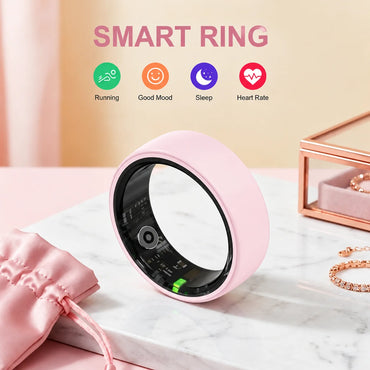
Osawalla smart rings are designed to support everyday tracking, with sleep-related information and additional health metrics available according to the model and its companion app. Prices and specifications below were checked against Osawalla's live product listings on 26 October 2026.
Current Osawalla smart ring lineup
|
Model |
Listed price |
Key listed details |
Link |
|
Signature Pro Smart Ring |
$49.99 |
3.0 g shell, hardened scratch-resistant finish, 24/7 health monitoring, advanced sleep tracking, 5–7 day battery, no subscription |
|
|
Ceramic Pro Smart Ring |
$49.99 |
Zirconia ceramic, 4 g / 2.6 mm profile, sleep and HRV tracking, cycle and ovulation tracking, 5ATM / IP68, 5–7 day battery, no subscription |
|
|
Smart Ring Sizer Kit |
$6.99 |
US sizes 6–14, useful before you commit to a ring you will wear nightly |
Both rings are offered with no subscription, which matters for this article's advice: every recommendation here depends on reviewing several weeks of your own data, and that only works if the data stays yours. Read more on why no-subscription tracking matters and browse the full Osawalla smart ring collection.
Comfort and fit decide whether nightly tracking happens at all. A ring that you remove before bed produces no overnight data, so fit is a measurement issue, not just a comfort issue. Start with how to choose the correct smart ring size and the full smart ring size guide, then decide which finger to wear it on and stick with that finger so your data stays comparable. Our guide to what makes a ring comfortable for 24/7 wear covers weight, profile and edge finishing in more detail.
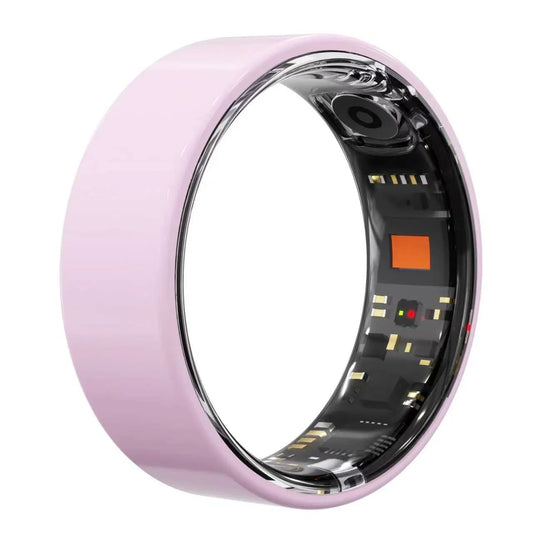
Choosing between the two models. If you want the lightest option for overnight wear, the 3.0 g Signature Pro is the obvious starting point; if you prefer the feel of ceramic and want water resistance for swimming or showering, the Ceramic Pro's 5ATM / IP68 rating is the differentiator. Material choice is mostly about scratch behaviour and texture — ceramic smart rings explained goes into the trade-offs, and our full comparison guide covers everything else. The independent Signature Pro review is worth reading for day-to-day ownership notes.
Pairing those records with a simple sleep diary gives you two complementary perspectives.
· Your ring helps answer: "What patterns appear in my overnight measurements?"
· Your diary helps answer: "What was happening in my life around those nights?"
Together, they make it easier to develop more informed questions about your habits. You might discover that a consistent wake-up time works better for your schedule, that late caffeine is worth reconsidering, or that a stressful evening affects how rested you feel.
You do not need to interpret every metric or make sleep tracking a second job. A few minutes of observation, followed by occasional reviews, can be enough to identify patterns worth exploring.
Section summary: Osawalla sells two rings at $49.99 each with no subscription — Signature Pro at 3.0 g, Ceramic Pro with 5ATM / IP68 — plus a $6.99 sizer kit. Fit determines whether you wear it every night, which determines whether you have data at all.
Conclusion: Track the Numbers, Record the Context
Smart ring sleep tracking and a sleep diary answer different questions. A ring provides estimates and physiological measurements, while a diary records your behavior, environment, and personal experience.
Neither is a complete picture of sleep on its own. Sleep stages estimates can be useful for observing trends, but they should not be treated as exact measurements — the independent validation data in Section 5 makes that concrete. Diary entries can reveal possible connections between sleep habits and how you feel, but they cannot prove what caused a change.
The most useful approach is to combine both methods, focus on sleep consistency, and look for patterns across multiple nights. Start with a few simple observations, test one realistic habit change, and evaluate whether the difference is meaningful in your daily life.
Better sleep tracking is not about collecting the most data. It is about understanding which details help you make better decisions.
If you are choosing your first ring for sleep specifically, start with the best smart rings without a subscription roundup, then browse the Osawalla smart ring collection and use your own observations to make the information more meaningful.
Conclusion summary: Rings quantify signals; diaries record context. Track both for two weeks, anchor on consistency rather than daily scores, and let morning function — not a nightly number — decide whether a change was worth keeping.
Frequently Asked Questions
Is smart ring sleep tracking more accurate than a sleep diary?
They measure different things. A smart ring estimates sleep-related metrics using sensor data, while a diary records your schedule, habits, and subjective experience. Neither replaces a clinical sleep assessment, and they are often most useful when combined. Independent testing shows approxifiable but imperfect agreement between consumer devices and lab polysomnography — see Section 5 and the linked JMIR study.
What should I write in a sleep diary?
Start with bedtime, wake-up time, caffeine timing, evening stress or activities, and how rested you feel in the morning. Keep entries brief and consistent so you can review patterns over time. Section 6 covers each of these five entries, and the Sleep Foundation's sleep diary guide offers a printable format.
Should I trust my smart ring's sleep stages estimates?
Use them as estimates rather than exact measurements. They may help reveal patterns over multiple nights, but individual readings can differ from clinical measurements. Avoid making decisions based on one night's stage breakdown alone — see light, deep and REM sleep explained for what each stage means in the first place.
How long should I track my sleep habits?
Start with 14 days to establish a basic picture of your routine and explore one small change. Continue longer if you need more observations, particularly when your schedule varies from week to week. Section 7 lays out the week-by-week structure.
Can a smart ring tell me why I slept poorly?
Not reliably on its own. A ring can reveal changes in estimated sleep duration or supported physiological measurements, but it cannot independently determine whether stress, caffeine, illness, noise, or another factor caused them. A diary can help you investigate possible explanations. Start with the behavioural categories in what affects your sleep quality.
Is a higher sleep score always better?
Not necessarily. Scores depend on the device's algorithm and available measurements. Consider your usual patterns, sleep schedule, and daytime functioning rather than trying to maximize a single number. Our breakdown of how the sleep quality score works explains which inputs carry the most weight.
Do I need to wear my ring on a specific finger for consistent data?
Consistency matters more than the finger itself. Whichever finger gives a snug, comfortable fit at night, keep using it — switching fingers introduces signal differences that can look like changes in your sleep. See choosing the right finger and the size guide.
FAQ summary: The recurring theme across all seven answers: use ring data for "what," use your diary for "why," judge across weeks not nights, and treat persistent daytime symptoms as a reason to see a clinician regardless of what the app shows.
References and Further Reading
External sources (all verified as reachable on 26 October 2026):
|
Source |
Used for |
|
JMIR mHealth and uHealth — validation of 11 sleep trackers vs. polysomnography |
Section 5 accuracy figures: device count, participant-hours, F1 range, agreement classification |
|
Section 1 baseline for interpreting individual HRV values |
|
|
Section 4 explanation of circadian rhythms and schedule shifts |
|
|
Section 4 sleep-duration baselines for adults |
|
|
Sections 2 and 6 caffeine-timing context |
|
|
Section 2 diary structure and printable formats |
|
|
Section 2 the clinical standard version of a sleep diary |
|
|
Section 7 candidate single-variable changes |
|
|
Sections 5 and 8 daytime symptoms that warrant professional advice |
|
|
Sections 5, 8 and editorial boundary between wellness and medical devices |
Related reading on the Osawalla blog:
· How does a smart ring track sleep? The honest, science-backed answer
· What are sleep stages? Light, deep and REM sleep explained
· How your sleep quality score is calculated
· Sleep contributors: what actually affects your sleep quality
· Smart ring heart rate monitoring: how accurate is it?
· Smart ring data explained and why sleep data fluctuates
· Smart ring vs. smartwatch for health and sleep tracking
· Best smart rings without a subscription in 2026
Shop Osawalla: Signature Pro Smart Ring · Ceramic Pro Smart Ring · Smart Ring Sizer Kit · All smart rings


