






Smart Ring Charging Case: What to Look For Before You Buy (2026)
Last updated 20 September 2026
Disclosure: Osawalla makes the rings and cases discussed in this guide. We have labelled every figure that comes from our own spec sheet, and we say plainly below which claims we have not independently verified.

The short answer
A smart ring charging case is a pocket-sized case with a built-in battery that tops up your ring without a wall outlet. Judge it on three things, not one: how many full ring charges it actually delivers, whether it fits your exact ring size and contact layout, and whether it is small enough that you will carry it every day.
Key takeaways
· Recharge count is a more useful number than mAh, because conversion losses mean a bigger cell does not translate into a proportional number of extra charges.
· Compatibility beats capacity. A case that does not seat your ring correctly will charge it inconsistently, whatever the battery rating says.
· Both Osawalla cases are well under the 100 Wh airline limit for spare lithium batteries, so they travel in your cabin bag without special approval.
· If you charge at home and your ring already lasts five to seven days, you probably do not need one.
Why a charging case is different from a dock or a cable
A dock sits on your bedside table. A cable lives in a drawer or a laptop bag. Neither holds any energy of their own, so both are useless the moment you are somewhere without an outlet.
A charging case does two jobs at once. It stores the ring, and it carries a battery. That combination is the whole point: you are not packing "a charger", you are packing a power reserve that happens to also be where your ring lives when it is off your finger.
That distinction matters most on trips. Arriving at a hotel at midnight, you do not want to unpack a dock, a cable and a wall adapter. You want to drop the ring into the thing that is already in your bag.
|
Option |
Best for |
Holds a charge? |
Travels well? |
|
Charging dock |
Bedside table, office desk |
No |
Poor |
|
USB charging cable |
Desk charging, secondary location |
No |
Fair |
|
Charging case |
Travel, commuting, long days out |
Yes |
Good |
1. Recharge count matters more than mAh
The most quoted number on any portable charger is its battery capacity in mAh. It is also the least useful one on its own.
How many times a case can refill your ring depends on the ring's own cell size, the efficiency of the voltage conversion, losses in the charging circuitry, how much reserve the case keeps for itself, and how depleted the case is when you start. Two cases with identical mAh ratings can deliver noticeably different results.
So read the estimated recharge count first, and treat mAh as supporting detail.
Osawalla's two cases, side by side
|
Spec |
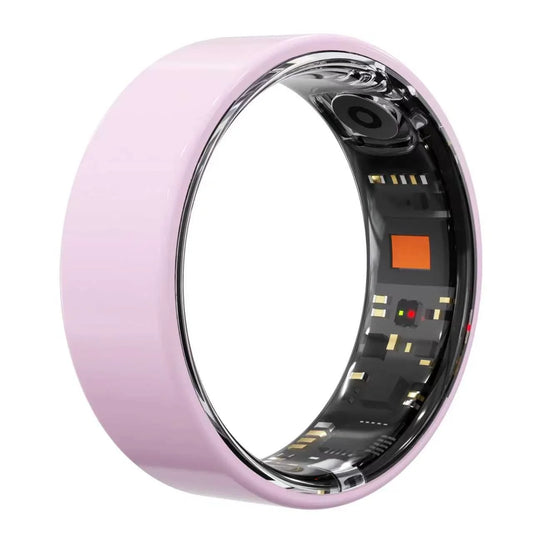
Pink Smart Ring Charging Case |
Clear Smart Ring Charging Case |
|
Battery capacity |
300 mAh |
450 mAh |
|
Rated ring charges |
8–10 |
15–20 |
|
Charging method |
Magnetic contact |
Magnetic contact |
|
Case input |
5 V / 0.2 A |
5 V / 0.2 A |
|
Ring output |
5 V / 0.02 A |
5 V / 0.02 A |
|
Port |
USB Type-C |
USB Type-C |
|
Fits |
Osawalla rings, sizes 6–13 |
Osawalla rings, sizes 6–13 |
|
Dimensions |
55 × 55 × 25 mm |
Not published |
|
Weight |
45g |
Approx. 45 g |
|
Best for |
Everyday carry, short trips |
Longer trips away from an outlet |
All figures above are manufacturer ratings from the Osawalla spec sheet, not independent measurements.
One number we want to flag
The Clear case holds 50% more battery than the Pink case, but is rated for only about 25% more ring charges. That gap does not follow from capacity alone.
We have asked our product team how the two figures were measured. Until we can publish their answer, treat both numbers as manufacturer estimates and expect real-world results to land at the lower end of each range, especially as the case battery ages.
About that 0.02 A output
5 V at 0.02 A is roughly 0.1 W. That is deliberately low, because small ring cells are charged at low current to protect them — but it also means a top-up is not instant. We have not yet published an independently timed full-charge figure, and we would rather say so than guess.
2. Compatibility comes before capacity
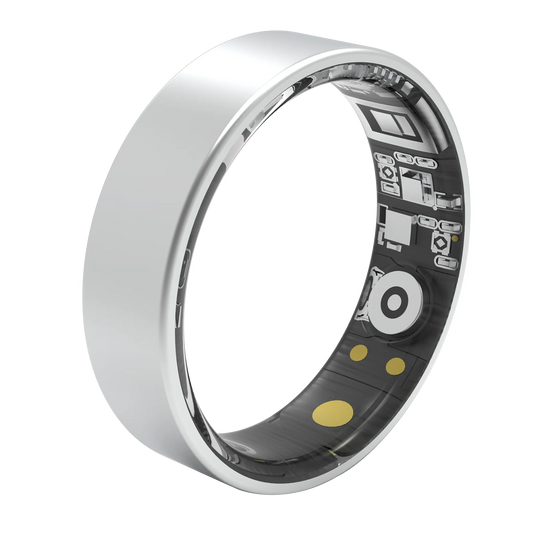
A case has to hold your ring still while keeping the charging contacts aligned. If the ring rocks, sits proud, or lands a millimetre off, charging becomes intermittent — and intermittent charging on a wearable you wear to sleep is worse than no charging at all, because you cannot tell it failed until morning.
Before you order, confirm:
· The exact ring model the case was designed for
· Whether your size is supported
· Where the charging contacts sit on your ring
· How the magnet aligns the ring
· Whether the case grips the ring during transport, or only when it is lying flat
Smart rings differ in width, wall thickness, sensor layout and contact position. A case built for one ring ecosystem should never be assumed to work with another, even if the sizes look similar.
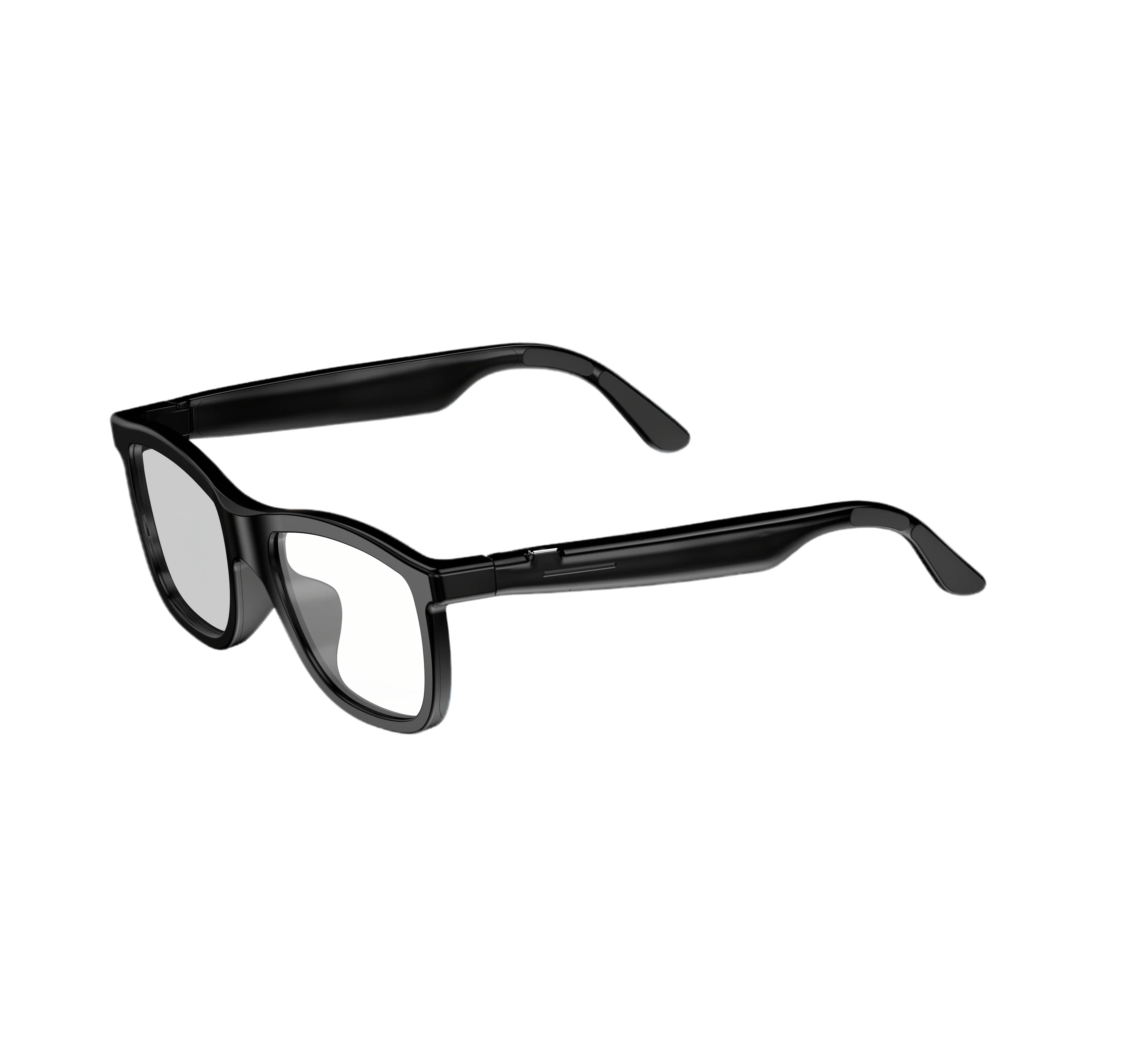
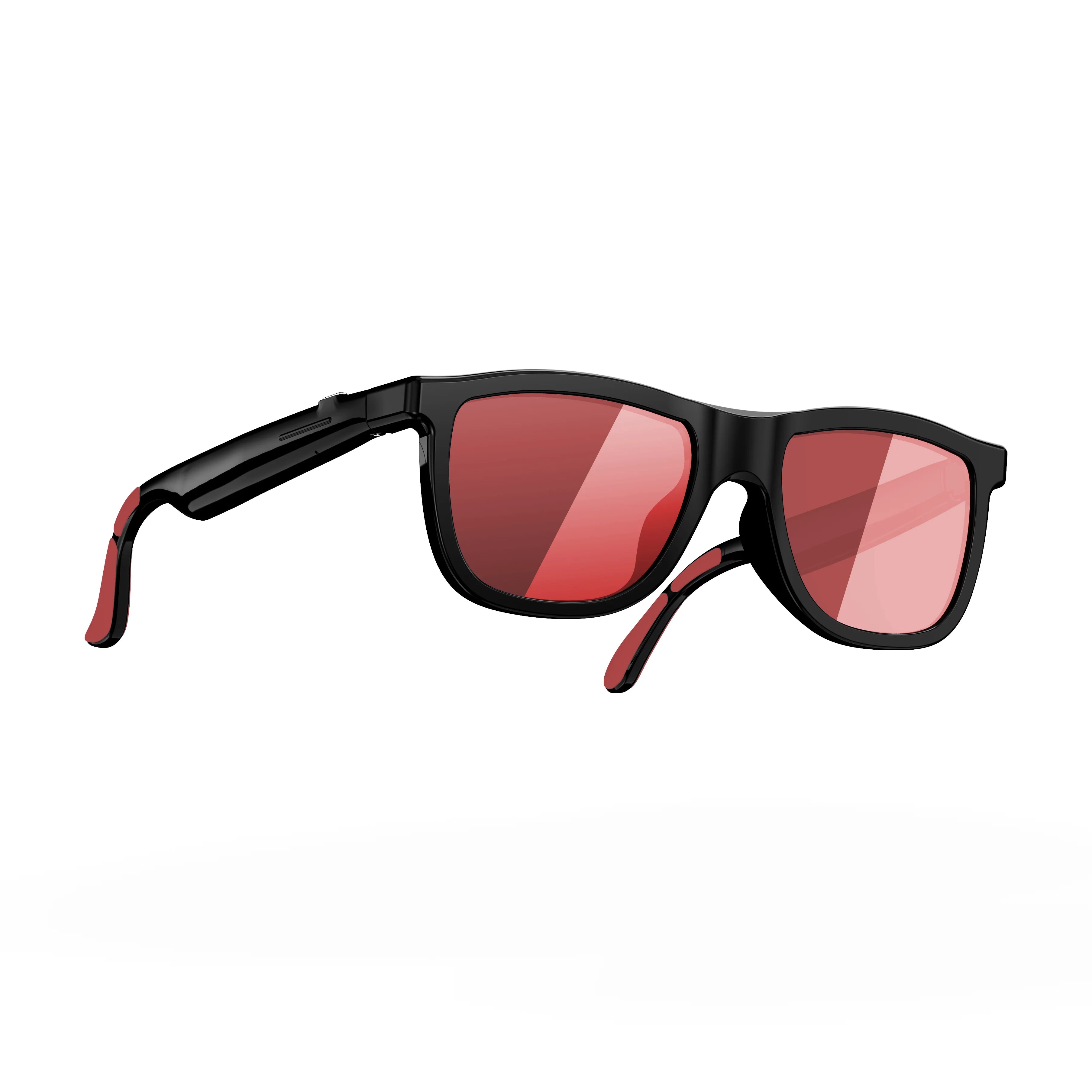
The Pink Smart Ring Charging Case is rated for sizes 6–13. The Clear Smart Ring Charging Case uses a dedicated magnetic cradle; we are confirming its supported size range and will update this section.
If you have not settled on a size yet, use the Osawalla Smart Ring Sizer Kit first. Sizing errors are the single most common reason a ring gets returned, and they are entirely avoidable. Our guide to measuring your ring size at home walks through it.

3. Magnetic alignment is the part that decides whether it works
Magnetic contact charging removes the fiddliest part of the whole routine: you never plug anything into the ring itself. You drop it in, the magnet pulls it into position, and the contacts meet.
This is worth more than it sounds on paper. Rings are small, their contacts are small, and aligning them by hand in a hotel room with bad lighting is exactly the kind of friction that makes people stop carrying a charger.
Where it pays off:
· Airports and hotel rooms
· Long office days away from your desk
· Gym bags, after a shower or swim
· Weekend trips where you never unpack properly

4. USB-C is a connector, not a speed
Both Osawalla cases charge over USB Type-C, which means they share a cable with your phone, headphones and laptop. On a trip, one cable fewer is a real win.
But the connector shape tells you nothing about power. USB Type-C is defined by the USB Type-C Cable and Connector Specification maintained by the USB Implementers Forum, and that document covers the physical interface and its reversible orientation — not the charging speed any given product implements. Two devices can both use USB-C and behave completely differently.
For a ring, this is fine. You are moving very little energy; convenience and cable compatibility matter far more than wattage. Just read the input and output numbers rather than assuming the port implies fast charging.
5. Portability: will you actually carry it?
The best case in the world does nothing if it stays on your desk. Portability is not a nice-to-have; it is the deciding feature.
The Clear case is listed at approximately 45 g. The Pink case measures 55 × 55 × 25 mm. Both are small enough for a pocket, a small handbag, a laptop sleeve, a gym bag or a carry-on.
A travel charger only works if it travels. Our rule of thumb: if you have to think about whether to bring it, it is too big.
6. Indicators and protection
A battery indicator sounds minor until you are standing in an airport with a dead ring and a case that turns out to be empty too.
The Clear case shows charging progress through its indicator, and gives a low-battery signal when the case itself needs recharging. Check before you leave, not after.
Two more things worth checking on any charging case:
· Does it hold the ring securely when closed, so it is not rattling loose in a bag?
· Is any water or dust resistance stated? Neither Osawalla case publishes an ingress protection rating, so keep them away from sinks and rain.
7. When you probably do not need one
This is the part most guides skip. A case is not automatically worth buying.
Skip it if:
· You charge at home and your ring lasts five to seven days between charges
· You already keep a second dock or cable at the place you spend most of your time
· You travel rarely enough that a wall adapter is always within reach
· You are still deciding whether to keep the ring long-term
The Osawalla Signature Pro Smart Ring is rated at roughly 5–7 days per charge depending on usage. At that rate, most people plug in once a week, and a portable ring charger is a solution to a problem they do not have. See our notes on smart ring battery life for what changes that number.
8. Honest limitations of the Osawalla cases
|
Limitation |
Why it matters |
|
Made for Osawalla rings only |
Switch ring brands later and the case becomes useless |
|
No published IP rating |
Not water resistant; keep it dry |
|
No wireless charging |
You still need a USB-C cable to refill the case |
|
Indicator lights, not a percentage display |
You get a rough idea of charge, not an exact figure |
|
Recharge counts are manufacturer estimates |
We have not independently verified them yet |
Two alternatives worth considering before you buy. If you mostly need backup power rather than storage, a small power bank plus the ring's own cable does the same job for less money. If your problem is forgetting the ring rather than charging it, a second dock kept permanently in your travel bag may be the cheaper fix.
How we evaluated these cases
We want to be clear about what is behind the recommendations here, and what is not.
What we used: The Clear Charging Case paired with an Osawalla Signature Pro Smart Ring, size 9. We tested the set continuously over 14 days in daily wear scenarios.
What we checked ourselves: fit and magnetic seating across sizes, pocketability, indicator behaviour, and how the case behaves in a bag.
What we have not verified: the rated recharge counts, the exact full-charge time, and the Clear case's supported size range. These come from the spec sheet. We will update this article with measured figures once testing is complete.
Buying checklist
|
# |
Check |
What to confirm |
|
1 |
Compatibility |
Matches your ring model and size |
|
2 |
Charging method |
Magnetic contact, not a plug you have to align |
|
3 |
Rated recharges |
A stated count, not just an mAh figure |
|
4 |
Capacity |
Enough for your longest stretch away from an outlet |
|
5 |
Portability |
Small and light enough to carry daily |
|
6 |
Interface |
USB-C, so it shares a cable with everything else |
|
7 |
Indicator |
You can see remaining charge before you leave |
|
8 |
Protection |
Holds the ring firmly when closed |
|
9 |
Limitations |
IP rating, warranty and brand lock-in are stated |
|
10 |
Price |
Worth it for how often you actually travel |
Flying with a charging case
Short answer: yes.
Both cases are far below the airline threshold. A 300 mAh cell at a nominal 3.7 V works out to about 1.1 Wh; the 450 mAh Clear case is about 1.7 Wh. Spare lithium-ion batteries under 100 Wh are generally allowed in carry-on baggage without airline approval.
Two rules still apply. Keep the case in your cabin bag, never in checked luggage, and if your bag gets gate-checked, take the case out first. The FAA PackSafe guidance and IATA's passenger lithium battery rules are the two sources to check before you fly, since individual carriers can be stricter.

Frequently asked questions
What is a smart ring charging case?
A portable case with a built-in battery that stores your ring and recharges it through internal contacts, without needing a wall outlet.
Is a smart ring charger case worth it?
It is worth it if you travel often, spend long days away from a charger, or want insurance against a flat ring. If you charge at home once a week, a standard dock is enough.
How many times can it recharge a ring?
It depends on the case and the ring. The Osawalla Pink case is rated at roughly 8–10 charges and the Clear case at 15–20, both manufacturer estimates.
Can I take one on a plane?
Yes. At roughly 1.1–1.7 Wh, both Osawalla cases sit far below the 100 Wh limit for spare lithium batteries in carry-on baggage. Always check your airline's own policy.
Does USB-C mean it charges fast?
No. USB-C describes the connector, not the power delivery. Check the input and output ratings instead.
Will it work with a ring from another brand?
Assume not. Contact position, ring width and magnet placement vary between brands, and a case designed for one ecosystem rarely seats another correctly.
Do the Osawalla cases have a waterproof rating?
No. Neither publishes an ingress protection rating, so treat them as splash-prone and keep them dry.
How long does the case itself take to recharge?
We have not published a measured figure yet. It charges from a standard USB-C source at 5 V / 0.2 A.
Final thoughts
The best charging case is not the one with the biggest battery. It is the one you actually carry.
Work through the list in order: compatibility, then rated recharges, then size. Capacity comes fourth, not first, because a 450 mAh case left on your desk delivers zero charges, while a 300 mAh case in your pocket delivers all of them.
For everyday carry and short trips, the Pink Smart Ring Charging Case is the simpler choice. If you are away from an outlet for days at a time, the Clear Smart Ring Charging Case buys you more margin.
Either way, the goal is the same: charging should not be something you have to think about.


